
As a cat parent, one of the most critical decisions you will make involves your cat’s nutrition. Walk into any pet store in the US, and you’ll find aisles filled with endless options. However, the debate always boils down to one primary question: Wet vs. Dry cat food which is truly better?
While both options have their loyal supporters, the answer isn’t always black and white. Your choice can impact your cat’s hydration, dental health, and overall longevity. In this comprehensive guide, we will break down the pros, cons, and expert-backed facts to help you make an informed decision.
More Than Just Texture
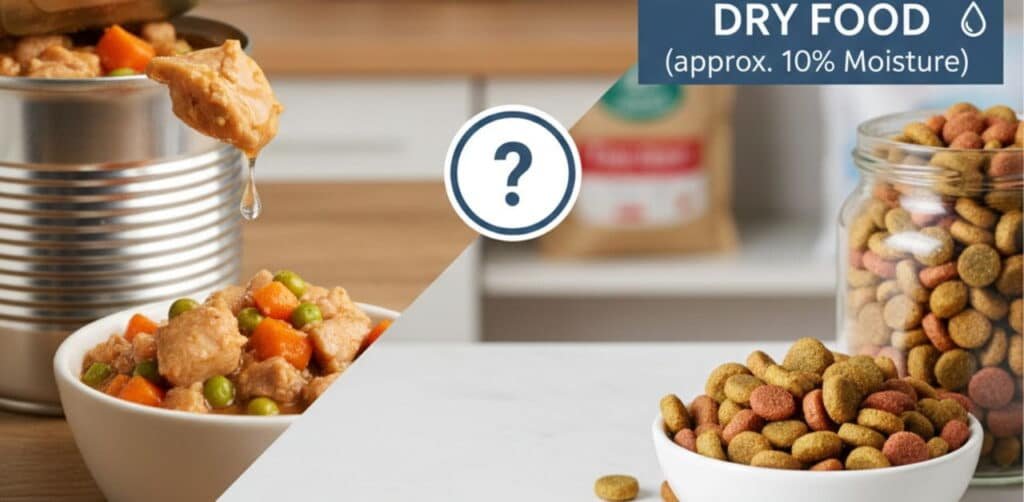
At first glance, the difference is moisture. Dry food (kibble) typically contains about 10% water, while wet food (canned) boasts a staggering 75% to 80% moisture content. But the differences go much deeper into calories, ingredients, and how they affect your cat’s biology.
The Hydration Hero
Most veterinarians, including experts from PetMD and Bond Vet, emphasize that cats have a low “thirst drive.” Evolutionarily, cats descended from desert dwellers who obtained most of their water from their prey.
The Benefits of Wet Food:
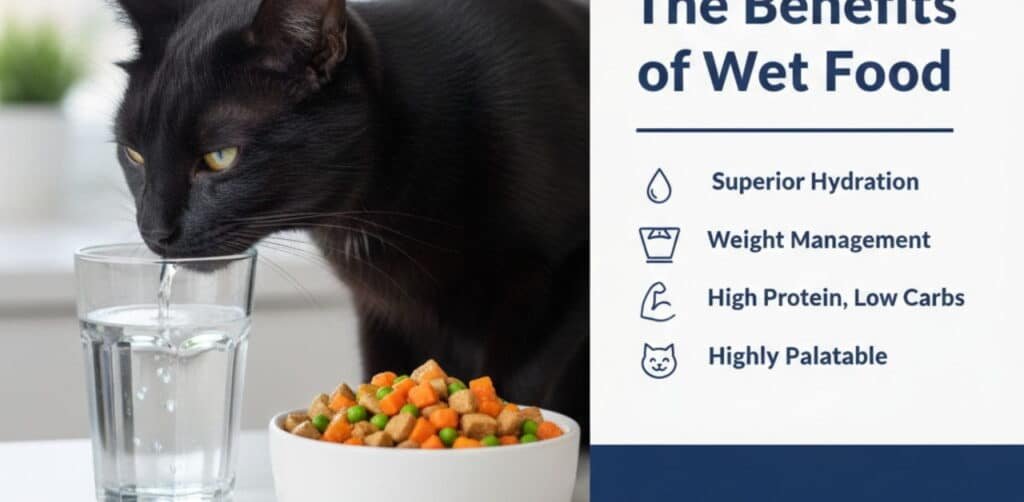
- Superior Hydration: High moisture content is vital for preventing kidney disease and Urinary Tract Infections (UTIs), which are common in domestic cats.
- Weight Management: Wet food is generally lower in calories by volume compared to dry food. The high water content helps cats feel full faster, making it a game-changer for obese cats.
- High Protein, Low Carbs: Most premium wet foods mimic a cat’s natural carnivorous diet better than kibble, which often requires starches to hold its shape.
- Highly Palatable: For “fussy eaters” or senior cats with a declining sense of smell, the rich aroma of wet food is irresistible.
The Convenience King
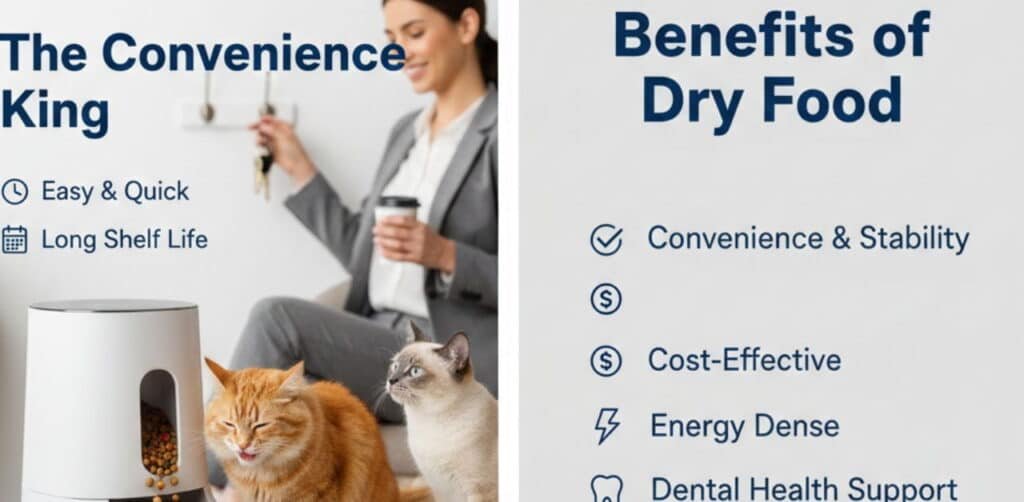
Dry food is the most popular choice across the US primarily due to its affordability and ease of use. But is it actually good for your cat?
The Benefits of Dry Food:
- Convenience and Stability: You can leave dry food out for “free-feeding” without worrying about it spoiling quickly. This is perfect for busy pet owners.
- Cost-Effective: On a per-meal basis, dry food is significantly cheaper than canned options, allowing you to provide high-quality nutrition on a budget.
- Energy Dense: For active cats or growing kittens, the high caloric density of kibble provides the essential energy they need to thrive.
- Dental Health (The Myth vs. Fact): Some dry foods are specifically formulated to reduce plaque and tartar. However, standard kibble often crumbles too quickly to provide significant dental benefits.
A Head to Head Comparison
| Feature | Wet Cat Food | Dry Cat Food |
| Moisture Content | High (75-80%) | Low (10%) |
| Shelf Life | Short (once opened) | Long |
| Price | Premium/Expensive | Budget-friendly |
| Plaque Control | Minimal | Moderate (if specialized) |
| Portion Control | Easy (pre-portioned) | Easy to overfeed |
Critical Health Considerations
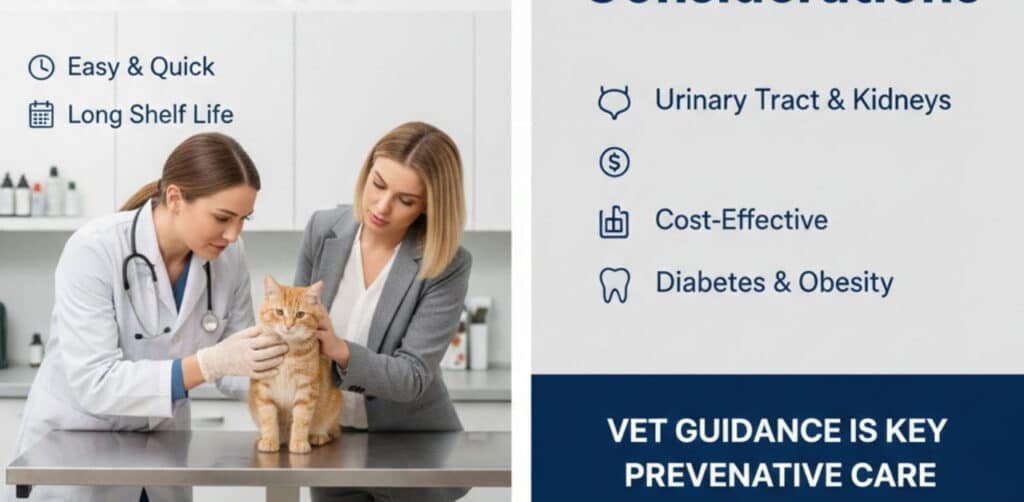
When choosing between wet and dry, you must consider your cat’s specific health profile.
Urinary Tract and Kidney Health
According to Purina and Blue Buffalo, cats prone to crystals or chronic kidney disease (CKD) almost always require a wet food diet. The extra water flushes the kidneys and dilutes urine, which is a life-saving benefit for many male cats who are prone to urinary blockages.
Diabetes and Obesity
Dry food is often higher in carbohydrates. For a diabetic cat, a low-carb wet food diet is often mandatory to manage blood glucose levels. If your cat is gaining weight, switching to scheduled wet food feedings can show proven results in weight loss.
Dental Care
Many owners believe dry food “scrapes” the teeth clean. While some veterinary-authorized dental diets do this, most cats swallow kibble whole or it shatters instantly. For optimal dental health, professional cleanings and teeth brushing are more effective than relying solely on dry food.
The Best of Both Worlds
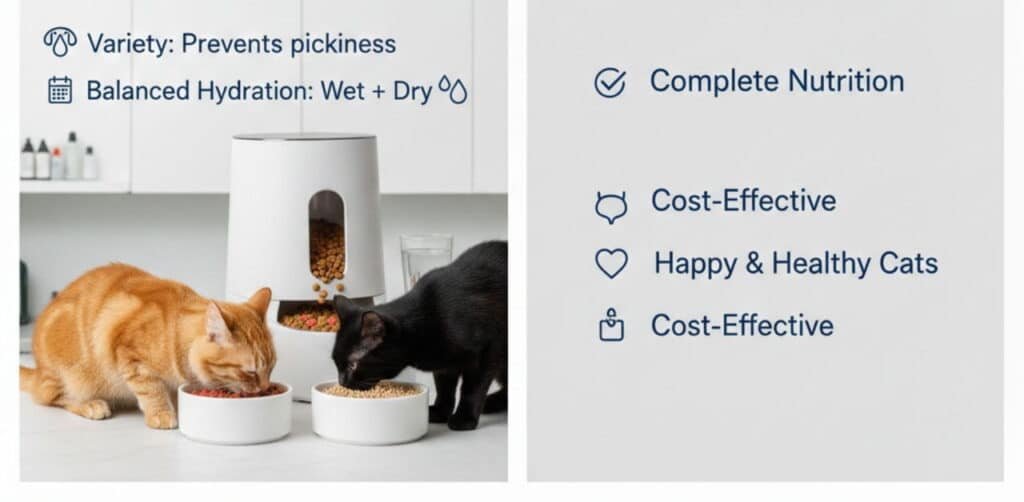
Can’t decide? You don’t have to! Many US veterinarians recommend a mixed feeding approach. This involves serving wet food for breakfast and dinner while leaving a measured amount of dry food for snacking during the day.
Why Mixed Feeding is a Winning Strategy:
Variety: It prevents your cat from becoming “addicted” to one texture, which is crucial if they ever need to switch diets for medical reasons later in life.
Balanced Hydration: They get the moisture from the wet food and the energy density of the dry food.
Affordability: You can stretch your budget by using dry food as a filler while still providing the essential nutrients found in canned food.
Expert Tips for Transitioning Your Cat’s Diet
Cats are notorious for being “neophobic” (afraid of new things). If you are switching from dry to wet, or vice-versa, follow these expert-recommended steps:
The 7-Day Rule: Mix a small amount of the new food with the old food. Gradually increase the ratio over a week to avoid stomach upset.
Temperature Matters: If your cat is hesitant about wet food, try warming it up slightly in the microwave to release the aromas.
Don’t Leave Wet Food Out: Wet food should not sit out for more than 30–60 minutes, as it can attract bacteria and pests.
Which Should You Choose?
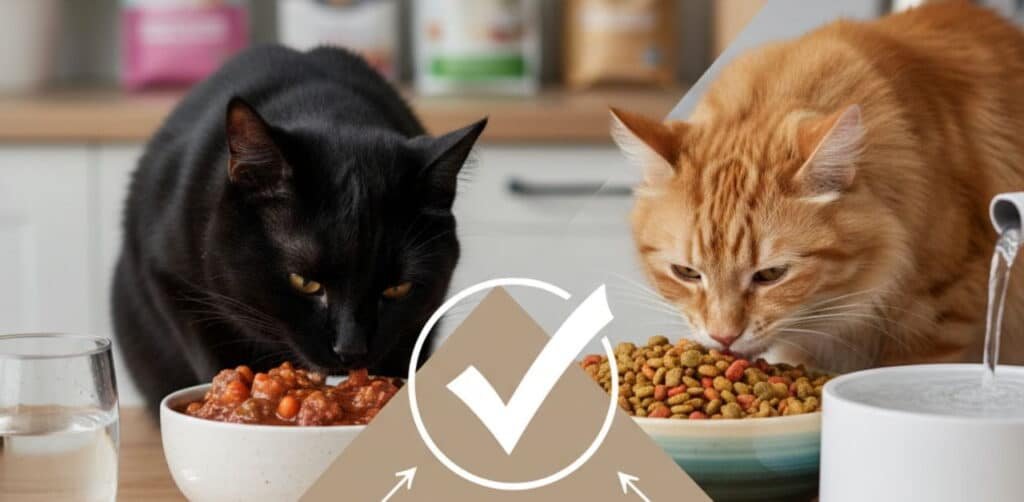
So, is wet food better than dry?
If your budget allows, wet food is often the superior choice for long-term health, particularly for hydration and weight management. However, high-quality dry food is a perfectly healthy option for many cats, especially when supplemented with plenty of fresh water or a cat water fountain.
The Bottom Line: Look for a “Complete and Balanced” label from AAFCO (Association of American Feed Control Officials). Whether you choose the convenience of dry or the nutritional richness of wet, the best food is the one that keeps your specific cat healthy, active, and happy.
Frequently Asked Questions (FAQs)
Q: Can cats live on dry food only?
A: Yes, but you must ensure they drink plenty of water. A cat water fountain can encourage drinking to compensate for the lack of moisture in the kibble.
Q: Is wet food bad for a cat’s teeth?
A: Not necessarily. While it doesn’t provide the “crunch” of dry food, it doesn’t actively cause decay. Regular dental checkups are vital regardless of diet.
Q: Why is wet food more expensive?
A: It contains higher-quality protein sources and requires more expensive packaging and processing to remain shelf-stable without heavy preservatives.
Final Thoughts

Choosing between wet and dry cat food is a pivotal part of being a responsible pet owner. By understanding the unique benefits of each, you can provide a diet that helps your feline friend live a long, vibrant life.