
Have you ever looked at your feline friend and wondered, “How old are you really?” We often hear the old wives’ tale that one cat year equals seven human years. However, if you have ever seen a one-year-old cat, you know they aren’t acting like a seven-year-old child—they are more like energetic teenagers!
Understanding your cat’s true age is essential for providing the best possible care. Whether you’ve just adopted a “teenage” rescue or you’re caring for a “senior” companion, this complete guide and cat age chart will unlock the secrets of feline aging.
The Myth of the “Seven-Year Rule”
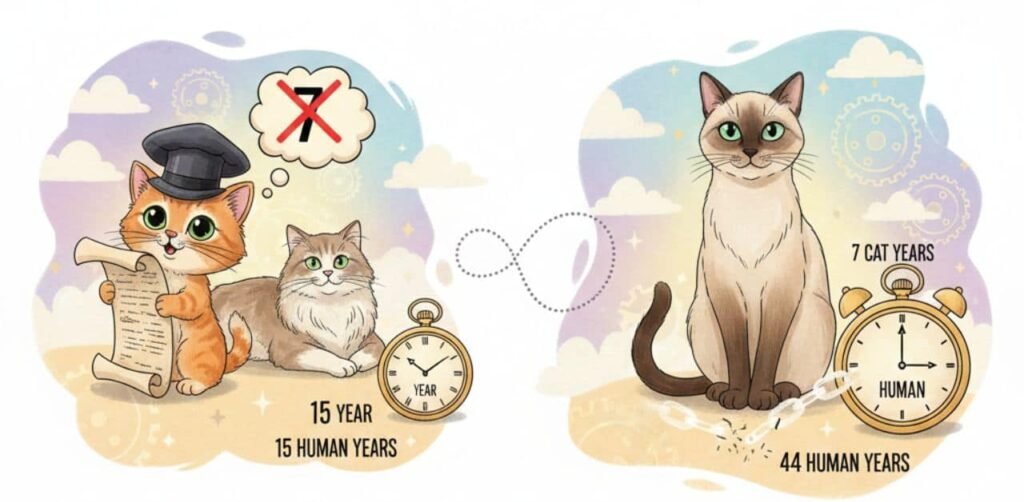
For decades, pet owners used a simple mathematical formula: multiply the cat’s age by seven. While this is easy to remember, it is scientifically inaccurate.
Cats age incredibly fast during their first two years of life. A one-year-old cat is roughly equivalent to a 15-year-old human, and by their second birthday, they have reached the physical maturity of a 24-year-old person. After age two, the aging process stabilizes to approximately four human years for every one calendar year.
The Definitive Cat Age Chart
To help you visualize this stunning transformation, here is a breakdown of how cat years translate to human years.
| Cat Age (Years) | Human Age (Equivalent) | Life Stage |
| 1 month | 1 year | Kitten |
| 3 months | 4 years | Kitten |
| 6 months | 10 years | Kitten |
| 1 year | 15 years | Junior |
| 2 years | 24 years | Junior |
| 3 years | 28 years | Prime |
| 5 years | 36 years | Prime |
| 7 years | 44 years | Mature |
| 10 years | 56 years | Mature |
| 12 years | 64 years | Senior |
| 15 years | 76 years | Senior |
| 18 years | 88 years | Geriatric |
| 20 years | 96 years | Geriatric |
The 5 Life Stages of a Cat
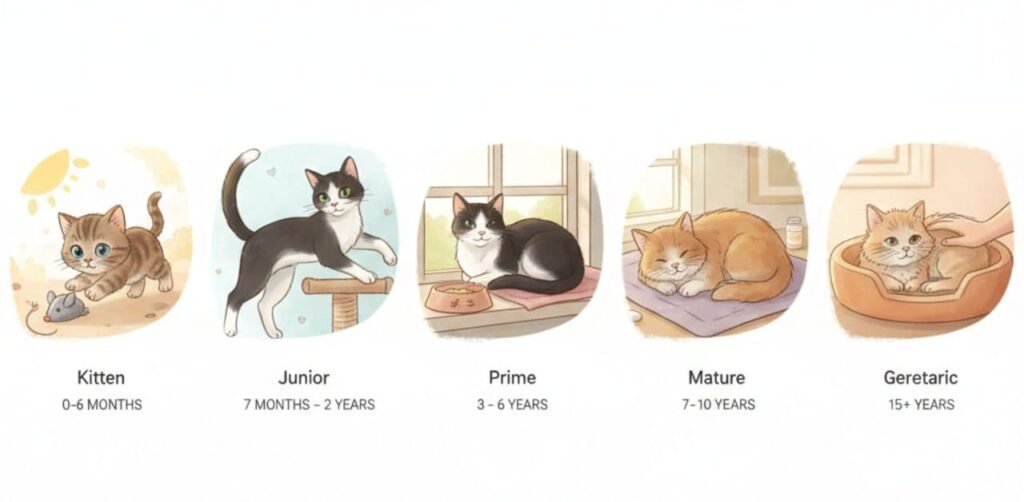
Understanding which stage of life your cat is in is critical for their nutrition, health screenings, and behavioral expectations. According to the American Animal Hospital Association (AAHA), cats move through six distinct stages:
Kitten (0 – 6 Months)
This is the explosive growth phase. Kittens are curious, playful, and physically developing at a lightning pace. This is the best time for socialization and establishing healthy habits.
Junior (7 Months – 2 Years)
Your cat is now a “teenager” and young adult. They reach their full size and learn how to navigate their environment. It’s a pivotal time for neutering/spaying to prevent unwanted behaviors or health issues.
Prime (3 – 6 Years)
These are the “golden years” of health. Your cat is at the peak of their physical fitness. Even though they seem invincible, regular vet checkups are still necessary to ensure they stay on the right track.
Mature (7 – 10 Years)
Just like humans in their 40s and 50s, “mature” cats might start slowing down. You might notice they play less or gain weight more easily. Monitoring their calorie intake is vital during this stage.As a cat matures, especially an Adult Male Cat or Tom Cat, you will notice specific physical changes in their face.
Geriatric (15+ Years)
Many cats live well into their late teens or early 20s. Geriatric cats require specialized care, softer bedding, and perhaps a modified diet to help their aging bodies function.
How to Tell a Cat’s Age: The Expert Signs
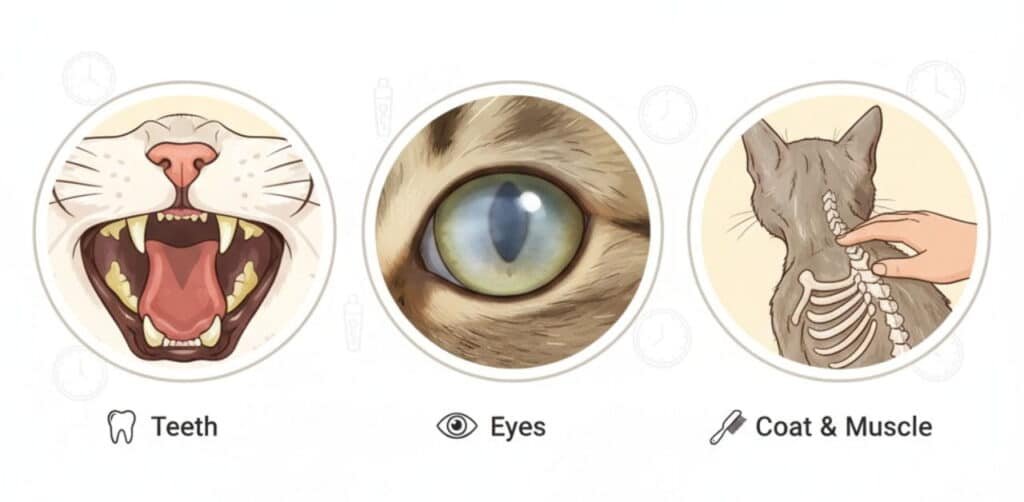
If you’ve rescued a stray and don’t have a birth certificate, don’t worry. Veterinarians use several proven physical indicators to estimate age:
- The Teeth: A kitten’s permanent teeth come in around 4 months. Yellowing or tartar buildup usually suggests a cat is between 3 and 5 years old. Missing teeth usually indicate a senior cat.
- The Eyes: Younger cats have very clear, bright eyes. As cats age (usually around 12 years), their lenses may become slightly cloudy—a condition called lenticular sclerosis.
- The Coat: Young cats have soft, fine fur. Older cats may have thicker, coarser fur that might turn gray in patches. Senior cats also tend to groom themselves less effectively.
- Muscle Tone: Younger cats are muscular and sleek. Older cats may have more prominent shoulder blades or “bony” backs as they lose muscle mass.
3 Proven Ways to Increase Your Cat’s Longevity
Every owner wants their cat to live a legendary life. While genetics play a role, your daily choices are transformative.
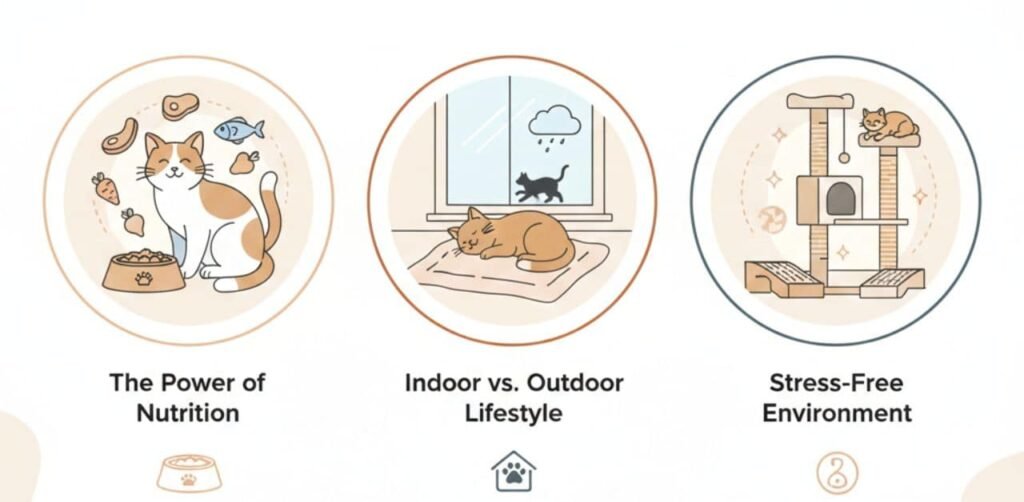
The Power of Nutrition
Avoid “filler” ingredients. High-quality, protein-rich diets are the bedrock of feline health. As your cat ages, switching to a senior-specific formula can protect their kidneys and joints.
Indoor vs. Outdoor Lifestyle
Statistics show that indoor cats live significantly longer (often 15-20 years) compared to outdoor cats (who may only live 2-5 years). Staying indoors protects them from predators, cars, and infectious diseases.
Stress-Free Environment
Chronic stress can weaken a cat’s immune system. Providing vertical space (cat trees), scratching posts, and quiet hiding spots ensures a peaceful and healthy life.
Why Knowing Your Cat’s Age Matters
Knowing where your cat stands on the cat age chart isn’t just about curiosity; it’s about preventative medicine.
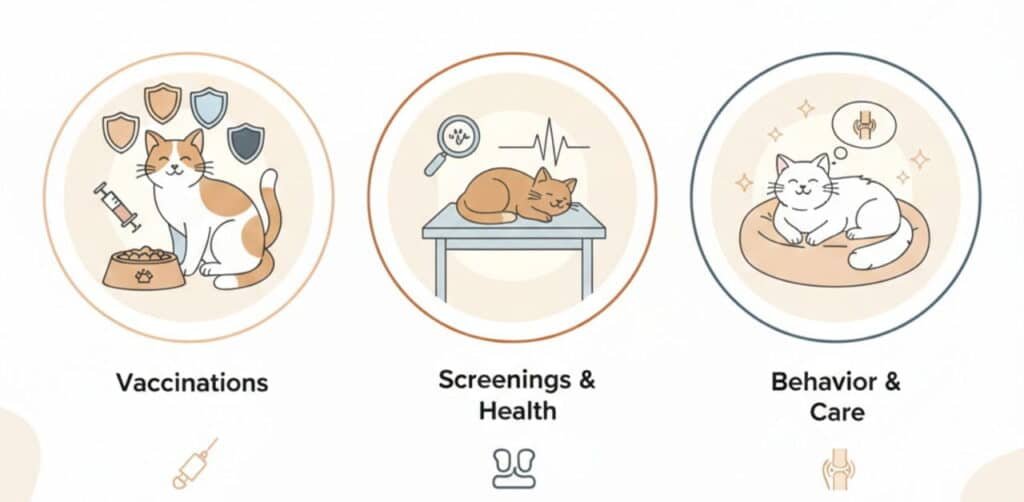
- Vaccinations: Kittens need a different schedule than seniors.
- Screenings: Bloodwork becomes more frequent as a cat enters the “Senior” and “Geriatric” phases.
- Behavior: What looks like “laziness” in a senior cat might actually be joint pain that requires medical attention.
Final Thoughts

Your cat’s journey from a tiny kitten to a wise senior is a remarkable experience. By using our cat age chart and staying observant of the physical signs of aging, you can provide the extraordinary care your feline companion deserves.
Don’t wait until your cat shows signs of slowing down. Take charge of their health today and ensure they remain a happy part of your family for years to come!