
As a cat owner, you know the heartbreak of coming home to find your premium leather sofa or favorite fabric armchair shredded into confetti. It’s frustrating, expensive, and can strain the bond between you and your feline friend.
But here is the undeniable truth: your cat isn’t scratching to be spiteful. They are following a biological blueprint.
If you’ve been searching for a guaranteed way to stop cat scratching furniture, you are in the right place. In this comprehensive guide, we will dive deep into the psychology of scratching and provide effortless, vet-approved strategies to protect your home while keeping your cat happy.
Why Do Cats Do It?
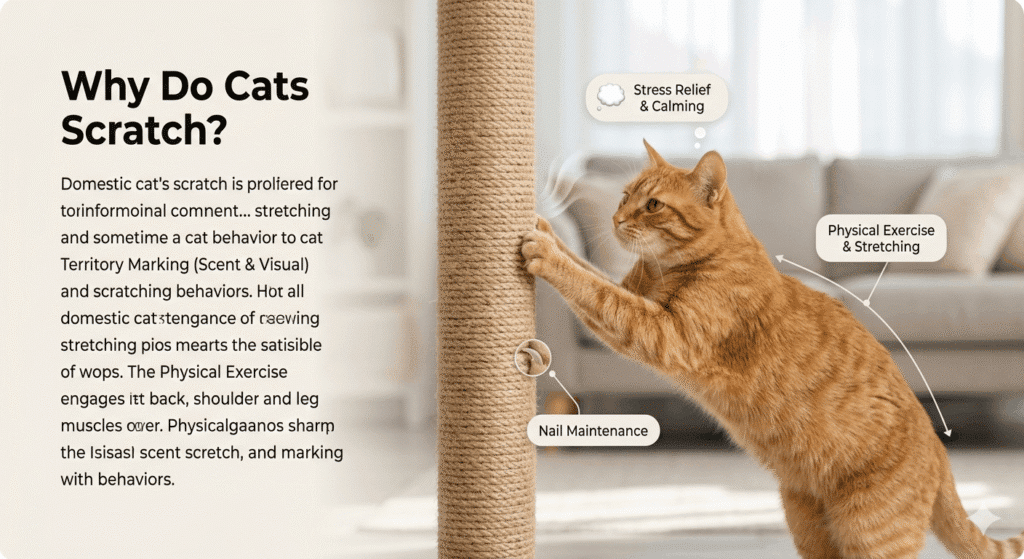
Before you can fix the behavior, you must understand the “why.” According to experts at PetMD and The Humane Society, scratching is a multi-purpose activity for cats:
Territory Marking: Cats have scent glands in their paws. When they scratch, they leave behind both a visual mark and a chemical scent to tell other animals, “This is my space.”
Nail Maintenance: Scratching helps remove the dead outer layer (sheath) of their claws, keeping them sharp and healthy.
Physical Exercise: It’s a full-body workout. It allows cats to stretch their back, shoulder, and leg muscles.
Stress Relief: Much like a human using a stress ball, cats scratch to release pent-up energy or anxiety.
The Power of Placement Providing Superior Alternatives
You cannot stop a cat from scratching entirely; it’s a physical necessity. Instead, you must redirect that energy. The secret to success lies in providing “The Big Three” of scratching surfaces:
Choose the Right Material
Not all scratching posts are created equal. Most cats prefer:
- Sisal Rope: Extremely durable and provides a satisfying “shred.”
- Corrugated Cardboard: An affordable, high reward texture that many cats find irresistible.
- Natural Wood: Mimics the trees they would scratch in the wild.
Vertical vs. Horizontal
Observe your cat. Do they stretch up high on the couch? They need a tall, sturdy vertical post (at least 32 inches high). Do they scratch the carpet? They need horizontal scratching pads.
Strategic Location
Don’t hide the scratching post in a corner. Place it directly next to the furniture they are currently destroying. Once they start using the post consistently, you can slowly move it to your preferred location.
Make Your Furniture “Invisible” and Unappealing
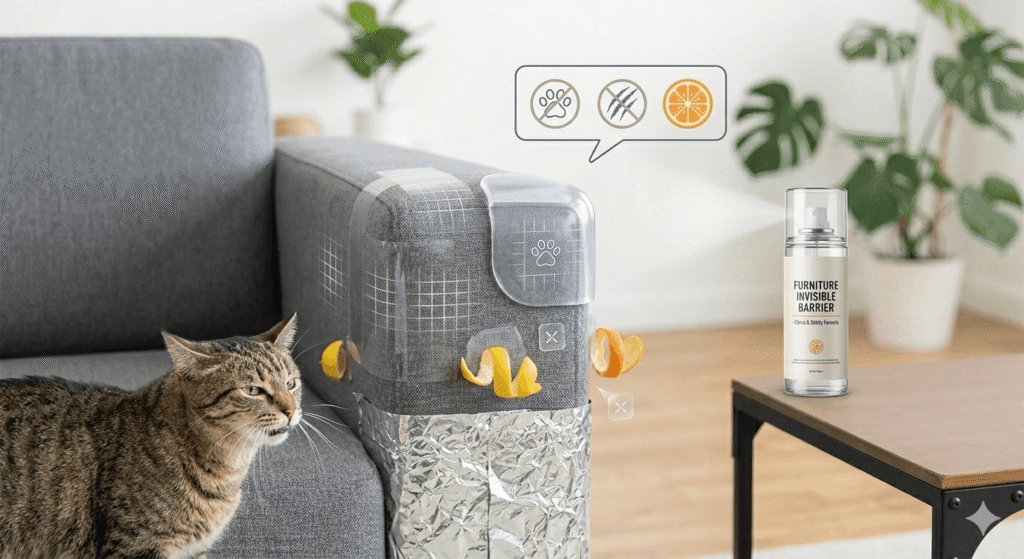
While you provide a better alternative, you must make your furniture a “no-go zone.” Here are effective, non-toxic deterrents:
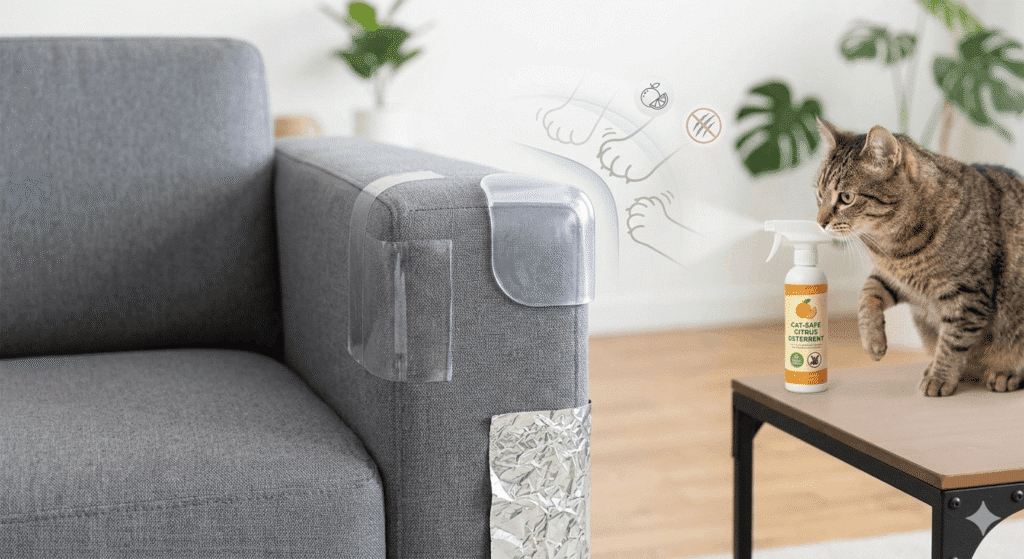
- Double-Sided Sticky Tape: Products like Sticky Paws are essential tools. Cats hate the sticky sensation on their paw pads and will avoid the area instantly.
- Aluminum Foil or Plastic Guards: Covering the corners of your sofa with smooth plastic protectors or crinkly foil makes the surface unsatisfying to touch.
- Citrus Scents: Cats have a highly sensitive sense of smell and generally dislike citrus. Use a cat-safe citrus spray on your furniture to create an invisible barrier.
The Grooming Essential Nail Trimming
As Bond Vet suggests, keeping your cat’s claws blunt is the easiest way to minimize damage.
- Regular Trims: Use specialized cat nail clippers to trim the sharp tips every 2–3 weeks.
- Nail Caps: If trimming isn’t enough, consider Soft Paws (vinyl nail caps). These are glued onto the cat’s claws and last for about 4–6 weeks, preventing any furniture damage even if the cat tries to scratch.
Positive Reinforcement (The Secret Weapon)
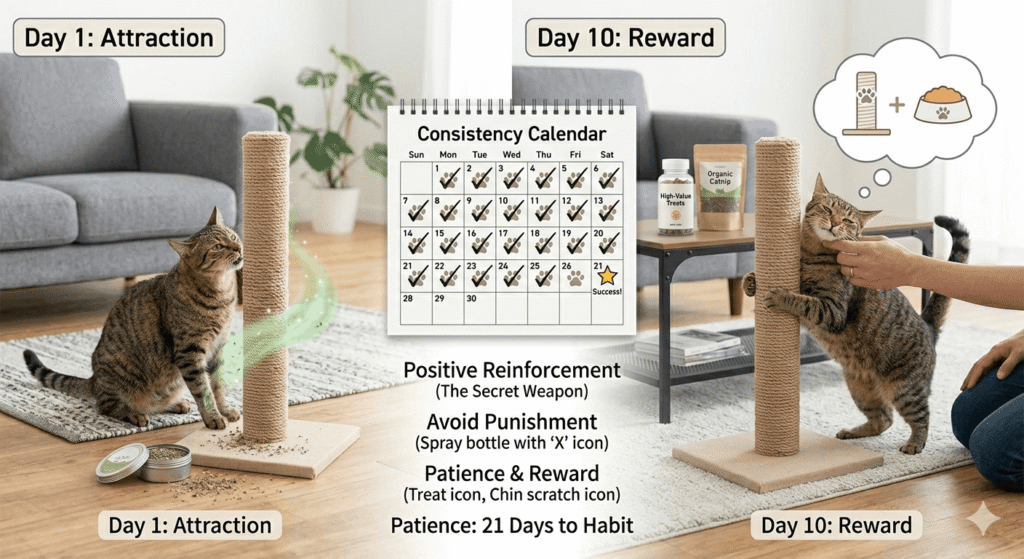
Punishment like shouting or spraying water does not work. It only makes your cat fear you. Instead, use the power of reward:
Catnip Magic: Rub high-quality organic catnip on the new scratching post to make it the most exciting thing in the room.
The “Yes” Reward: Whenever you see your cat use the scratching post, give them a high-value treat or a chin scratch immediately.
Patience is Key: It takes roughly 21 days to form or break a habit. Stay consistent.
Why You Must Avoid “Declawing” at All Costs
Many owners consider declawing as a quick fix, but it is a cruel and outdated practice. Declawing is not just a nail trim; it is a surgical amputation of the last bone of each toe.
As noted by Purina and HumaneWorld, declawing can lead to:
- Chronic pain and arthritis.
- Biting (since they lost their primary defense).
- Litter box issues (their paws become too sore to dig).
Stick to the humane, effective alternatives mentioned above for a happy, healthy cat.
Your 5 Point Checklist to Stop Cat Scratching Furniture
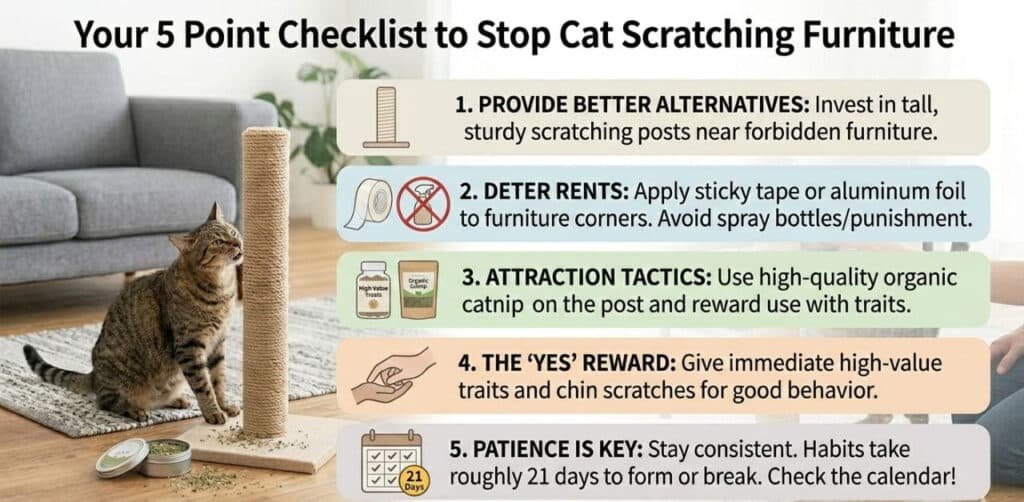
To ensure your home stays pristine, follow this proven blueprint:
Invest in a tall, sturdy sisal post and place it near the “danger zone.”
Apply double-sided tape or plastic guards to the furniture corners.
Scent the area with citrus and the post with catnip.
Trim your cat’s nails bi-weekly.
Praise every good behavior with treats and affection.
A Harmonious Home is Possible

Stopping a cat from scratching furniture isn’t about “breaking” the cat’s spirit; it’s about smart management. By understanding their instincts and providing the right tools, you can enjoy a beautiful home and a happy pet simultaneously.
Don’t wait until your next couch is ruined. Take action today your furniture (and your cat) will thank you!
FAQs (Frequently Asked Questions)
Q: How long does it take to train a cat to stop scratching? A: Most cats adapt to new scratching posts within 1 to 2 weeks if positive reinforcement and deterrents are used correctly.
Q: Can old cats be trained to stop scratching? A: Absolutely! While kittens learn faster, senior cats can be redirected by offering softer materials like cardboard and using catnip to attract them.
Q: What is the best material to protect a couch? A: Microfiber and velvet are generally “cat-resistant” because the weave is too tight for cats to get their claws into. For existing furniture, clear plastic shields are the most effective.
“To keep your cat busy and save your furniture, check out these [best interactive cat toys] that cats are obsessed with.”