
As a devoted cat parent, nothing is more frustrating than watching your feline friend act hungry, meow for food, but then refuse to eat once the bowl is full. You might think they are just being “finicky” or “picky eaters,” but the reality could be far more painful.
Your cat might be suffering from Whisker Fatigue, a silent but significant source of sensory overload that affects millions of household pets.
In this comprehensive guide, we will dive deep into the science of whisker sensitivity, the shocking symptoms you might be missing, and the proven solutions to transform your cat’s mealtime from a stressful chore into a pure delight.
What is Whisker Fatigue? (The Science Behind the Stress)
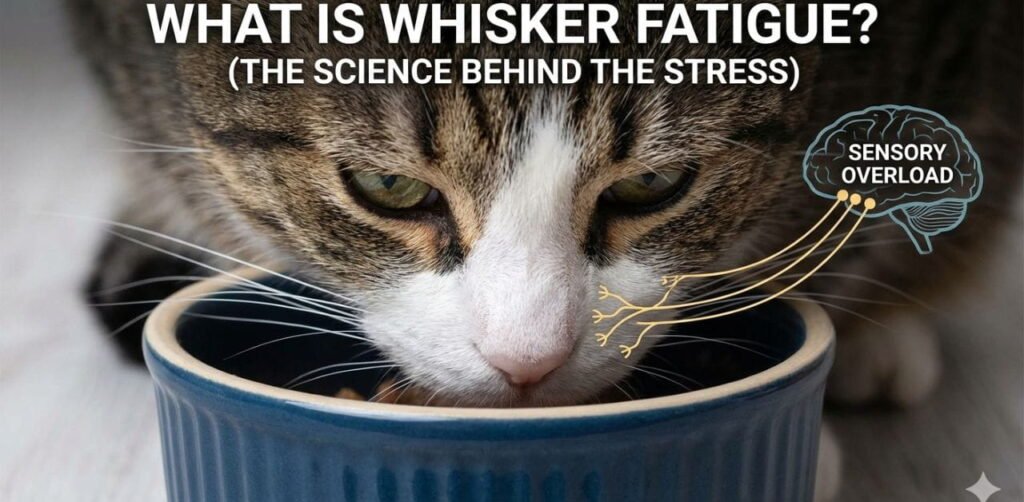
To understand whisker fatigue, we first need to understand the incredible power of a cat’s whiskers. Officially known as vibrissae, these are not just hairs; they are sophisticated sensory organs.
Each whisker is deeply embedded in a follicle packed with nerves. These receptors, called proprioceptors, send constant signals to the brain about the cat’s environment, detecting air currents, nearby objects, and even the size of a space.
Whisker Fatigue occurs when these highly sensitive receptors are overstimulated. This most commonly happens when a cat’s whiskers frequently touch the sides of a deep or narrow food and water bowl. Imagine someone tapping your arm every single second for ten minutes eventually, that light touch becomes irritating, then agonizing. That is exactly what your cat feels.
Common Symptoms of Whisker Fatigue in Cats
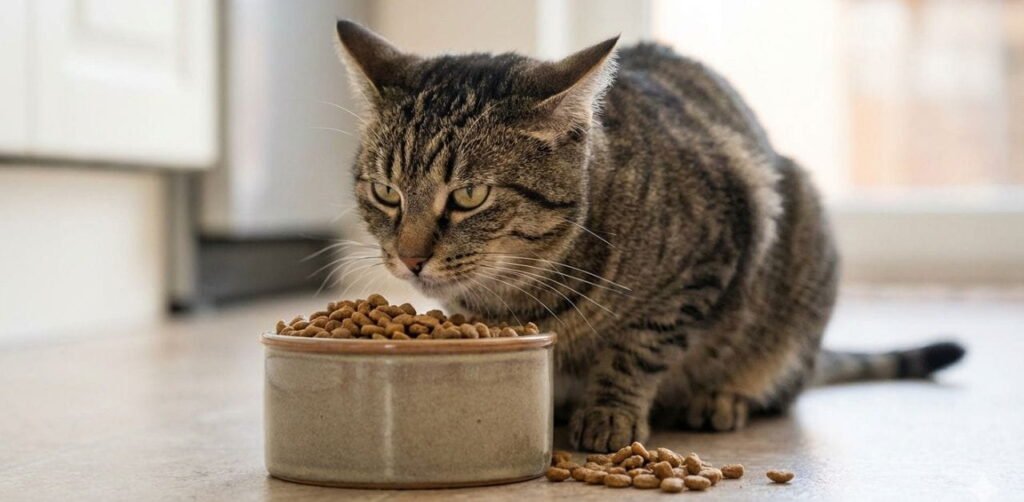
Most owners overlook the signs of whisker stress, dismissing them as behavioral quirks. However, if you notice these red flags, it’s time to take action:
- Pawing food out of the bowl: If your cat eats off the floor instead of the dish, they are trying to avoid whisker contact.
- Acting hungry but refusing to eat: They want the food, but they dread the sensation of the bowl.
- Pacing or hesitating at the feeding station: A clear sign of anxiety.
- Dropping food frequently: Difficulty maintaining a grip on kibble due to the awkward angle required to protect their whiskers.
- Aggression or irritability during mealtime: If your cat growls or swats while eating, they are likely in sensory overload.
Why Standard Cat Bowls Are the Enemy
Most traditional cat bowls sold in big-box stores are designed for human convenience (to prevent spills) rather than feline comfort. These deep, high-walled dishes are the primary cause of whisker fatigue.
When a cat reaches deep into a narrow bowl to get the last bits of kibble, their whiskers are forced to bend and rub against the edges. This constant friction causes a “sensory storm” in their nervous system. Over time, this can lead to chronic stress, weight loss, and even digestive issues.
Choosing Whisker Friendly Bowls
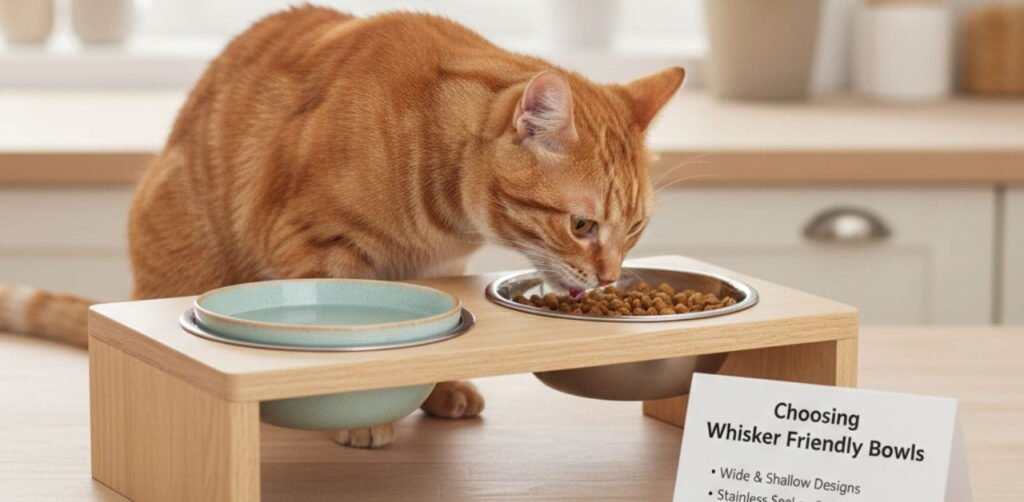
The fix is surprisingly effortless and affordable. By simply upgrading your feeding station, you can instantly improve your cat’s quality of life.
Wide and Shallow Designs
The best cat bowls for whisker fatigue are those that allow a cat to eat without their whiskers touching the sides. Look for “saucer-style” dishes or wide, oval shapes.
Stainless Steel or Ceramic Materials
While plastic is cheap, it traps bacteria and can cause “cat acne.” Stainless steel and high-quality ceramic are non-porous, easy to clean, and provide a much more hygienic dining experience.
Elevated Cat Feeders
Adding height to your cat’s meal can also help. An elevated cat bowl reduces neck strain and allows the cat to maintain a more natural posture, further reducing the stress associated with mealtime.
Step by Step Guide to Preventing Sensory Overload
If you want to ensure your cat is living their best, most comfortable life, follow these essential tips:
Ditch the deep bowls: Replace any dish deeper than one inch.
Separate food and water: Cats instinctively prefer their water source to be away from their food to avoid “contamination.” Using a wide cat water fountain can also help prevent whisker fatigue while encouraging hydration.
Monitor behavior: After switching bowls, observe your cat. You will likely see an instant transformation in how much they enjoy their food.
Keep it clean: A clean bowl prevents whisker irritation from dried-on food particles.
The Life Changing Benefits of a Stress-Free Mealtime
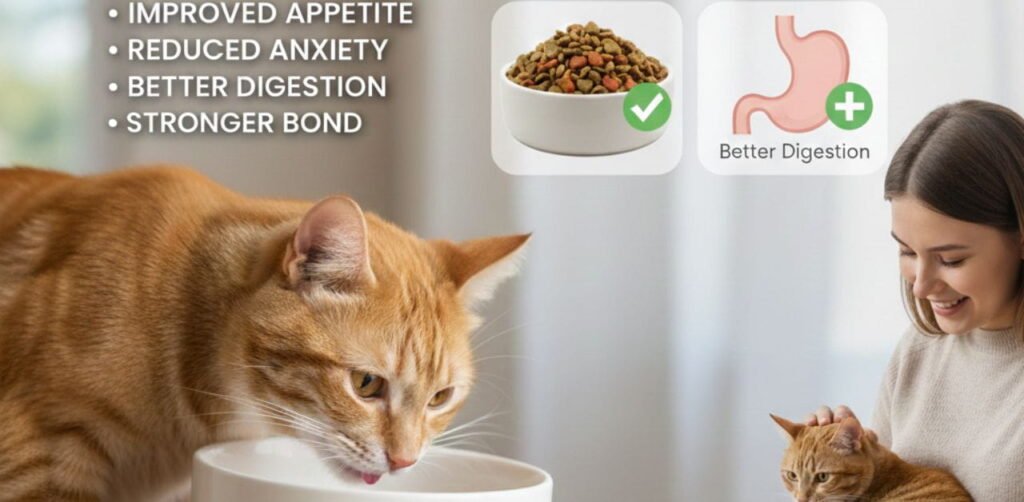
When you solve the problem of whisker fatigue, you aren’t just buying a new dish—you are investing in your cat’s long-term health. Owners who have made the switch report:
- Improved Appetite: Cats finish their meals without hesitation.
- Reduced Anxiety: No more pacing or crying at the food bowl.
- Better Digestion: Less “scarf and barf” behavior because the cat feels relaxed.
- Stronger Bond: A happy, well-fed cat is a more affectionate companion.
Don’t Let Your Cat Suffer in Silence
Whisker fatigue is a real and painful condition, but it is 100% preventable. By recognizing the signs and providing a whisker-friendly environment, you are showing your pet the love and care they deserve.
Your cat relies on you to interpret their silent signals. Don’t wait until they stop eating entirely. Make the switch to a wide, shallow bowl today and watch your feline friend flourish.