
Every cat owner knows the “look.” You reach for the nail clippers, and suddenly, your sweet, purring companion turns into a furry whirlwind of teeth and talons. If you’ve ever walked away from a grooming session looking like you fought a briar patch, you aren’t alone. Learning how to trim cat nails without getting scratched is a vital skill that saves your furniture, your skin, and your relationship with your feline friend.
In this comprehensive guide, we’ll break down the psychology of cat paws, the tools you need, and a step-by-step “no-scratch” strategy to make nail day a breeze.
Why Do Cats Hate Having Their Nails Trimmed?
Before we dive into the technique, it’s important to understand the “why.” To a cat, their claws are their primary tools for defense, climbing, and hunting. When you grab their paw, you are effectively disarming them. Furthermore, many cats have had a bad experience “If your cat is already prone to Stress or Anxious behavior, you must take extra care during nail trimming.where their “quick” (the sensitive blood vessel inside the nail) was nipped, causing pain.
The secret to success isn’t force; it’s desensitization and trust.
Essential Gear: What You’ll Need
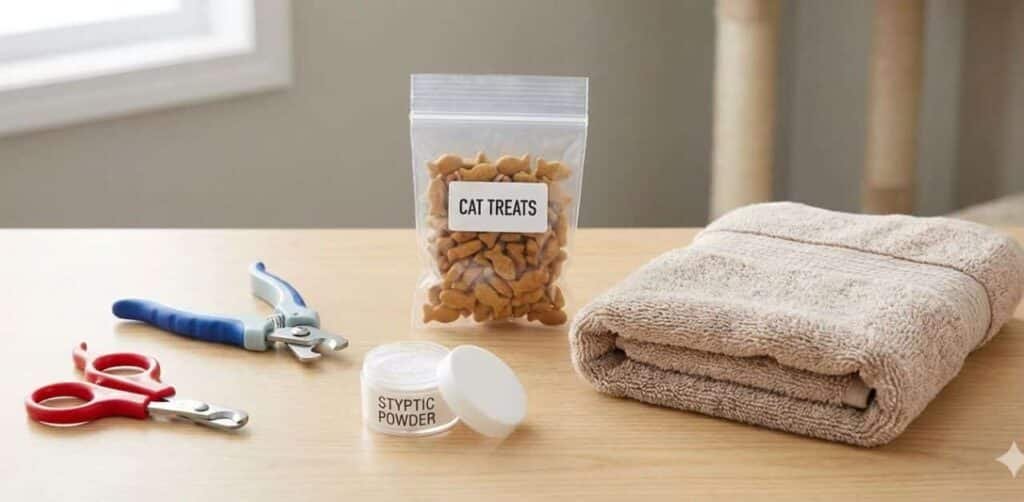
Don’t use human nail clippers! Cats have rounded nails that can crush or splinter if you use flat blades. To ensure safety, gather these items:
Scissor-style Clippers: Best for beginners as they offer better control.
Guillotine Clippers: Great for thicker nails but require more precision.
Styptic Powder: Essential for stopping bleeding if you accidentally cut the quick. (Cornstarch works in a pinch).
High-Value Treats: Think Churu, tuna, or freeze-dried chicken.
A Large Towel: For the famous “Cat Burrito” method.
The Pre-Trim Warmup (Desensitization)
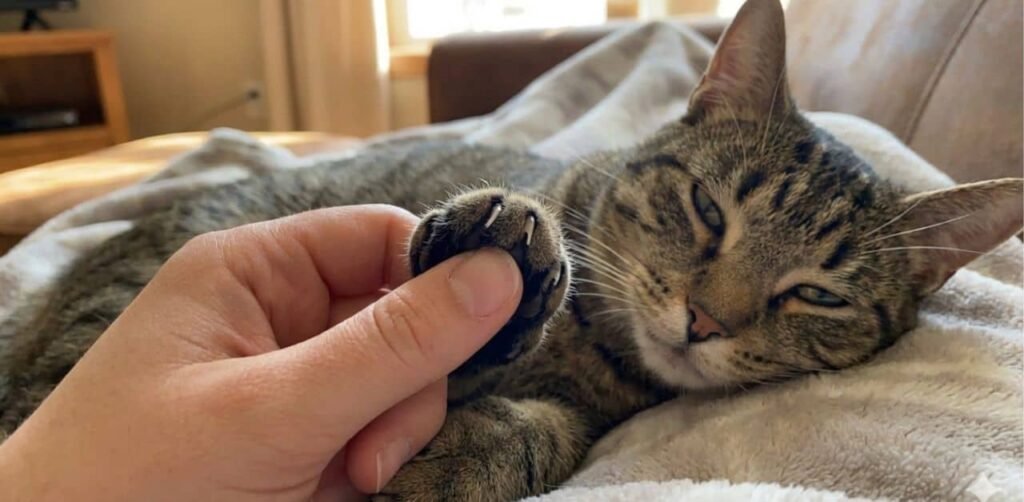
You can’t just jump into a trim. You need to prepare your cat days in advance.
Paw Handling
While your cat is relaxed or sleepy, gently massage their paws. Don’t bring out the clippers yet. Just get them used to the sensation of their toes being touched and extended. If they pull away, let go and try again later. Reward them with a treat every time they allow you to hold a paw for more than five seconds.
The Sound of Success
Cats are sensitive to noise. Click the clippers near them while feeding them a treat so they associate the “click” sound with something positive.
How to Trim Cat Nails Without Getting Scratched (Step-by-Step)
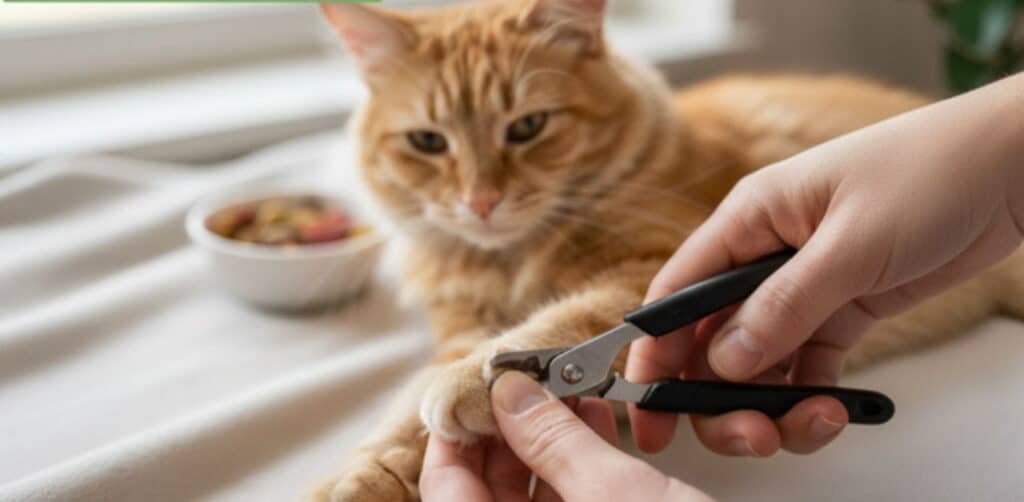
Now that your cat is somewhat comfortable with paw handling, it’s time for the actual process. Follow these steps to keep the blood—yours and theirs—where it belongs.
Step 1: Choose the Right Time
Never try to trim nails when your cat is in “zoomie” mode or looking out the window at birds. The best time is after a heavy meal or a long play session when they are lethargic and sleepy.
Step 2: The “Purrito” Technique
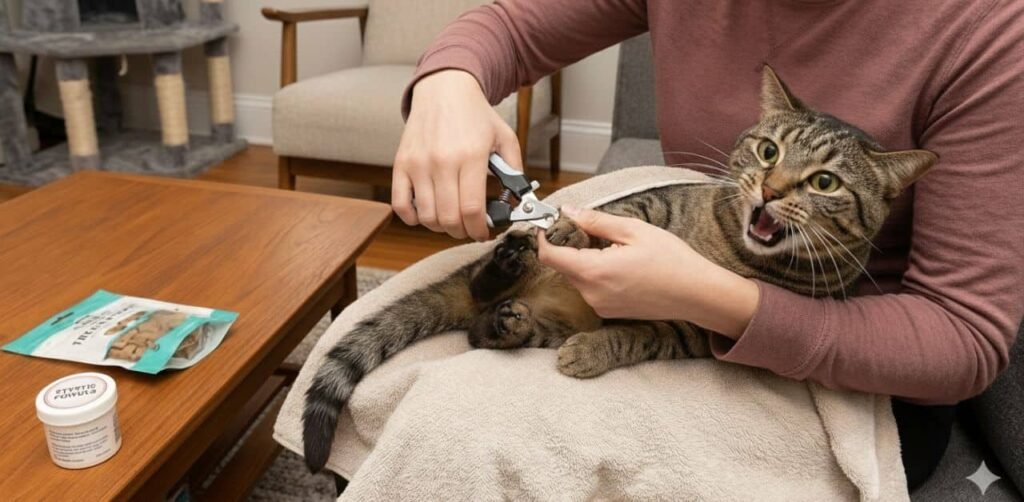
If your cat is particularly wiggly, use a towel. Wrap your cat snugly (but not too tightly) in a towel, leaving only one paw exposed at a time. This limits their ability to scratch or bolt. This is the most effective way to learn how to trim cat nails without getting scratched if you have a high-energy pet.
Step 3: Identify the Quick
Press the paw pad gently to extend the claw. You will see a pinkish area inside the translucent nail. This is quick. It contains nerves and blood vessels. Never cut into the pink area. Aim for the clear, hooked tip of the nail. It is better to cut too little than too much.
Step 4: The One-Nail Rule
Don’t feel pressured to do all 18 claws at once (10 front, 8 back). If your cat gets stressed after two nails, stop. Give them a treat and try again in an hour or the next day. Making it a low-stress, short event prevents future aggression.
Advanced Tips for Difficult Cats
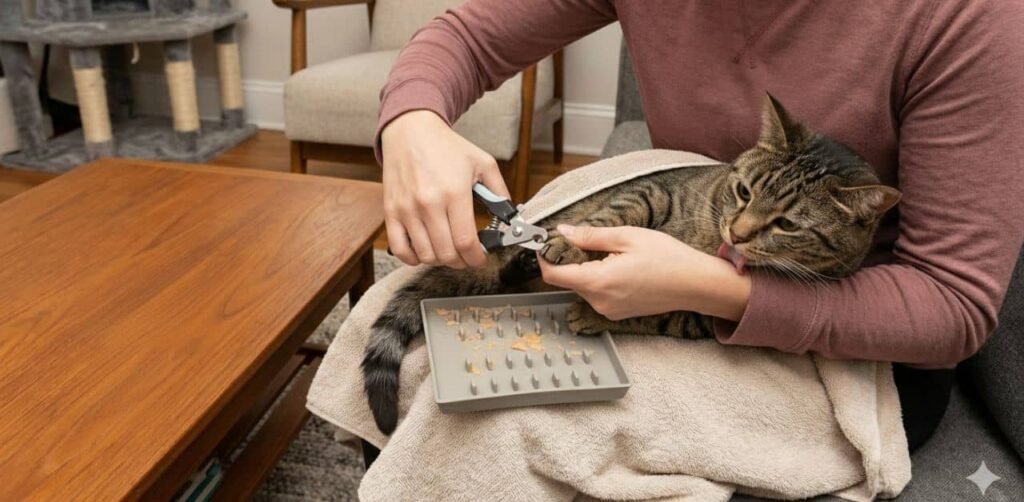
Sometimes, even with the best intentions, a cat remains stubborn. Here are some “pro-tips” from vet technicians:
- The Distraction Method: Smear a little bit of lickable treat (like Churu) on a silicone mat or even the table. While the cat is busy licking, you can usually clip 3-4 nails before they even realize what’s happening.
- The “Scruff” (Use Sparingly): In extreme cases, a gentle hold on the scruff of the neck can induce a natural calming reflex, but most modern behaviorists recommend the towel method first.
- Feliway Spray: Using a calming pheromone spray on your grooming towel can significantly reduce feline anxiety.
Common Mistakes to Avoid
- Rushing: If you are stressed, your cat will be stressed. Take deep breaths.
- Yelling: Never punish your cat for scratching during a trim. This will only make them fear the process more next time.
- Cutting the Quick: If you do hit the quick, don’t panic. Apply styptic powder immediately with firm pressure. It will stop bleeding in seconds.
When to Call a Professional
If your cat becomes genuinely aggressive—hissing, growling, or attempting to bite—stop immediately. Some cats have “grooming trauma” that requires a professional groomer or a vet who can provide mild sedation. There is no shame in asking for help to keep both you and your pet safe.
Conclusion
Understanding how to trim cat nails without getting scratched is all about patience and positive reinforcement. By turning a scary chore into a “treat-filled bonding session,” you remove the fear factor. Remember: start slow, use the right tools, and always keep the treats flowing. Within a few months, your cat might actually come running when they hear the clippers—okay, maybe that’s a stretch, but they certainly won’t run away!