
Ensuring your feline companion leads a long, vibrant life involves more than just premium kibble and cozy nap spots. One of the most vital yet overlooked aspects of feline wellness is dental hygiene. Periodontal disease affects a staggering 70-80% of cats by age three, leading to painful infections, tooth loss, and even systemic issues like heart or kidney disease.
Learning how to brush cat teeth is a game-changing skill that can save you thousands in veterinary bills and, more importantly, spare your pet from silent suffering. This comprehensive guide breaks down the process into simple, stress-free steps to help you master feline dental care like a pro.
Why Feline Dental Care is Non-Negotiable

In the wild, a cat’s diet of prey helps scrape away plaque. However, domestic cats eating soft or processed foods are prone to rapid tartar buildup. Without intervention, plaque hardens into tartar within 24 to 48 hours.
Brushing is the gold standard for oral health. It disrupts the biofilm of bacteria, preventing gingivitis and keeping their breath fresh. If you want a stunning transformation in your cat’s overall health, starting a dental routine is the most effective way to achieve it.
The Ultimate Toolkit

Before you begin, you must have the right tools. Never use human toothpaste, as it contains fluoride and xylitol, which are toxic and potentially fatal to cats.
Feline-Specific Toothpaste: These come in poultry, beef, or seafood flavors to make the experience rewarding.
Finger Brushes or Specialized Pet Toothbrushes: Finger brushes offer more control for beginners, while long-handled brushes help reach the back molars.
Soft Gauze: A great starting point for kittens or highly sensitive cats.
High-Value Rewards: Have their favorite treats ready to create a positive association.
How to Brush Cat Teeth Without the Struggle

Patience is your most powerful asset. Do not expect to brush every tooth on the first day. Follow this proven sequence to ensure success:
The Flavor Introduction
Start by letting your cat lick a small amount of flavored pet toothpaste off your finger. Do this for 2-3 days without attempting to touch their mouth. You want them to view the toothpaste as a delicious treat rather than a medicine.
Desensitization to Touch
Gently lift your cat’s lips to expose the teeth and gums. Rub your bare finger along the outer surface of their teeth in a slow, circular motion. If they remain calm, reward them immediately. This builds the essential trust needed for the actual brushing.
Introducing the Brush
Apply a small amount of toothpaste to the brush or gauze. Let the cat sniff and lick the brush. Once they are comfortable, gently angle the brush at a 45-degree angle toward the gum line. Focus on the outer surfaces of the upper teeth first, as this is where tartar builds up most aggressively.
The Full Cleanse
Once your cat is habituated, spend about 30 seconds on each side. Focus on the large cheek teeth (premolars and molars) and the canines. You do not need to worry about the inside surface of the teeth, as the cat’s tongue naturally keeps those areas cleaner.
5 Expert Tips for a Stress-Free Experience

- Timing is Everything: Choose a time when your cat is relaxed, perhaps after a meal or a long play session. Avoid brushing when they are in a high-energy “zoomie” phase.
- The “Burrito” Method: If your cat is wiggly, gently wrap them in a soft towel to keep their paws tucked away, ensuring safety for both of you.
- Short Bursts: It is better to have a successful 10-second session than a stressful 2-minute struggle.
- Consistency Wins: Brushing daily is ideal. If that is not possible, aim for at least three times a week to prevent plaque from calcifying into tartar.
- Positive Reinforcement: Always end the session with praise, head scratches, or a treat.
Common Mistakes to Avoid
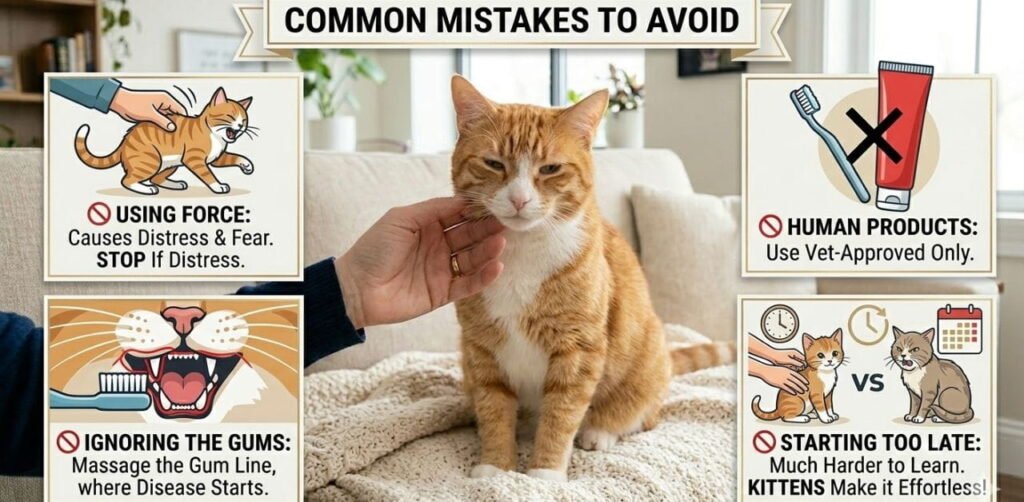
To ensure your dental routine is effective and safe, steer clear of these pitfalls:
- Using Force: If your cat becomes distressed, stop immediately. Forcing the issue can lead to a permanent fear of the toothbrush.
- Human Products: As mentioned, human toothpaste and mouthwashes are dangerous. Stick to vet-approved supplies.
- Ignoring the Gums: Dental disease starts at the gum line. Ensure you are gently massaging the area where the tooth meets the gum.
- Starting Too Late: While older cats can learn, starting when they are kittens makes the process effortless in the long run.
Professional Alternatives for Stubborn Cats

Sometimes, despite your best efforts, a cat may refuse the brush. If you find yourself in this position, don’t lose hope. There are brilliant alternatives that still offer protection:
Dental Gels: These contain enzymes that break down plaque and can be applied to the gums with a finger or even licked off a paw.
Water Additives: Odorless and tasteless liquids that you add to their water bowl to inhibit bacterial growth.
Dental Diets & Treats: Look for the VOHC (Veterinary Oral Health Council) seal. These products are specifically textured to scrape teeth as the cat chews.
Professional Cleanings: Regardless of how well you brush, a professional veterinary cleaning under anesthesia is usually required once a year to reach under the gumline.
A Lifetime of Healthy Purrs

Brushing your cat’s teeth is a transformative habit that defines responsible pet ownership. While it may seem daunting at first, the long-term benefits of a pain-free mouth and fresh breath are extraordinary. By following this step-by-step guide and utilizing the right tools, you are providing your feline friend with a superior quality of life.