
Seeing your beloved feline struggle with digestive issues is heartbreaking for any pet parent. Diarrhea isn’t just a messy inconvenience; it’s a sign that your cat’s internal ecosystem is out of balance. If you are searching for a proven, effective solution, cat probiotics for diarrhea are often the “miracle” fix experts recommend.
In this comprehensive guide, we will dive deep into how these beneficial bacteria work, the best strains for feline health, and how to choose a supplement that actually delivers results.
What Exactly Are Cat Probiotics?
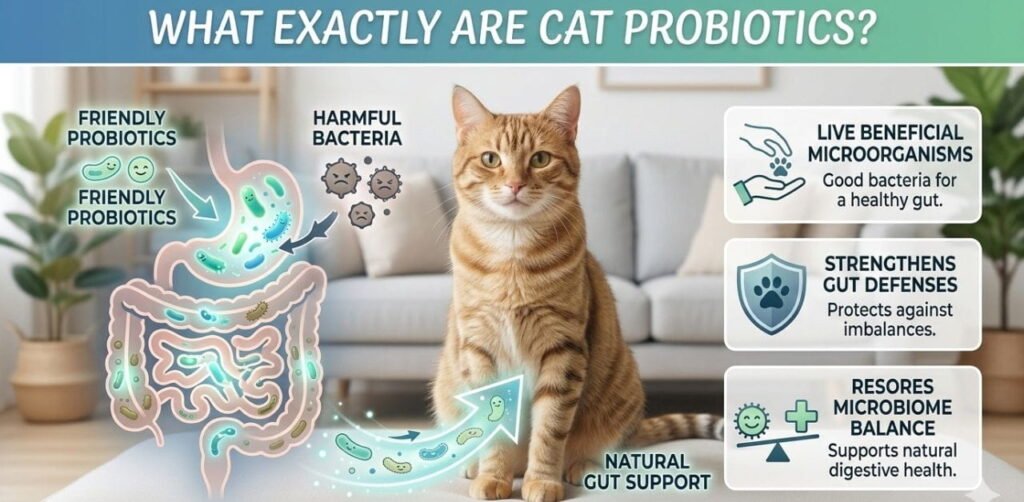
Probiotics are live, beneficial microorganisms—often called “good bacteria”—that live in your cat’s gastrointestinal tract. A healthy cat has a diverse microbiome that helps digest food, produce vitamins, and support the immune system.
However, when “bad” bacteria like E. coli or Salmonella overpopulate the gut, the result is often a bout of watery, frequent stools. Cat probiotics for diarrhea work by reintroducing billions of friendly microbes to overwhelm the bad bacteria and restore peace to the digestive system.
Why Use Probiotics for Feline Diarrhea?
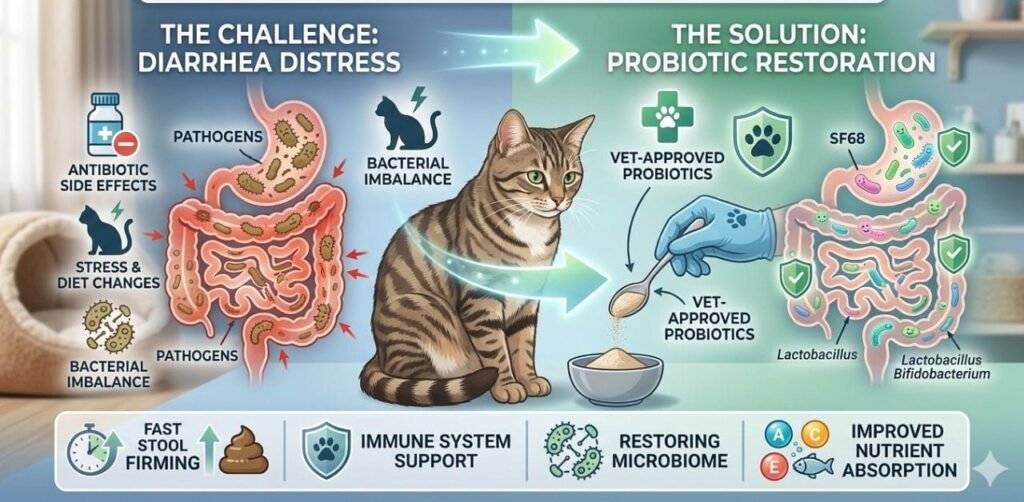
Diarrhea in cats can be triggered by many factors:
- Dietary Indiscretion: Eating something they shouldn’t have.
- Antibiotics: These medications often kill good bacteria along with the bad.
- Stress: Moving houses or new pets can upset a cat’s stomach.
- Chronic Conditions: Such as IBD (Inflammatory Bowel Disease).
Using a high-quality probiotic provides an instant boost to the immune system. Unlike some harsh medications, probiotics are a natural way to firm up stools and reduce the duration of digestive distress.
Top 3 Benefits of Probiotics for Your Cat
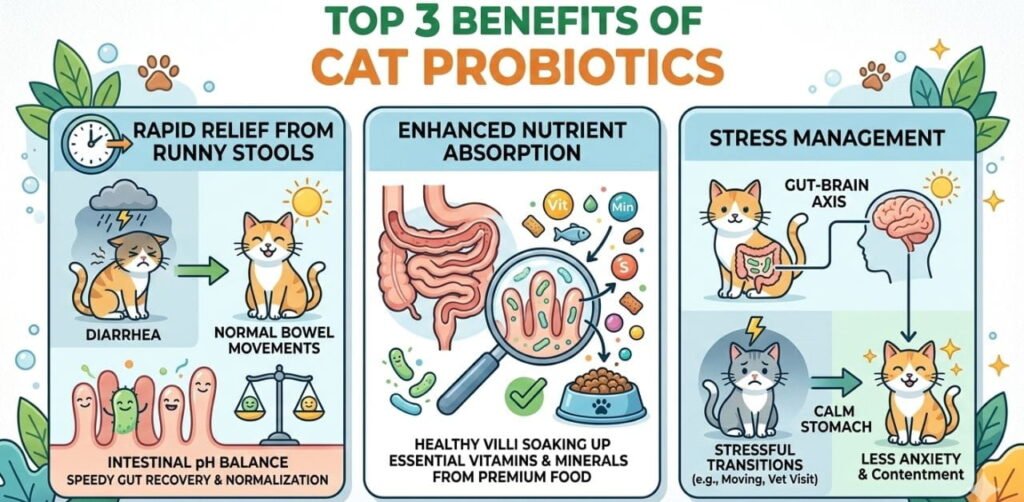
Rapid Relief from Runny Stools
The primary reason owners seek out cat probiotics for diarrhea is speed. Targeted strains can help normalize bowel movements within a few days by balancing the pH level of the intestines.
Enhanced Nutrient Absorption
A damaged gut cannot absorb the essential nutrients from your cat’s premium kibble or wet food. Probiotics ensure that the villi in the intestines are healthy enough to soak up vitamins and minerals.
Stress Management
The gut-brain axis is real in cats too. By keeping the stomach calm, you are literally helping your cat feel less anxious during stressful transitions.
Key Probiotic Strains to Look For
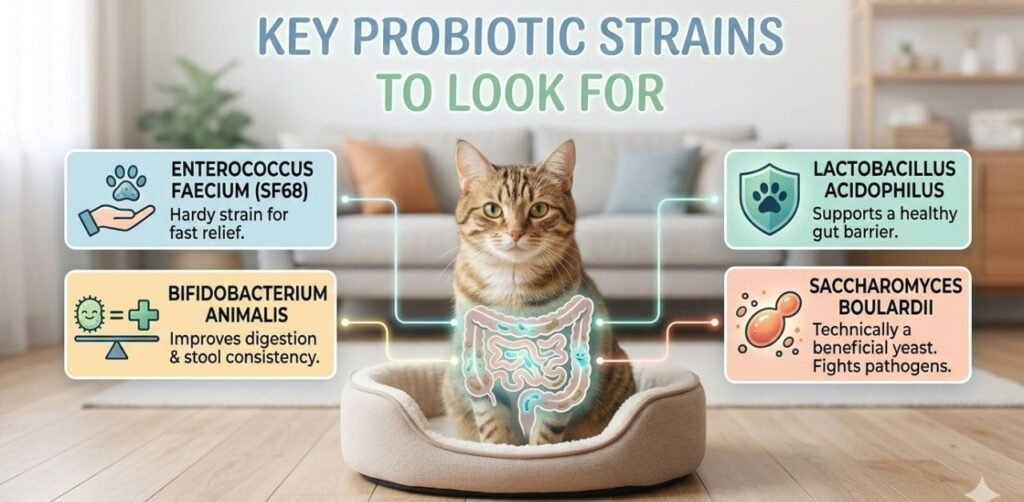
Not all probiotics are created equal. If you want to see guaranteed improvement, look for these specific, scientifically-backed strains on the label:
- Enterococcus faecium (SF68): This is the gold standard in feline probiotics. It is incredibly hardy and has been shown to improve stool quality significantly.
- Bifidobacterium animalis: Excellent for improving overall digestion and reducing bloating.
- Lactobacillus acidophilus: Helps maintain a protective barrier in the gut against pathogens.
- Saccharomyces boulardii: Technically a beneficial yeast, this is incredibly powerful for treating acute diarrhea and antibiotic-associated issues.
How to Choose the Best Probiotic for Your Cat
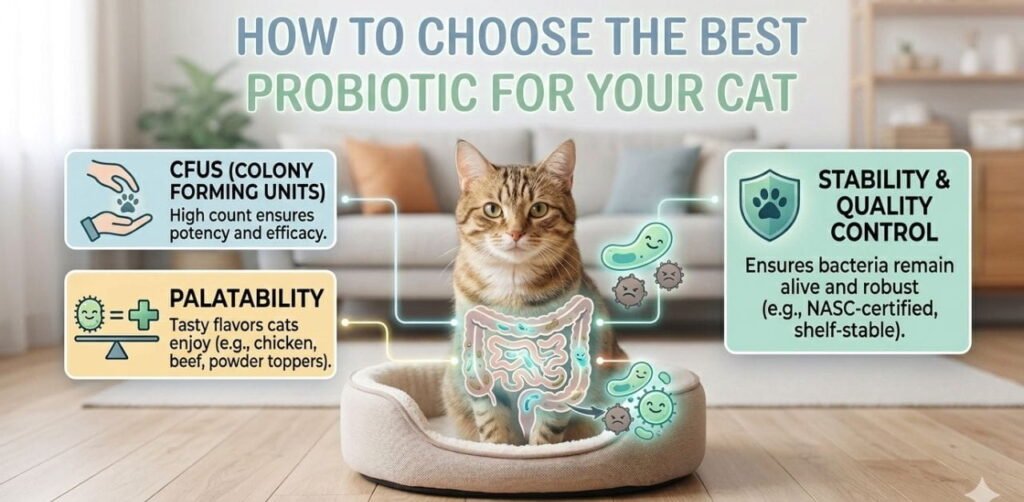
When shopping for cat probiotics for diarrhea in the US market, avoid cheap, generic fillers. Instead, focus on these three critical factors:
CFUs (Colony Forming Units)
CFU indicates the number of live bacteria in each dose. For active diarrhea, look for a supplement providing at least 2 to 5 billion CFUs per serving.
Palatability
We all know cats are picky. The best probiotics come in flavorless powders that you can easily mix into wet food or “savory” flavors like chicken or beef that act as a meal topper.
Stability and Quality Control
Ensure the product is “shelf-stable” and manufactured in a facility that follows strict quality guidelines (like NASC-certified brands). This ensures the bacteria are actually alive when they reach your cat’s stomach.
Probiotics vs. Prebiotics: What’s the Difference?
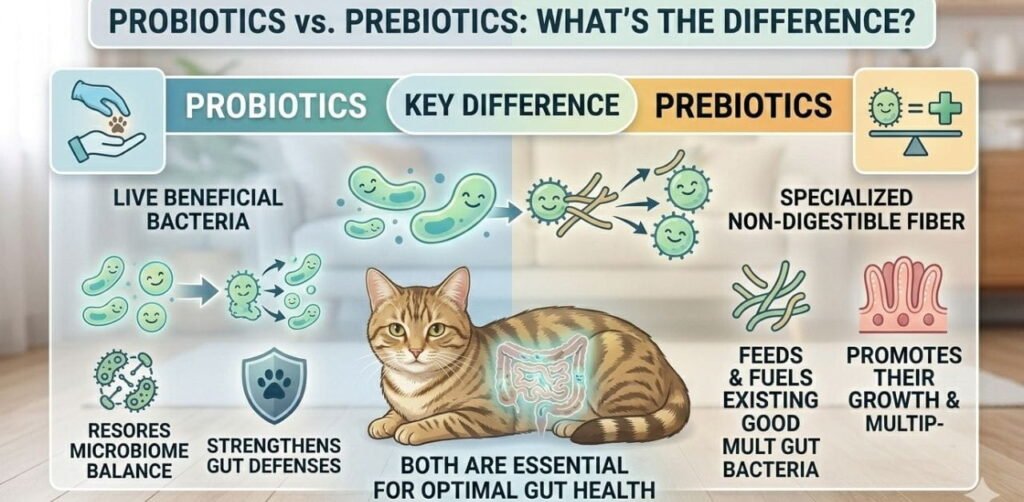
You will often see prebiotics listed on supplement labels. Think of prebiotics as the “food” for the probiotics. Ingredients like Fructooligosaccharides (FOS) help the good bacteria thrive and multiply faster. For the most effective treatment, choose a “synbiotic” supplement that contains both.
When Should You See a Vet?
While cat probiotics for diarrhea are a game-changer, they aren’t a cure-all for serious underlying diseases. You should consult your veterinarian if:
- The diarrhea lasts more than 48 hours.
- You see blood in the stool.
- Your cat is lethargic or vomiting.
- Your cat shows signs of dehydration (tacky gums).
Pro Tips for Administering Probiotics
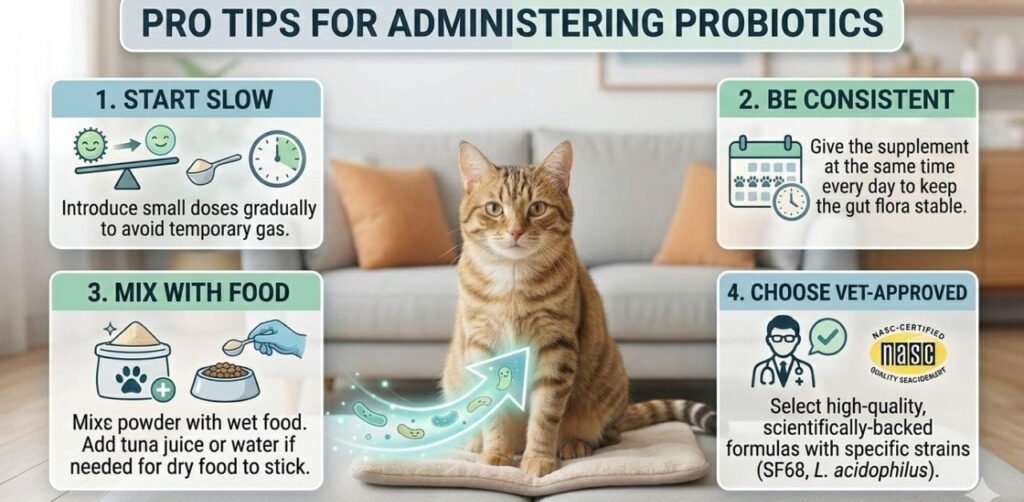
Start Slow: While probiotics are safe, introducing them too quickly can cause temporary gas. Start with a half dose and work your way up.
Consistency is Key: Give the supplement at the same time every day to keep the gut flora stable.
Mix with Wet Food: If your cat eats dry kibble, add a splash of water or tuna juice so the probiotic powder sticks to the food.
Final Thoughts
Managing feline digestive health doesn’t have to be a guessing game. By utilizing cat probiotics for diarrhea, you are giving your pet a natural, science-based tool to fight back against illness. Whether it’s a sudden flare-up or a chronic sensitivity, the right “good bacteria” can transform your cat from lethargic and uncomfortable to happy and playful again.