
As a cat owner, you know that felines are masters of disguise. In the wild, showing weakness or pain makes an animal a target, so our domesticated friends have evolved to hide their discomfort. This often leaves pet parents wondering: “Is my cat just tired, or are they hurting?”
Fortunately, veterinary science has gifted us a breakthrough tool to solve this mystery: the Cat Grimace Scale (CGS).
This comprehensive guide will walk you through how to use this life-saving scale, what signs to look for, and how to ensure your furry companion lives a pain-free, happy life.
What is the Cat Grimace Scale?
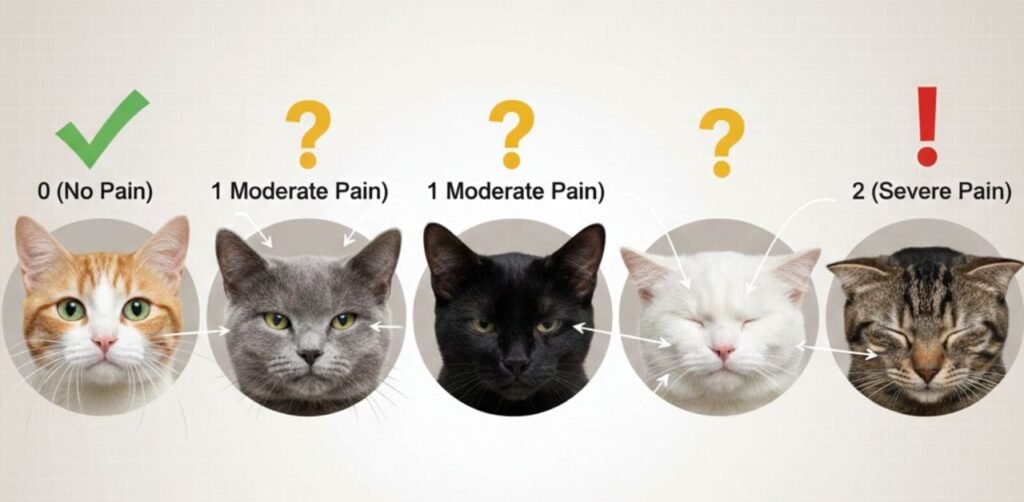
The Cat Grimace Scale is a scientifically validated tool developed by researchers at the University of Montreal. It is designed to assess acute pain in cats based on changes in their facial expressions. Unlike dogs, who might whimper or limp, cats express their distress through subtle “Action Units” in their face.
By mastering the Cat Grimace Scale, you can stop guessing and start understanding your cat’s silent language. This tool is now considered the gold standard for veterinarians and is an essential skill for every dedicated pet parent in the US.
What is the Cat Grimace Scale?
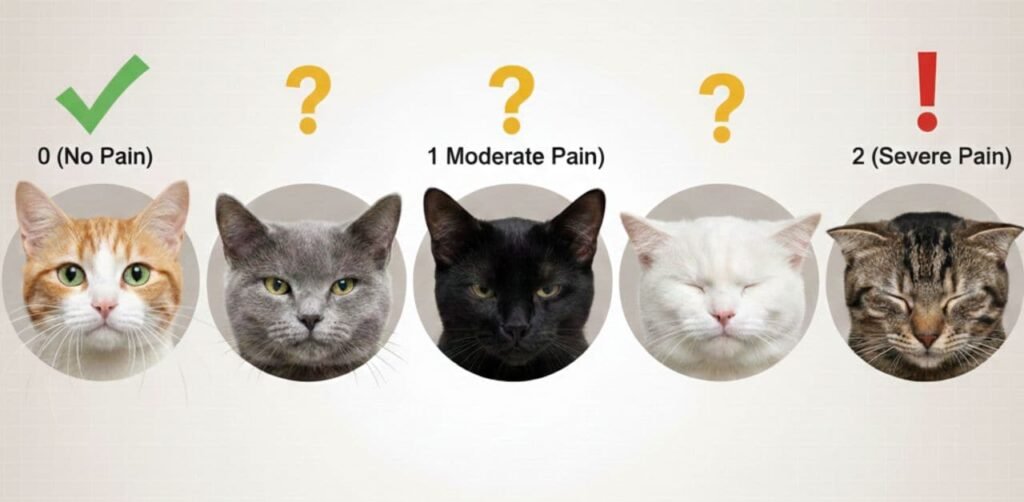
Many cat owners wait for vocalizations or drastic behavior changes before seeking help. However, by the time a cat cries out, the pain is often severe. The Cat Grimace Scale allows for early detection, which is crucial for:
- Post-surgical recovery monitoring.
- Managing chronic conditions like arthritis or dental disease.
- Evaluating the effectiveness of pain medication.
- Preventing unnecessary suffering through timely veterinary intervention.
The 5 Key Indicators of the Cat Grimace Scale
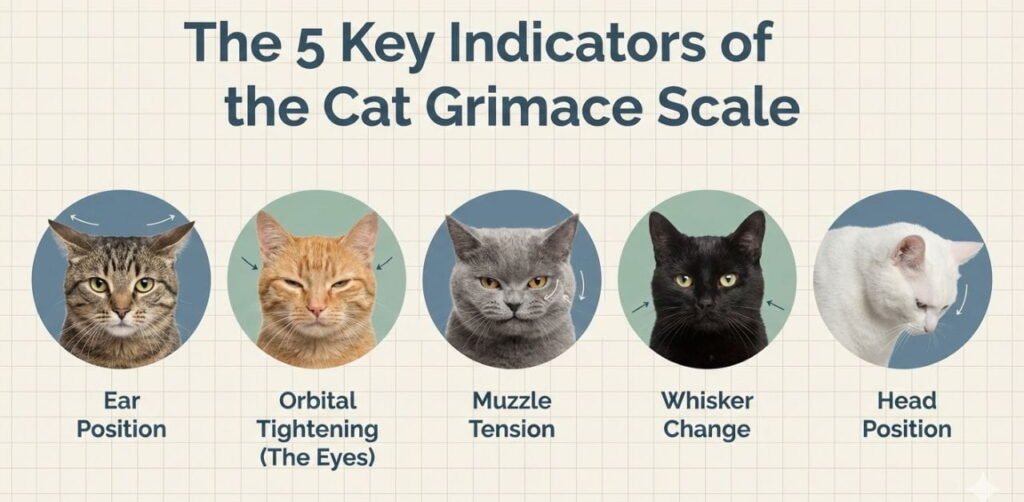
To use the scale effectively, you need to observe five specific areas of your cat’s face. Each area is scored from 0 to 2:
- 0: Features are absent (Cat is comfortable).
- 1: Feature is moderately present (Potential pain).
- 2: Feature is pronounced (Significant pain).
Ear Position
In a relaxed cat, ears are facing forward. As pain increases, the ears begin to pull apart and rotate outwards. In the highest stage of the Cat Grimace Scale, the ears are flattened and turned down toward the sides.
Orbital Tightening (The Eyes)
Keep a close eye on those “almond” shapes. A happy cat has wide, round eyes. A cat in pain will squint or squeeze their eyelids together. If you notice your cat’s eyes look “heavy” or half-closed, it’s a major red flag.
Muzzle Tension
A relaxed muzzle is round and soft. When a cat experiences discomfort, the muzzle becomes tense, and the mouth area may appear more elliptical or “bunched up.”
Whisker Change
Believe it or not, whiskers tell a story. Relaxed whiskers curve slightly downward. Pain causes the whiskers to become straight, tense, and sometimes even stand out or bunch together.
Head Position
A comfortable cat holds its head above the shoulder line. As pain intensifies, the cat may lower its head or tuck its chin toward its chest. This “hunched” facial posture is a key indicator in the Cat Grimace Scale scoring system.
How to Score Your Cat Using the Cat Grimace Scale
To get an accurate reading, observe your cat from a distance while they are awake. Do not disturb them, as their reaction to you might mask their true expression.
The Scoring Table
| Feature | Score 0 (No Pain) | Score 1 (Moderate) | Score 2 (Severe) |
| Ears | Facing forward | Slightly pulled apart | Flattened/Rotated |
| Eyes | Opened | Partially squinted | Tightly shut |
| Muzzle | Relaxed/Round | Slightly tense | Very tense/Flattened |
| Whiskers | Relaxed/Curved | Slightly tense/Straight | Very tense/Forward |
| Head Position | Above shoulders | Aligned with shoulders | Below shoulders/Tucked |
Total Score Interpretation:
- 0-3: Your cat is likely comfortable.
- 4-10: Your cat is in pain.
A score of 4 or higher is the “analgesic threshold,” meaning medical intervention is required.
When Should You Contact Your Veterinarian?
If your scoring on the Cat Grimace Scale suggests a score of 4 or above, do not wait. In the US, veterinary clinics are increasingly using these scales to provide better care.
Pro Tip: Take a clear, level-angle photo of your cat’s face and show it to your vet. This provides them with “real-time” evidence of the facial cues you observed at home.
Common Misconceptions About Feline Pain
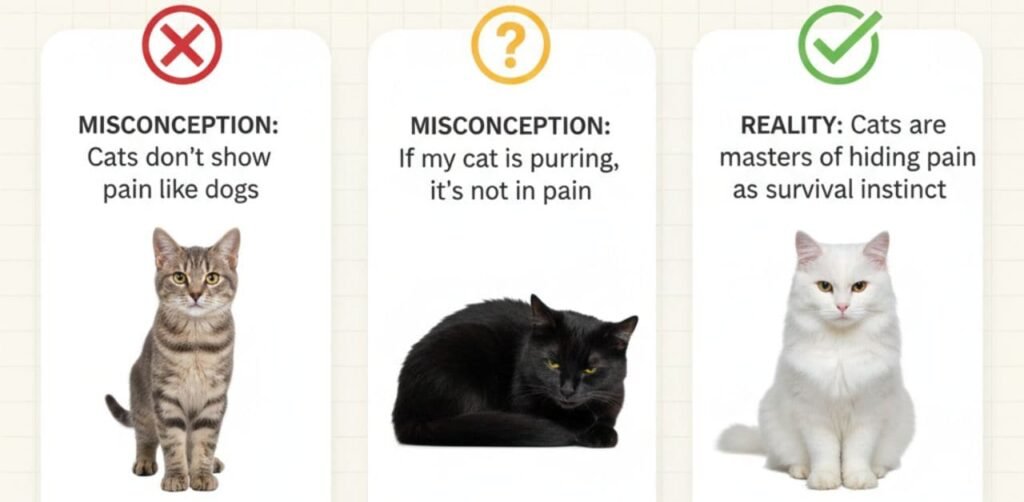
- “My cat is purring, so they aren’t in pain.” False. Cats often purr to self-soothe when they are in intense pain or distress.
- “They are still eating, so they must be fine.” Cats have a strong survival instinct and will often eat even with significant dental or internal pain.
- “They are just getting old and lazy.” Slowing down is often a sign of untreated arthritis pain, not just “old age.”
The Cat Grimace Scale cuts through these myths by focusing on involuntary facial muscle movements that the cat cannot easily hide.
Implementing the Cat Grimace Scale into Your Routine
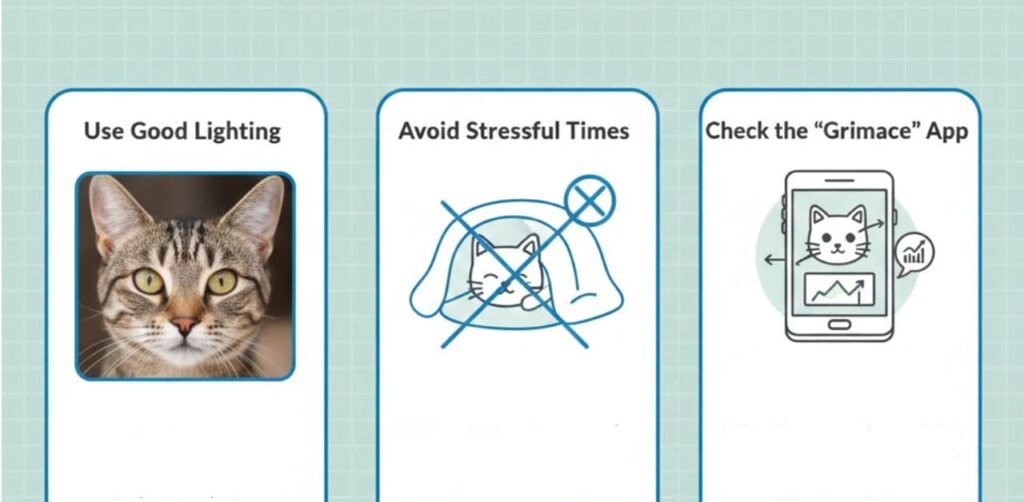
You don’t need to be a doctor to use this. Make it a habit to “scan” your cat’s face during quiet moments. This proven technique builds a baseline for what your cat’s “normal” looks like, making it much easier to spot deviations early.
Expert Tips for Accuracy:
- Use Good Lighting: Ensure you can see the whisker base and eye shape clearly.
- Avoid Stressful Times: Don’t score immediately after a loud noise or a stressful event (like a bath).
- Check the “Grimace” App: There are now digital versions of the Cat Grimace Scale that help you calculate scores on your smartphone.
Empower Yourself with the Cat Grimace Scale
Your cat depends on you to be their advocate. By understanding and applying the Cat Grimace Scale, you are taking a massive step toward being a proactive and informed pet owner. Don’t wait for your cat to hide under the bed or stop eating. Look at their face—the signs are already there.
Is your cat showing any of these signs today?
Early detection saves lives and prevents thousands of dollars in emergency vet bills down the road.
Frequently Asked Questions (FAQs)
Is the Cat Grimace Scale 100% accurate?
While highly reliable and scientifically backed, it should be used alongside other observations like appetite and mobility.
Can I use this for kittens?
Yes, though kittens are more expressive, the basic facial indicators of the Cat Grimace Scale still apply.
Does this work for all breeds?
Yes, but be mindful of flat-faced (encephalitic) breeds like Persians, as their natural muzzle shape can make scoring slightly more complex.