
As a cat parent, there is nothing more heartbreaking or frustrating than seeing your furry friend struggle with digestive issues. If you are tired of cleaning up frequent vomit, dealing with smelly litter boxes, or watching your cat hide in discomfort after every meal, you are not alone.
Finding the perfect cat food for sensitive stomachs is not just about convenience; it’s about your cat’s quality of life. In this comprehensive guide, we will dive deep into the proven strategies to soothe your cat’s tummy, the essential ingredients to look for, and the top-rated US brands that actually work.
Understanding the “Sensitive Stomach” Struggle
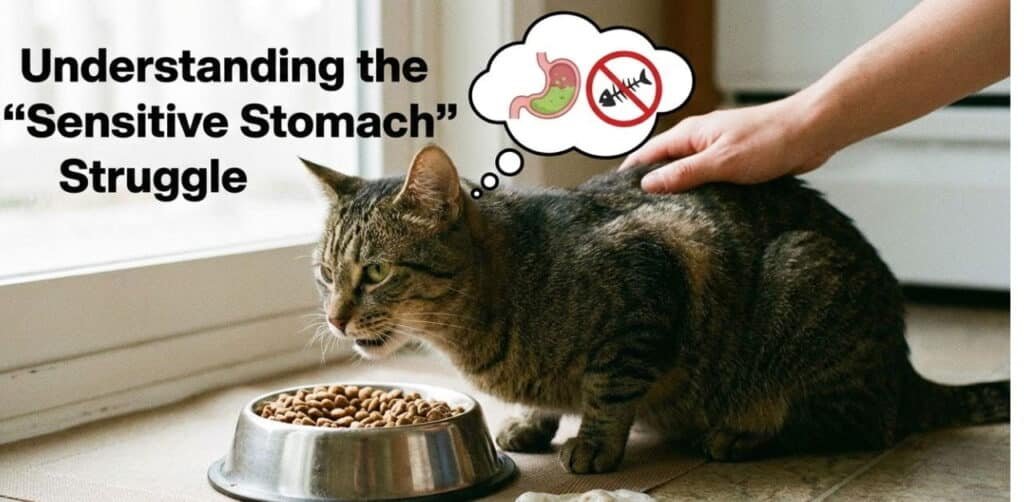
Before you rush to buy the most expensive bag on Amazon, you must understand why your cat is reacting this way. A “sensitive stomach” isn’t a single condition; it’s often a symptom of underlying triggers.
According to experts at PetMD, the most common culprits are:
Low-Quality Fillers: Many budget brands use corn, wheat, and soy, which are hard for felines to process.
Protein Sensitivities: Believe it or not, common proteins like chicken or beef can cause allergic reactions in some cats.
Artificial Additives: Chemical dyes and preservatives can irritate the delicate lining of a cat’s gut.
Food Intolerance: Just like humans, some cats lack the enzymes to digest specific ingredients properly.
Does Your Cat Need a Change?

Look for these alarming signs:
- Chronic vomiting (often misidentified as “just a hairball”).
- Loose stools or diarrhea.
- Excessive flatulence (gas).
- Lethargy or hiding after eating.
- Poor coat quality or itchy skin.
What Makes a Cat Food “Safe”?
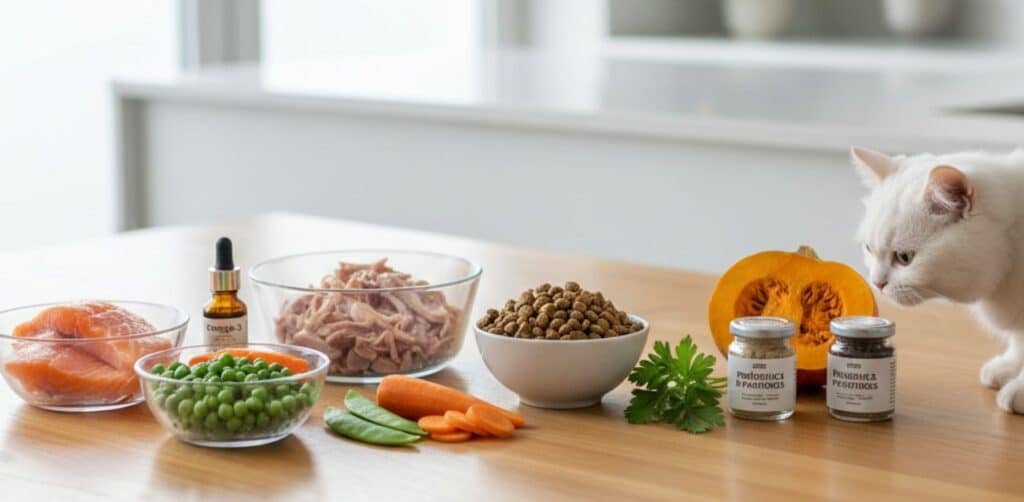
When browsing brands like Purina, Blue Buffalo, or Wellness, you need to be a label detective. For a cat with a sensitive GI tract, the ingredient list should be simple, clean, and potent.
Easily Digestible Proteins
Look for “Novel Proteins” like Duck, Rabbit, or Venison. If you stick with chicken or turkey, ensure it is the first ingredient listed. Brands like Nulo emphasize high-meat protein with low carb content to mimic a cat’s natural diet.
\Prebiotics and Probiotics
These are the secret weapons for gut health. Probiotics (live beneficial bacteria) and Prebiotics (fiber that feeds that bacteria) help balance the microbiome, ensuring smooth digestion and firm stools.
Omega Fatty Acids
Omega-3 and Omega-6 (found in salmon oil or flaxseed) are miraculous for reducing inflammation in the gut and promoting a glowing, healthy coat.
Limited Ingredient Diets (LID)
As the name suggests, LID formulas minimize the number of components your cat is exposed to. This drastically reduces the chances of a flare-up.
The Best Cat Food for Sensitive Stomachs: Top US Picks
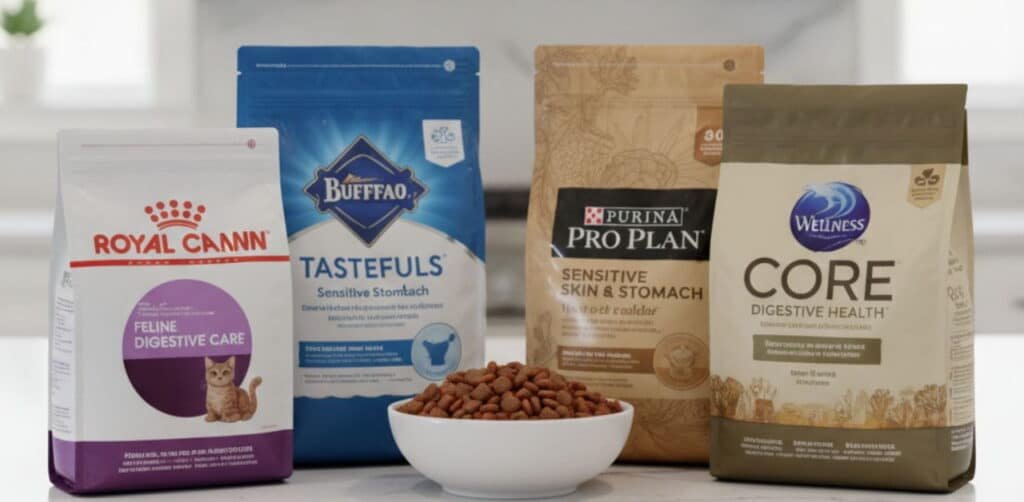
Based on clinical research and thousands of Amazon reviews, here are the gold-standard recommendations:
Royal Canin Feline Digestive Care
This is often considered the holy grail for tummy issues. The kibble is specially shaped to encourage slow chewing, while highly digestible proteins ensure maximum absorption.
Blue Buffalo Tastefuls Sensitive Stomach
A favorite among US pet owners, this formula features real chicken and LifeSource Bits—a precise blend of antioxidants and minerals. It is free from corn, wheat, and soy, making it a safe bet for sensitive kitties.
+1
Purina Pro Plan Sensitive Skin & Stomach
This formula uses real lamb or rice and is packed with oatmeal, which is incredibly gentle on the stomach. It’s a high-performance food that also addresses skin irritation.
Wellness CORE Digestive Health
If you want a premium, grain-free option, Wellness CORE is unbeatable. It features a “digestive coat” on every kibble, delivering 100 million CFU of probiotics per pound!
The “Slow Switch” Strategy: Don’t Make Things Worse!
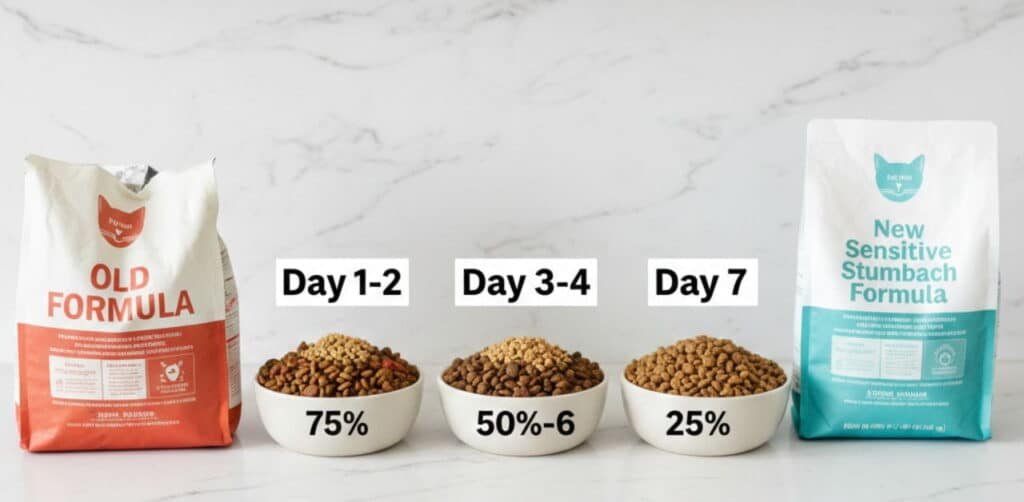
Even the best cat food for sensitive stomachs can cause issues if you switch too fast. A sudden change can shock your cat’s system, leading to even more vomiting.
+1
Follow this proven 7-day transition plan:
- Day 1-2: 75% old food, 25% new food.
- Day 3-4: 50% old food, 50% new food.
- Day 5-6: 25% old food, 75% new food.
- Day 7: 100% new food.
Expert Tips for Digestive Success
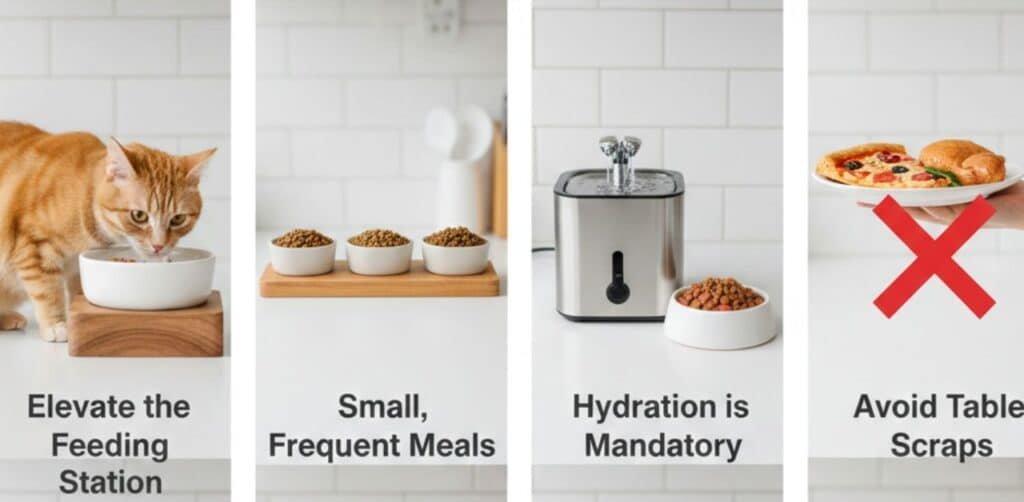
Changing the food is the biggest step, but these exclusive tips can provide even better results:
- Elevate the Feeding Station: Using an elevated bowl helps the food travel more easily to the stomach, reducing “regurgitation.”
- Small, Frequent Meals: Instead of two large meals, try 4-5 smaller portions. This prevents the stomach from becoming “overwhelmed.”
- Hydration is Mandatory: Cats with sensitive stomachs often lose fluids through loose stools. Consider adding a high-quality wet food (like Purina Pro Plan Wet) or a water fountain to keep them hydrated.
- Avoid Table Scraps: Even a tiny piece of cheese or seasoned meat can trigger a painful reaction.
Don’t Ignore the Warning Signs
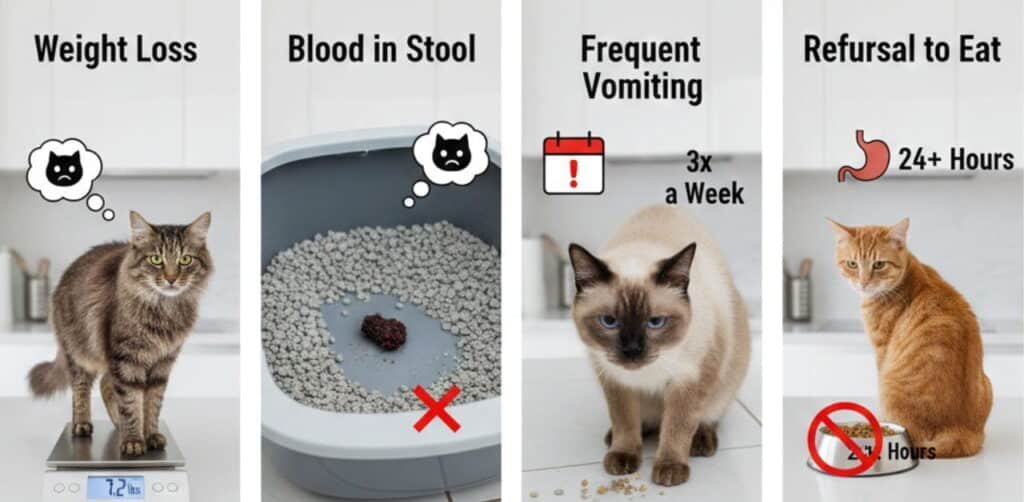
While a diet change works for 90% of cats, sometimes the issue is more serious. If your cat shows any of the following, consult your veterinarian immediately:
- Weight loss despite eating.
- Blood in the stool.
- Vomiting more than three times a week.
- Refusal to eat for more than 24 hours.
These could be signs of Inflammatory Bowel Disease (IBD) or kidney issues, which require specialized medical intervention.
A Happier, Healthier Cat Awaits

Finding the right cat food for sensitive stomachs is a journey, not a destination. By choosing high-quality, grain-free, and probiotic-rich foods like Hill’s Science Diet or Blue Buffalo, you are giving your cat the gift of a pain-free life.
Stop the cycle of vomiting and discomfort today. Your cat depends on you to make the right choice. Switch to a premium sensitive stomach formula and watch your feline friend transform into a playful, energetic, and happy companion once again!
FAQs for SEO (People Also Ask)
Q: Is grain-free food better for a sensitive stomach?
A: Not necessarily. While some cats are allergic to grains, many are actually sensitive to specific proteins. However, high-quality grain-free options often have fewer fillers, which helps.
Q: Can wet food help with a sensitive stomach?
A: Yes! Wet food is easier to digest and provides essential hydration, which is vital for cats with chronic diarrhea.
Q: How long does it take to see results?
A: Most cats show improvement within 2 to 4 weeks of a consistent diet change.