
As a cat owner, you’ve likely watched your feline friend eye a piece of raw chicken while you’re preparing dinner. After all, cats are obligate carnivores, and their ancestors survived solely on raw prey in the wild. But is raw chicken actually safe for modern domestic cats?
In this comprehensive guide, we will dive deep into the benefits, risks, and expert opinions on feeding raw chicken to cats to help you make the best decision for your pet’s health.
Are Cats Built for Raw Meat?
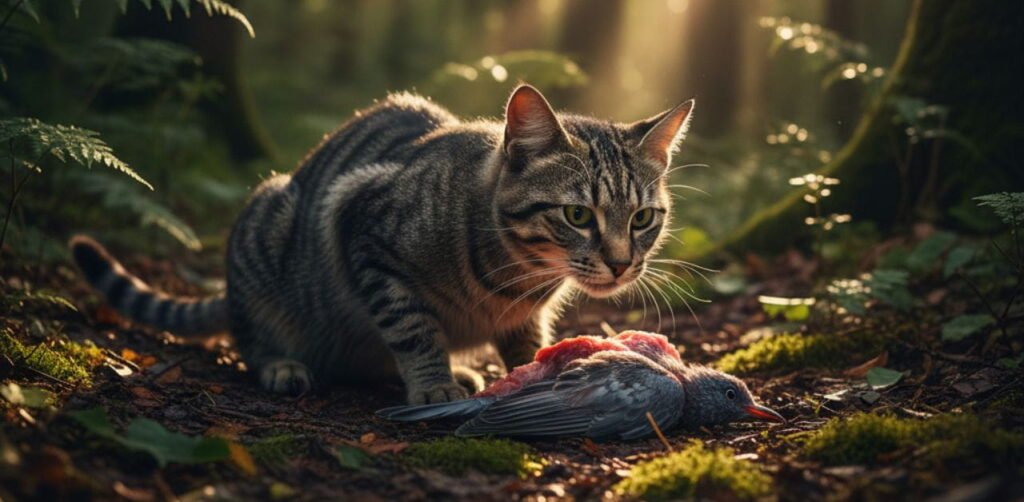
To understand if cats can eat raw chicken, we first need to look at their biology. Cats are obligate carnivores, meaning their bodies are designed to process animal protein. In the wild, their diet consists of birds, rodents, and small mammals all consumed raw.
Their digestive systems are shorter and more acidic than humans’, which allows them to process raw meat more efficiently and potentially handle certain bacteria that would make a human very sick. However, domestic cats today are different from their wild ancestors, and the meat we buy from supermarkets is handled differently than a fresh kill in the wild.
The Benefits of Raw Chicken for Cats
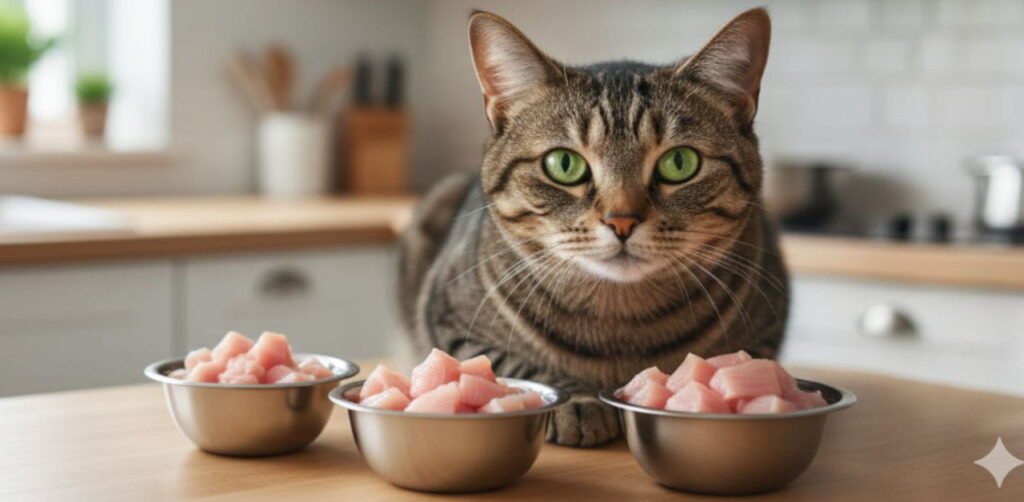
Proponents of the “Raw Food Diet” (often called BARF – Biologically Appropriate Raw Food) argue that raw chicken offers several advantages:
High Protein Content: Chicken is an excellent source of lean protein, which is essential for muscle maintenance and energy.
Natural Taurine: Raw heart and muscle meat are rich in taurine, an amino acid vital for a cat’s heart health and vision.
Improved Digestion: Many owners report smaller, less odorous stools when cats eat a raw-based diet.
Dental Health: Chewing on raw meat (and specifically soft raw bones) can help reduce tartar buildup.
Hydration: Raw meat has a higher water content than dry kibble, helping keep cats hydrated.
The Serious Risks of Feeding Raw Chicken
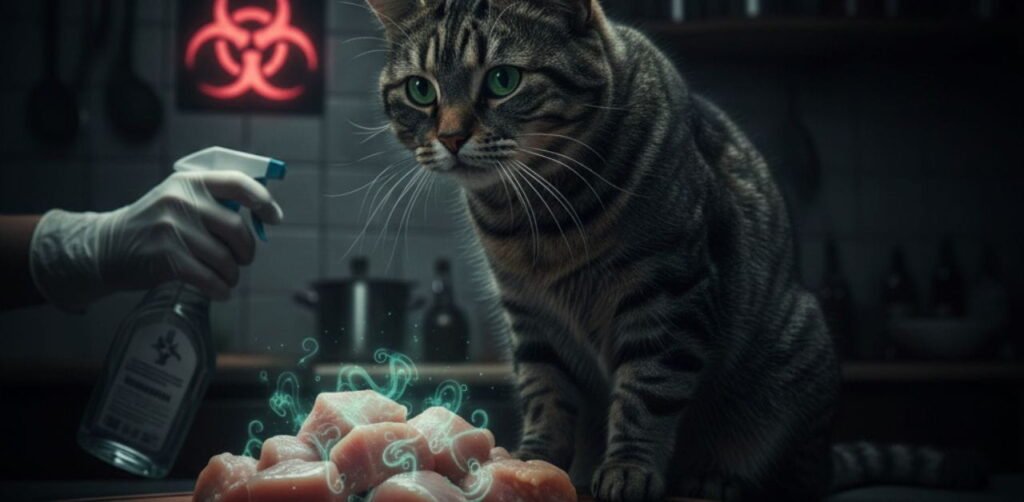
While the benefits sound appealing, organizations like PetMD and Purina emphasize that the risks are significant and should not be ignored.
Bacterial Contamination (Salmonella and E. Coli)
This is the biggest concern. Raw chicken is frequently contaminated with Salmonella, Listeria, or Campylobacter. While a healthy cat’s acidic stomach might handle these, they can still get sick. More importantly, human family members are at risk of cross-contamination from the cat’s saliva, fur, or litter box.
Parasites
Raw chicken can harbor parasites like Toxoplasma gondii. If a cat becomes infected, they can develop toxoplasmosis, which is also a major health risk for pregnant women living in the same household.
Sharp Bones
If the raw chicken contains bones, there is a risk of choking or internal punctures. While raw bones are softer than cooked bones (which splinter), they can still cause dental fractures or gastrointestinal blockages.
Nutritional Imbalance
Feeding only raw chicken breast is not a complete diet. Cats need a precise balance of calcium, phosphorus, vitamins, and minerals found in organs and bone marrow. Without a formulated recipe, your cat could develop severe nutritional deficiencies.
Raw Chicken vs. Cooked Chicken: Which is Better?
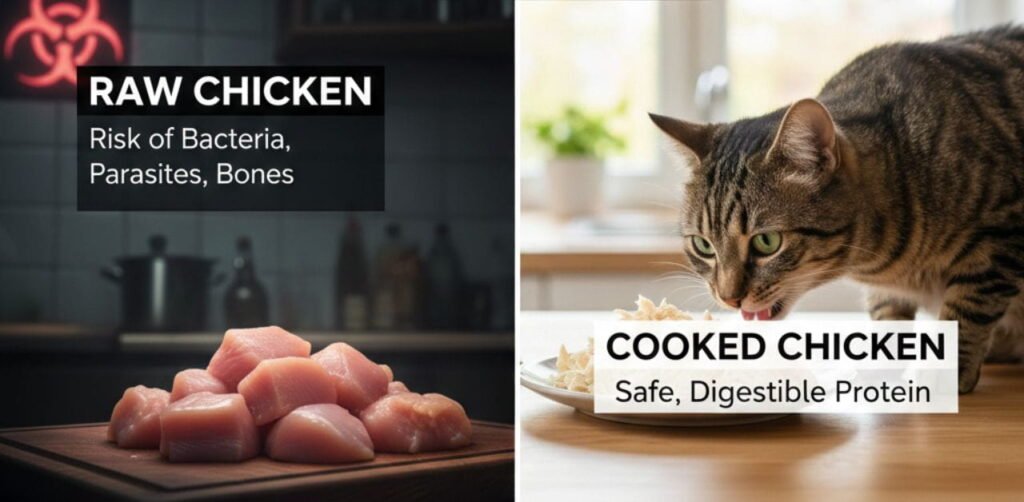
If you want to give your cat chicken as a treat, most veterinarians recommend plain, cooked chicken.
- Cooked Chicken: Boiling or baking chicken (without salt, onions, garlic, or oil) kills harmful bacteria and parasites while still providing the protein your cat craves.
- Raw Chicken: While more “natural,” it requires extreme caution regarding sourcing and hygiene.
How to Feed Raw Chicken Safely (If You Choose To)
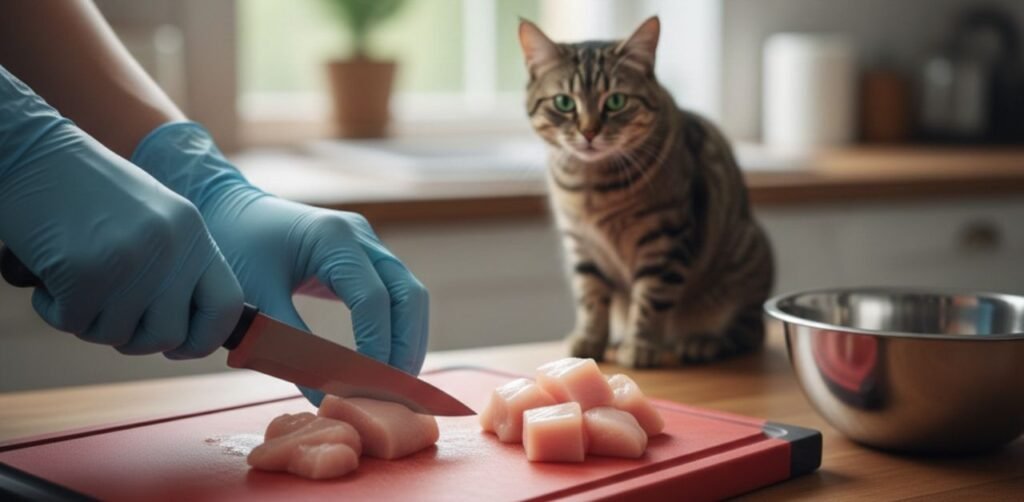
If you decide to proceed with raw feeding, follow these safety protocols sourced from expert guidelines:
- Source Matters: Never use “enhanced” chicken from the grocery store that contains high sodium or seasonings. Buy human-grade, organic, or pasture-raised chicken.
- Flash Freezing: Freezing raw meat for at least 24 hours can help kill some parasites (though it does not kill bacteria).
- Hygiene is Key: Wash all bowls, surfaces, and your hands with hot soapy water immediately after handling raw meat. Use stainless steel or ceramic bowls, as plastic can harbor bacteria in scratches.
- Small Portions: Use raw chicken as a treat (less than 10% of their daily calories) rather than a full meal unless you are working with a veterinary nutritionist.
- Avoid Necks and Wings: If you are worried about bones, stick to boneless, skinless thigh or breast meat.
What Do the Experts Say?
The American Veterinary Medical Association (AVMA) and the FDA generally discourage feeding raw diets due to the risk of pathogens. However, some holistic vets argue that if the meat is sourced and prepared correctly, the benefits outweigh the risks.
According to data from Cats.com and Untamed, the “middle ground” is often high-quality, commercially prepared raw food that has undergone HPP (High-Pressure Processing). This process kills bacteria without cooking the meat, offering the benefits of raw with the safety of cooking.
Common FAQs
Can kittens eat raw chicken?
It is highly discouraged. Kittens have developing immune systems and are much more susceptible to bacterial infections and nutritional imbalances than adult cats.
Can raw chicken give my cat diarrhea?
Yes. A sudden switch to raw food or a batch contaminated with bacteria can cause vomiting, diarrhea, and lethargy.
Is raw chicken skin okay for cats?
Chicken skin is very high in fat. While not toxic, it can cause upset stomachs or even pancreatitis in sensitive cats. It’s best to stick to the meat.
Should You Feed Your Cat Raw Chicken?
The answer isn’t a simple yes or no. While cats can eat raw chicken, the safety risks to both the cat and the household are high.
- For a safe treat: Stick to plain, boiled chicken.
- For a raw experience: Choose a commercially prepared raw diet that is nutritionally balanced and pathogen-tested.
Always consult with your veterinarian before making significant changes to your cat’s diet, especially if they have underlying health issues.
Is Raw Chicken Right for Your Cat?
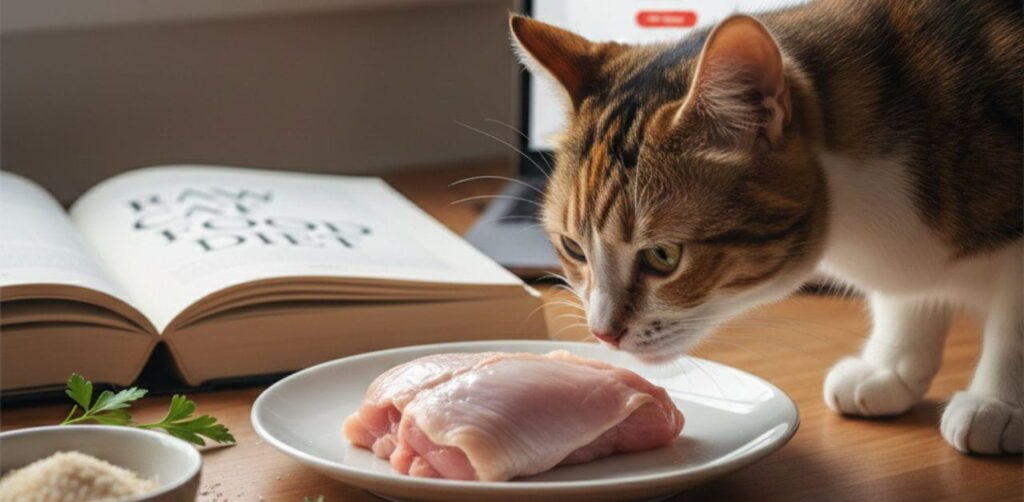
Deciding whether to feed your cat raw chicken comes down to balancing the natural biological benefits with the very real safety risks. While cats are designed to handle raw meat, our modern environment and store-bought poultry require us to be extra cautious.
Raw vs. Cooked Chicken
| Feature | Raw Chicken | Plain Cooked Chicken |
| Bacterial Risk | High (Salmonella/E. coli) | Very Low |
| Nutritional Value | High (Natural Enzymes) | Good (High Protein) |
| Safety for Humans | High Risk (Cross-contamination) | Safe |
| Bone Safety | Safe (Only if soft/raw) | Dangerous (Splinter risk) |
When to Call the Vet: Warning Signs
If your cat consumes raw chicken and shows any of the following symptoms, please consult a veterinarian immediately:
- Persistent Vomiting or bloody diarrhea.
- Lethargy: Extreme tiredness or lack of energy.
- Loss of Appetite: Refusing to eat their regular food.
- Abdominal Pain: Sensitivity or swelling in the stomach area.
Pro-Tip: The 10% Rule
Treats, whether raw or cooked chicken, should never make up more than 10% of your cat’s daily calorie intake. The remaining 90% should come from high-quality, balanced cat food to ensure they receive all the necessary vitamins and minerals for a long, healthy life.
What do you think?
Have you ever tried feeding your cat a raw diet, or do you prefer sticking to cooked treats? Share your experiences and questions in the comments below!
Disclaimer: This article is for informational purposes only and does not constitute medical advice. Always consult with your veterinarian before making significant changes to your pet’s diet.
Interactive Chicken Treat Calculator
While chicken is a great source of protein, it should only be an occasional treat, not the main meal. Feeding too much can lead to nutritional imbalances and weight gain.
The Golden Rule: Treats should never exceed 10% of your cat’s total daily calories. Not sure how much that is? Use our custom calculator below! Simply enter your cat’s weight in Kilograms (Kg) or Pounds (Lbs), and we’ll tell you exactly how many grams of chicken are safe for your feline friend today.
🐱 Cat Treat Calculator
Enter your cat’s weight to find the perfect chicken treat portion (10% Rule).
Why use this tool?
- Prevent Obesity: Keeps calorie intake in check.
- Balance Nutrition: Ensures your cat still has room for their vitamin-rich main meals.
- Precision: Tailored to your cat’s specific size and weight.