Are you looking to give your tiny furball the best start in life? If you are a kitten parent in the US, you probably know that the first year is the most critical period for development. To transform that adorable ball of fluff into a majestic, healthy adult cat, you need more than just a standard kibble you need High Protein Kitten Food.
In this comprehensive guide, we dive deep into the science of kitten nutrition, using expert insights from PetMD and Forbes, to help you choose the superior fuel your kitten deserves.
Why High Protein is Non-Negotiable for Kittens
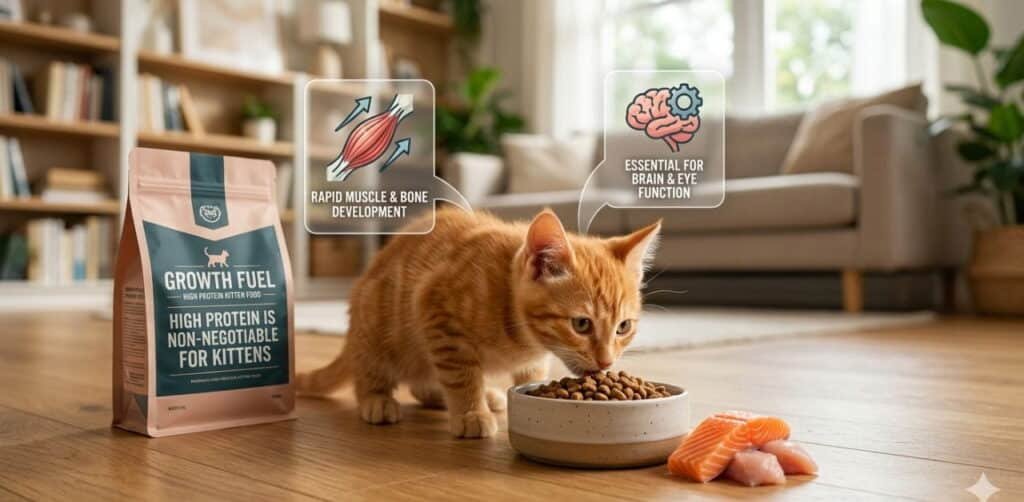
Kittens are biological “energy machines.” During their first six months, their bodies are working overtime to develop muscles, bones, and a sharp immune system. Unlike adult cats, kittens require a significantly higher concentration of protein to support this rapid growth.
The Building Blocks of Life: Amino Acids
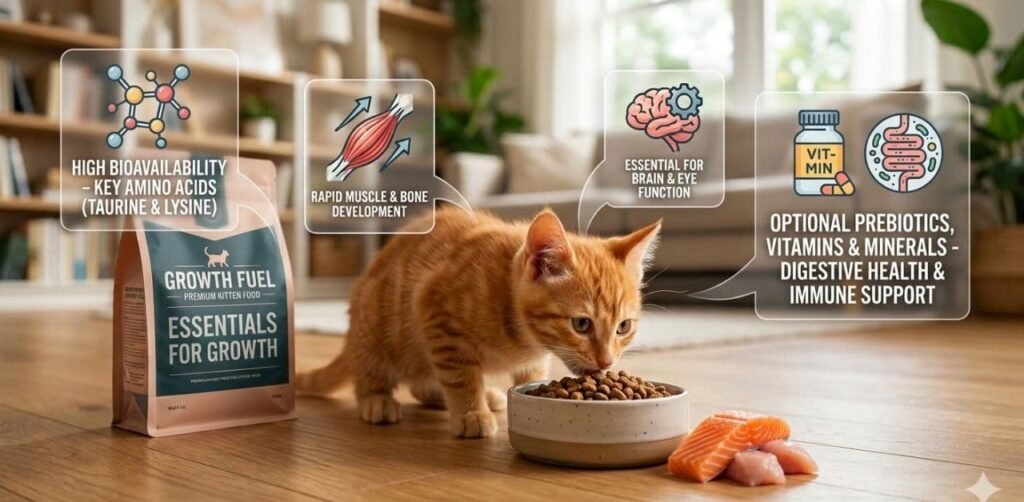
Protein is made of amino acids, and for kittens, Ta urine is the king. Without enough animal-based protein, kittens can suffer from heart issues and vision loss. High-quality protein ensures their “engine” runs smoothly.
Sustained Energy for Play
Kittens burn calories at twice the rate of adult cats. A high-protein diet provides the metabolic energy they need to explore, pounce, and learn without crashing.
What to Look for in Premium Kitten Food
Not all proteins are created equal. When scanning the aisles of Petco or browsing Amazon, you must look for specific “Gold Standard” markers.
AAFCO Statement
According to PetMD, the most important thing to check is the AAFCO (Association of American Feed Control Officials) statement. Ensure the label says the food is formulated for “Growth” or “All Life Stages.”
Named Animal Proteins
Avoid vague terms like “meat by-products.” Instead, look for:
- Real Deboned Chicken
- Fresh Salmon
- Roasted Turkey
- Lamb
DHA for Brain Development
High-protein kitten foods often include DHA (Docosahexaenoic Acid), an omega-3 fatty acid found in mother’s milk. This is crucial for brain and eye development, making your kitten smarter and more alert.
Top 5 Expert-Recommended High Protein Kitten Foods
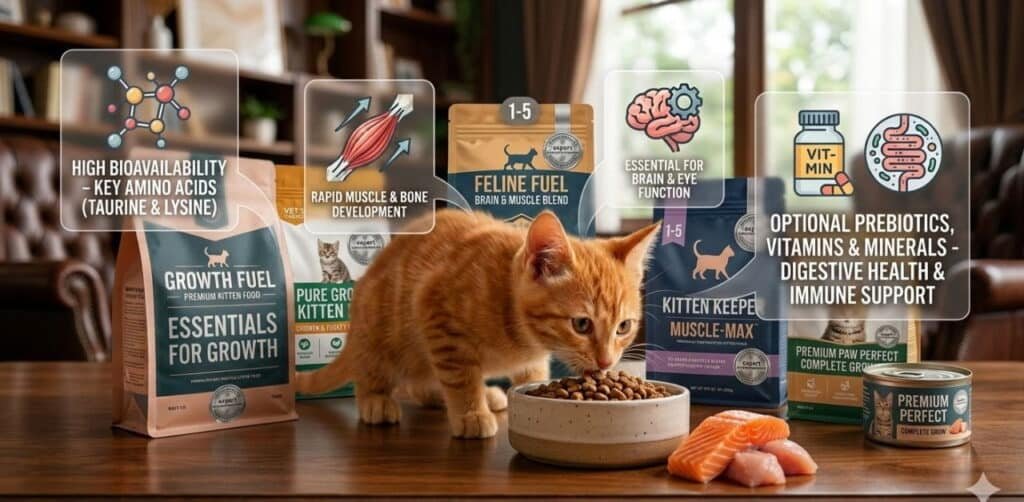
Based on analysis from Forbes Personal Shopper and vet-verified data, here are the top picks for the US market:
Royal Canin Mother & Babycat
This is the “gold standard” for early development. It features a specialized ultra-soft mousse or tiny kibble that is easy for kittens to transition to. It’s packed with highly digestible proteins and prebiotics.
Blue Buffalo Wilderness Kitten
If you want a grain-free, high-protein powerhouse, this is it. It mimics a lynx’s diet with real chicken as the first ingredient and includes “LifeSource Bits”—a precise blend of antioxidants and minerals.
Wellness CORE Signature Selects
Forbes often highlights this for its high moisture content and protein density. It’s grain-free and focuses on shredded poultry or fish in a delicious broth, which is vital since cats often don’t drink enough water.
Hill’s Science Diet Kitten
Vet-recommended across the US, this formula focuses on balanced nutrition. While slightly lower in raw protein than “Wilderness” brands, its digestibility is unmatched, ensuring your kitten actually absorbs the nutrients.
Smalls Fresh Cat Food
For the modern US pet parent, Smalls offers human-grade, high-protein fresh meals delivered to your door. It’s high in protein, high in moisture, and contains zero “mystery” fillers.
The Danger of “Fillers”: What to Avoid
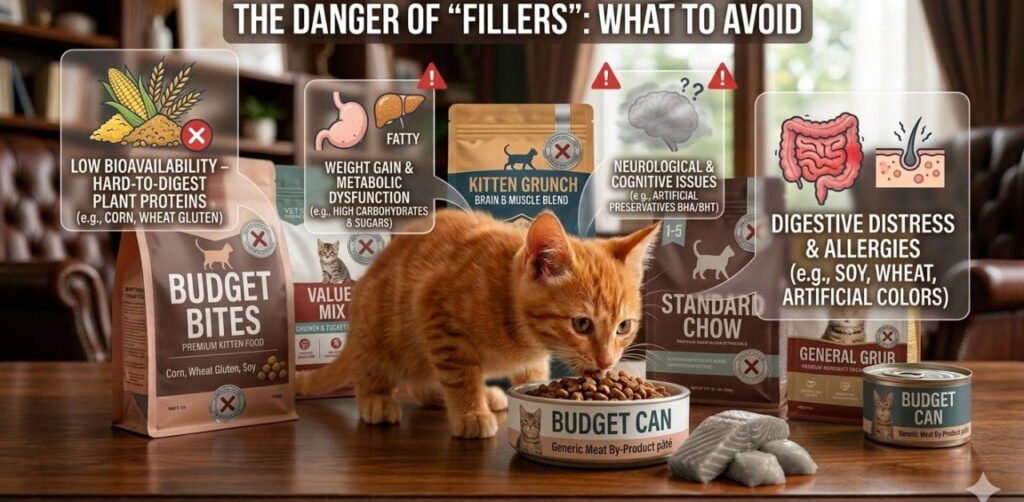
To make your blog (and your kitten) powerful, you must know what to skip. Many budget brands use:
- Corn, Wheat, and Soy: These are “empty” calories that can cause allergies.
- Artificial Preservatives: Look out for BHA, BHT, and Ethoxyquin.
- Excessive Carbs: Kittens have no biological need for high amounts of sugar or starch.
Which is Better for Growth?
This is a hot debate in the US pet community.
- Wet Food: Better for hydration and usually higher in animal protein. It helps prevent urinary tract issues later in life.
- Dry Food: Better for dental health (mechanical scraping of plaque) and more convenient for free-feeding.
Pro Tip: Most vets recommend a “Mixed Feeding“ strategy. Give them wet food for breakfast and dinner, and leave a small amount of high-protein kibble out for snacking.
How Much Protein Does a Kitten Actually Need?
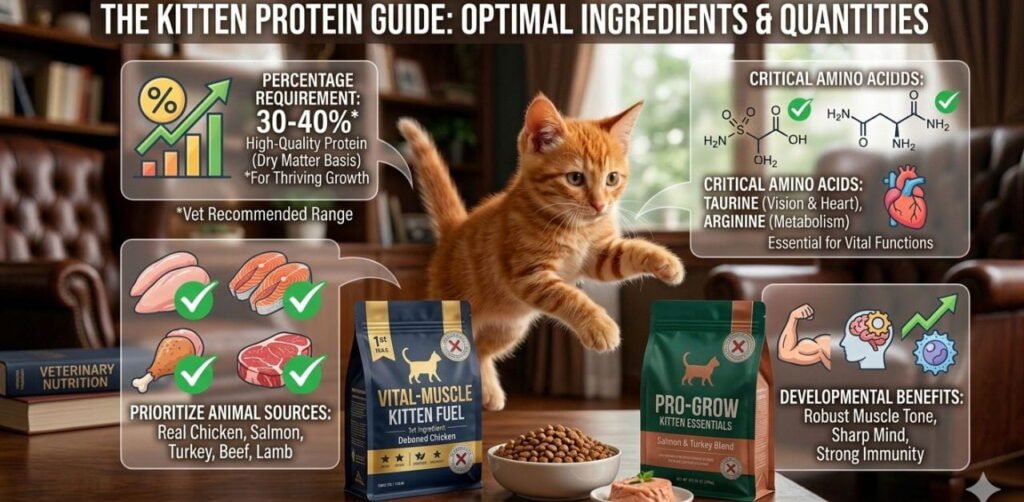
According to PetMD, a kitten’s diet should consist of at least 30% to 40% protein on a dry matter basis. However, “High Protein” specialized foods often go up to 45% or 50%.
The Growth Timeline:
- 0-4 Weeks: Mother’s milk or replacement formula.
- 4-8 Weeks: Weaning phase (Introduction to high-protein wet food).
- 2-12 Months: Intense growth phase (Strict high-protein kitten diet).
- 1 Year+: Transition to adult maintenance food.
Expert Secrets for Improving Your Kitten’s Health
Check the “First Five”: In the US, ingredients are listed by weight. The first five ingredients should ideally be animal-based proteins.
Avoid “Grain-Free” Marketing Traps: Unless your kitten has a diagnosed allergy, some grains (like brown rice or oatmeal) can provide healthy fiber. The focus should be on high protein, not necessarily zero grain.
Temperature Matters: Kittens prefer their food at body temperature (around 100°F). Slightly warming wet food can unlock aromas and encourage a picky eater.
Investing in the Future
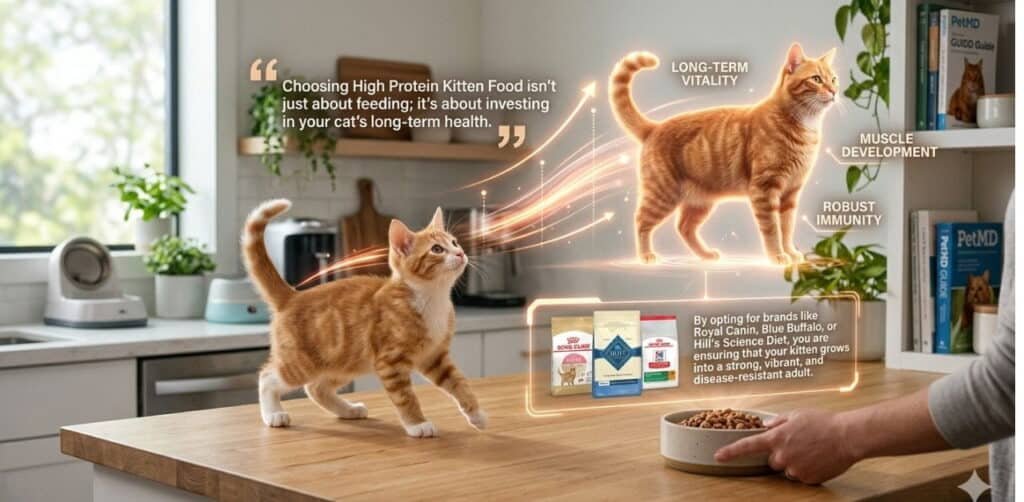
Choosing High Protein Kitten Food isn’t just about feeding; it’s about investing in your cat’s long-term health. By opting for brands like Royal Canin, Blue Buffalo, or Hill’s Science Diet, you are ensuring that your kitten grows into a strong, vibrant, and disease-resistant adult.
Don’t settle for “cheap” fillers. Your kitten’s health is a reflection of what you put in their bowl today.