
As a cat owner, there is nothing more distressing than seeing your feline friend suffer from digestive upset. The constant trips to the litter box, the messy cleanups, and the sight of your cat in discomfort can be heartbreaking. If you are searching for a proven and effective way to stop the running, you’ve likely come across one solution: Cat probiotics for diarrhea.
But do they actually work? Are they safe? And which one should you choose to get instant relief for your pet?
In this comprehensive guide, we will dive deep into the science-backed benefits of probiotics, how they tackle diarrhea, and the expert-recommended steps to restore your cat’s vitality.
What Exactly are Probiotics for Cats?
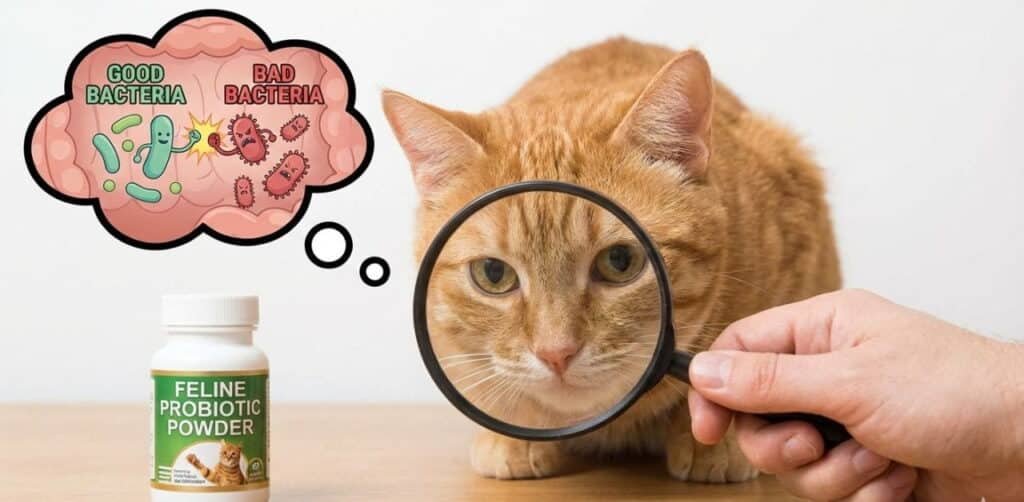
Before we jump into the cure, let’s understand the “magic” behind it. Probiotics are live, beneficial bacteria and yeasts that live naturally in your cat’s intestines. Think of them as a “tiny internal army” that fights off harmful pathogens and keeps the digestive system running like a well-oiled machine.
When your cat has diarrhea, it’s often a sign that their gut microbiome is “out of whack.” The bad bacteria have outnumbered the good ones. Introducing a high-quality probiotic helps restore this delicate balance, effectively “crowding out” the invaders that cause loose stools.
Why is My Cat Having Diarrhea? (The Hidden Culprits)
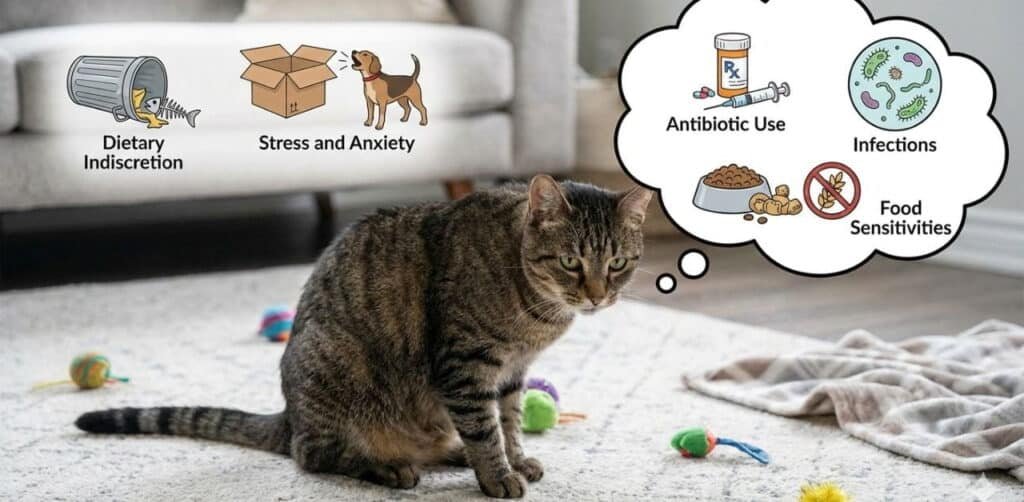
According to PetMD, diarrhea isn’t a disease itself but a symptom of an underlying issue. To treat it effectively, you must understand the trigger:
Dietary Indiscretion: Did your cat sneak into the trash or eat a new type of treat?
Stress and Anxiety: Moving house or a new pet can trigger “stress colitis.”
Antibiotic Use: While antibiotics kill infections, they also wipe out the “good” gut bacteria.
Infections: Parasites, viruses (like panleukopenia), or bacteria (like Salmonella).
Food Sensitivities: Many cats develop sudden intolerances to common proteins or grains.
How Probiotics Stop Diarrhea
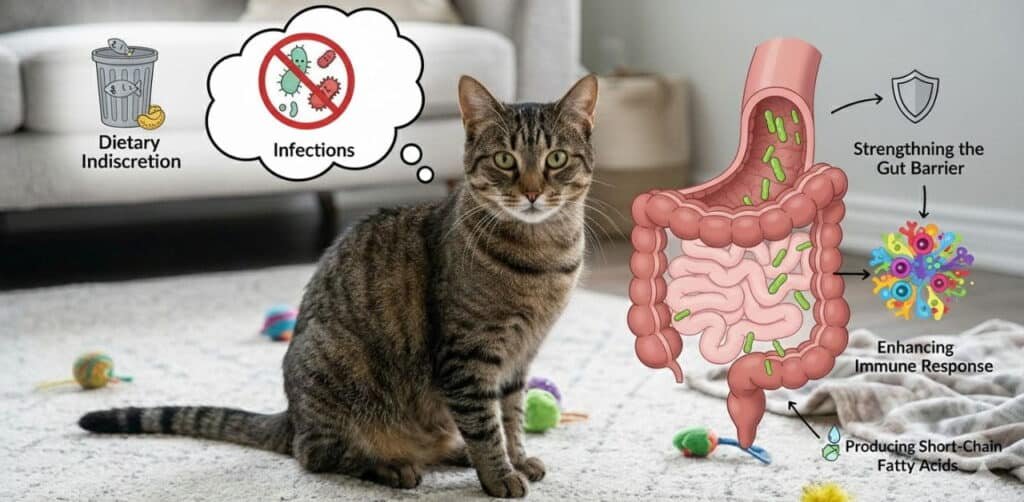
Research published in the National Institutes of Health (PMC) highlights that specific strains of bacteria can significantly reduce the duration of feline diarrhea.
When you administer cat probiotics for diarrhea, they perform three critical functions:
- Strengthening the Gut Barrier: They create a protective shield on the intestinal lining.
- Enhancing Immune Response: About 70% of a cat’s immune system is in their gut.
- Producing Short-Chain Fatty Acids: These acids help absorb water and nutrients, turning liquid stools back into firm ones.
Choosing the Best Cat Probiotics: What the Experts Say

Not all probiotics are created equal. If you want guaranteed results, you need to look for specific “Power Strains” and quality markers.
Look for Enterococcus faecium (SF68)
This is the “gold standard” in the veterinary world. Studies from Riverside Vet suggest that this specific strain is highly effective at managing acute diarrhea and boosting the immune system in kittens and adult cats.
CFU Count (Colony Forming Units)
A “Power Probiotic” should have billions of live cultures. Look for products that guarantee at least 1 to 5 billion CFUs per serving. Anything less might not survive the harsh acids of the stomach.
Prebiotics are a Must
The best supplements are actually “Synbiotics”—a combination of probiotics (the bacteria) and prebiotics (the food for the bacteria). Ingredients like Inulin or FOS (Fructooligosaccharides) ensure the probiotics thrive once they reach the gut.
Probiotics vs. Home Remedies: Which is Better?
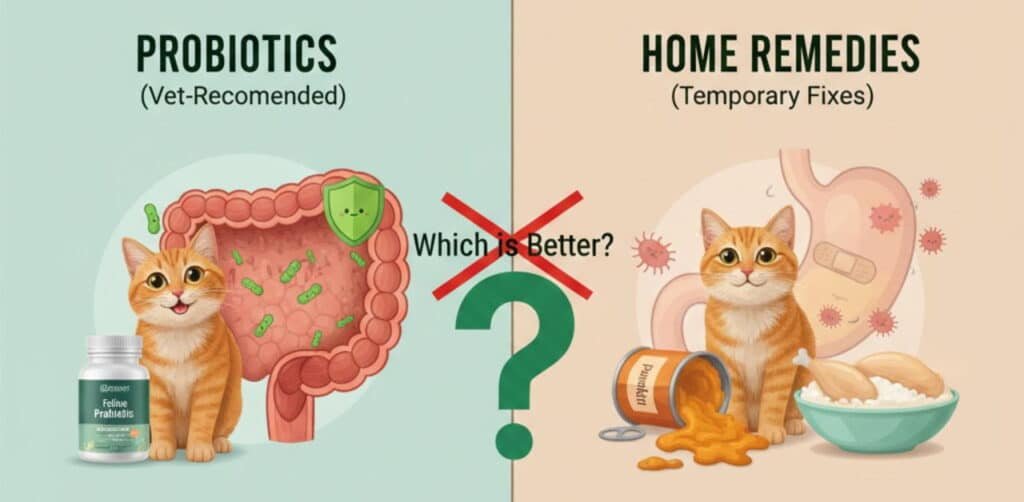
While some owners try “pumpkin puree” or “bland diets” (boiled chicken and rice), these are often just temporary fixes. Food For Life emphasizes that while a bland diet eases the workload on the gut, it doesn’t repopulate the essential bacteria.
Probiotics provide a long-term solution by fixing the root cause of the imbalance, rather than just masking the symptoms.
How to Administer Probiotics to Your Finicky Cat
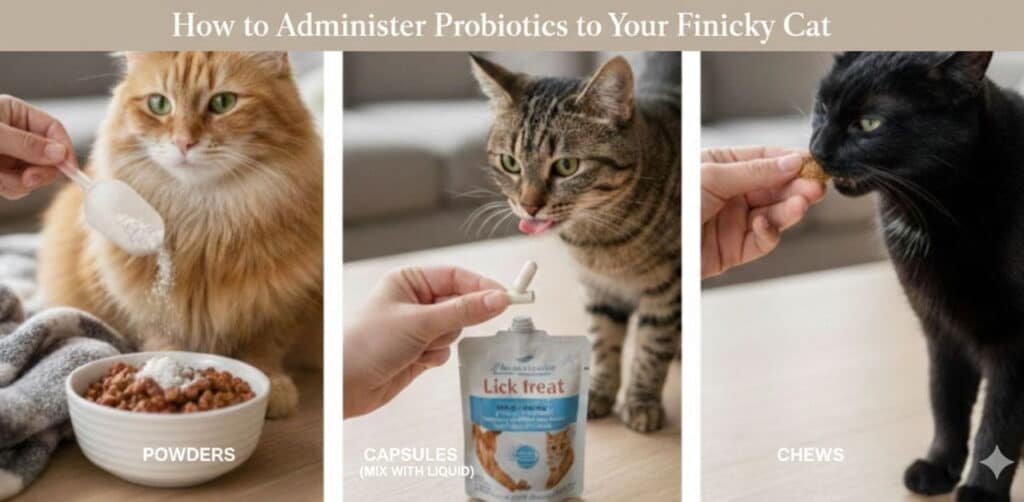
We know cats can be notoriously picky. Fortunately, probiotics come in several easy-to-use forms:
- Powders: Most are flavorless or “liver-flavored” and can be sprinkled directly onto wet food.
- Capsules: Can be opened and mixed into a “lickable treat.”
- Chews: Perfect for cats who view everything as a snack.
Pro Tip: Always start with a small dose and gradually increase it to the recommended level to avoid any further stomach upset.
Is it Safe? Potential Side Effects
Probiotics are incredibly safe. However, in the first 24-48 hours, some cats might experience a slight increase in gas as their gut microbiome shifts. This is a completely normal sign that the good bacteria are winning the battle.
Important: Never give your cat human probiotics without a vet’s approval. Human guts have a different pH level and different bacterial needs. Giving your cat the wrong supplement could lead to dangerous complications.
When to See a Veterinarian (The Warning Signs)
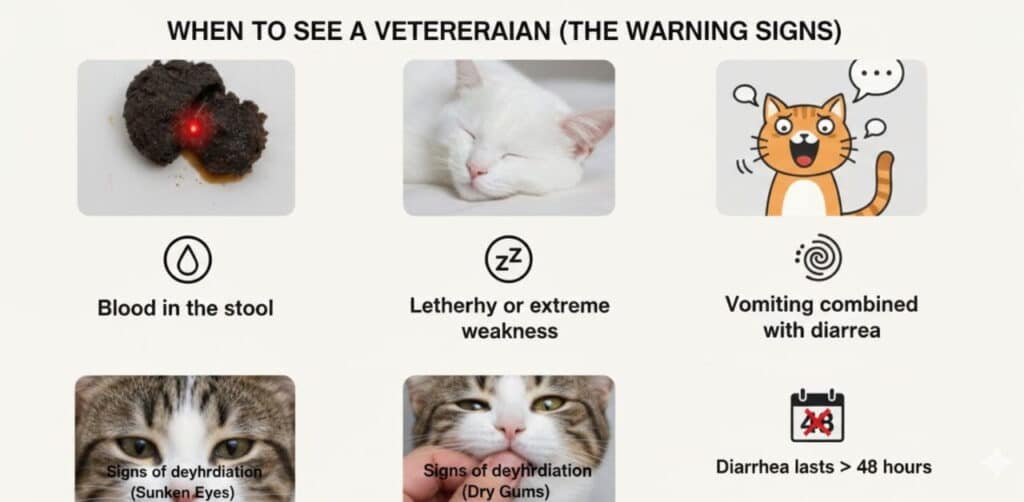
While probiotics are a miracle worker for simple diarrhea, some situations require urgent medical attention. According to Cats Protection (UK), you should call your vet immediately if you notice:
- Blood in the stool (bright red or dark/tarry).
- Lethargy or extreme weakness.
- Vomiting combined with diarrhea.
- Signs of dehydration (sunken eyes, dry gums).
- Diarrhea that lasts longer than 48 hours despite treatment.
Are Cat Probiotics Worth It?
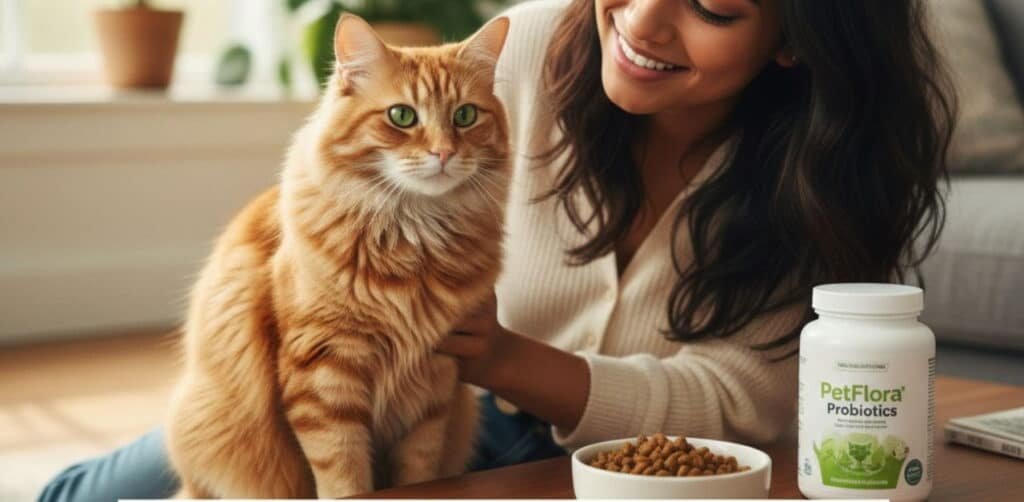
Absolutely. Investing in a high-quality cat probiotic is one of the best decisions you can make for your pet’s long-term health. Not only do they stop the immediate “mess,” but they also build a fortress of health within your cat’s digestive system, preventing future issues.
Stop the suffering today. By choosing a science-backed probiotic, you aren’t just cleaning up a litter box—you are giving your cat the vibrant, pain-free life they deserve.