For millions of Americans, the dream of owning a cat is often crushed by the painful reality of allergies. You see a beautiful kitten, you want to cuddle it, but within minutes, your eyes are watering, your throat is itchy, and you’re reaching for the antihistamines. It feels like a heartbreaking choice between your health and your love for animals.
But what if I told you that you don’t have to choose?
Enter the world of Hypoallergenic Cats. While no cat is 100% allergen-free, certain breeds are proven to be game-changers for allergy sufferers. In this comprehensive guide, we will reveal the best breeds for your home and the insider secrets to living comfortably with your feline soulmate.
The Science of “Hypoallergenic”: Debunking the Myths

Before we dive into the breeds, we must address a massive misconception. Most people think cat hair causes allergies. This is false.
The real culprit is a protein called Fel d 1, which is found in a cat’s saliva, skin oils (dander), and urine. When a cat grooms itself, this protein dries on its fur and becomes airborne.
Hypoallergenic cats are simply breeds that:
Produce significantly less of the Fel d 1 protein.
Shed much less hair and dander into your living environment.
By choosing the right breed, you can drastically reduce your exposure to these triggers and finally enjoy the companionship you’ve been longing for.
Top 8 Hypoallergenic Cat Breeds for US Homes
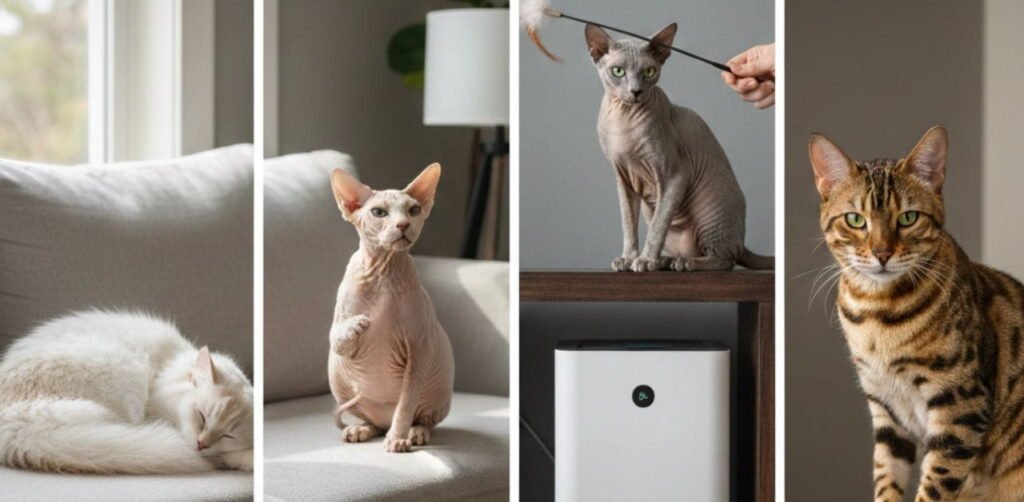
If you are ready to transform your life, here are the top-rated breeds that are popular across the United States.
The Fluffy Miracle
It sounds unbelievable, but this long-haired, majestic beauty is often the best choice for severe allergy sufferers.
- Why they work: Siberians naturally produce much lower levels of Fel d 1 than almost any other breed.
- Personality: They are known as “dog-like” cats—loyal, playful, and incredibly affectionate.
The Iconic Hairless Companion
The Sphynx is the gold standard for many allergy sufferers. Because they have no fur to trap saliva, the allergens stay on their skin.
- Pro Tip: You must bathe them weekly to wash away skin oils.
- Personality: They are social butterflies who love to be the center of attention.
The Russian Blue: The Silver Beauty
With their stunning emerald eyes and shimmering silver coats, Russian Blues are a breathtaking addition to any home.
- Why they work: Their coat is dense and double-layered, which traps allergens close to the skin rather than letting them float into your living room.
- Personality: Quiet, gentle, and highly intelligent.
Exotic and Energetic
Bengals look like mini-leopards and have a unique “pelt” instead of traditional fur.
- The Advantage: Their coats require very little grooming, meaning they don’t spread saliva-coated dander around your house.
- Personality: High-energy and adventurous. They even love playing in water!
The “Long-Haired Siamese”
Don’t let the long, silky hair fool you. The Balinese is one of the best-kept secrets in the cat world for allergy sufferers.
- Why they work: Like the Siberian, they produce far less Fel d 1 protein than common house cats.
The Devon Rex & Cornish Rex
These “curly-coated” cats are extraordinary. The Cornish Rex only has a soft undercoat (down hair), while the Devon Rex has very little hair overall.
- The Result: Minimal shedding and a much lower “allergy footprint” in your home.
The Oriental Shorthair
A member of the Siamese family, these cats have a very fine, short coat that sheds almost nothing.
- Why they work: Frequent brushing can make their allergen levels nearly non-existent.
The Javanese
The Javanese has only one of the three usual layers of cat fur. Less fur means less protein being deposited during grooming.
5 Life-Changing Tips to Manage Allergies at Home
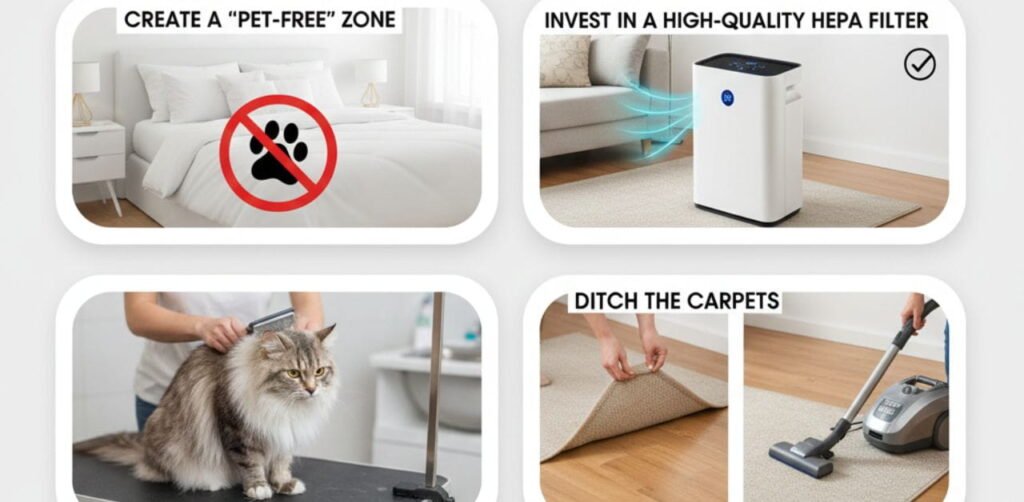
Even with a hypoallergenic breed, you should follow these expert-verified steps to ensure your home remains a sanctuary.
Create a “Pet-Free” Zone
Your bedroom should be a sacred space. Keep your cat out of the bedroom to ensure your pillows and sheets remain free of any trace of dander. This allows your immune system to “recover” while you sleep.
Invest in a High-Quality HEPA Filter
Standard air filters won’t cut it. You need a HEPA (High-Efficiency Particulate Air) purifier. This device is guaranteed to capture microscopic dander particles that are invisible to the naked eye.
Frequent Bathing and Brushing
While most cats hate water, breeds like the Sphynx or Bengal can be trained to enjoy it. Wiping your cat down with a damp cloth daily is a simple yet powerful way to remove surface allergens.
Ditch the Carpets
Hardwood or tile floors are an allergy sufferer’s best friend. Carpets are notorious for trapping dander and holding it for years. If you can’t remove carpets, use a vacuum with a HEPA filter twice a week.
The Power of Nutrition
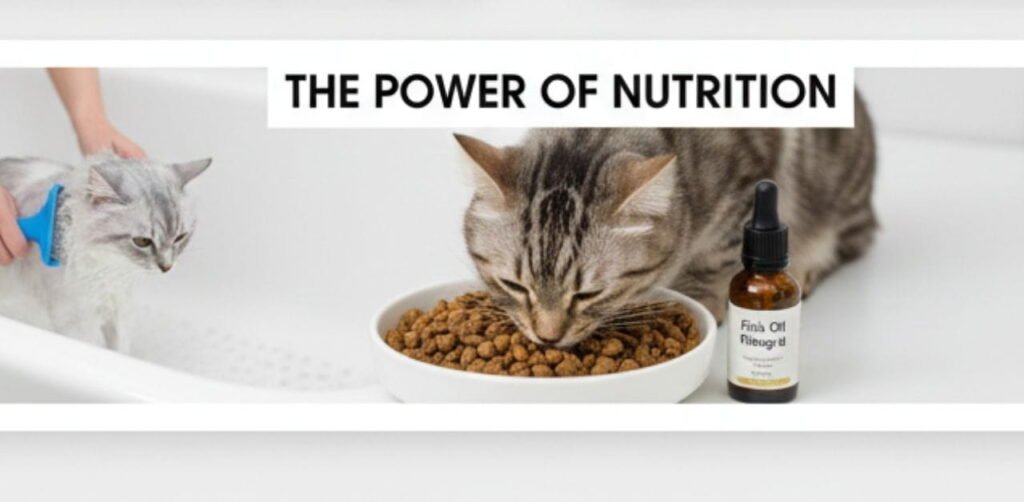
Feeding your cat a high-quality, Omega-3-rich diet keeps their skin healthy. Healthy skin means less flaking, and less flaking means less sneezing for you.
Are You Ready for a “Trial Run”?
Choosing a cat is a huge responsibility. If you’re unsure, we strongly recommend visiting a reputable breeder in your area. Spend 30 to 60 minutes in a closed room with the specific breed you’re interested in. This “sniff test” is a foolproof way to see how your body reacts before you make a lifelong commitment.
Frequently Asked Questions (FAQ)
Q: Is there such a thing as a 100% non-allergic cat?
No. Every cat produces some level of protein. However, “hypoallergenic” breeds produce so little that many people with moderate allergies never experience symptoms.
Q: Do male or female cats cause more allergies?
Interestingly, studies show that intact males produce more Fel d 1 than females or neutered males. If you’re highly sensitive, a spayed female might be your safest bet.
Q: Does kitten fur cause more allergies?
No, usually it’s the opposite. As a cat matures, it produces more allergens.
Don’t Let Allergies Win
Living with a cat is one of life’s purest joys. The companionship, the purrs, and the unconditional love are priceless. By choosing a hypoallergenic breed and following our management tips, you can finally experience the bliss of cat ownership without the misery of allergies.