
Have you ever looked at your playful kitten or your sleepy senior cat and wondered, “How old are they really?” For decades, we’ve been told the famous “Rule of Seven”—the idea that one cat year equals seven human years.
Here’s a shocking truth: The seven-year rule is a total myth. Calculating cat years to human years is much more complex than simple multiplication. Cats age rapidly in their youth and then settle into a graceful plateau. Understanding your cat’s true biological age is not just about curiosity; it’s essential for providing the right nutrition, medical care, and lifestyle support.
In this definitive guide, we will break down the feline aging process, provide an easy-to-use conversion chart, and reveal the expert-backed signs that your cat is entering a new stage of life.
Why the “7-Year Rule” is Wrong (And What to Use Instead)
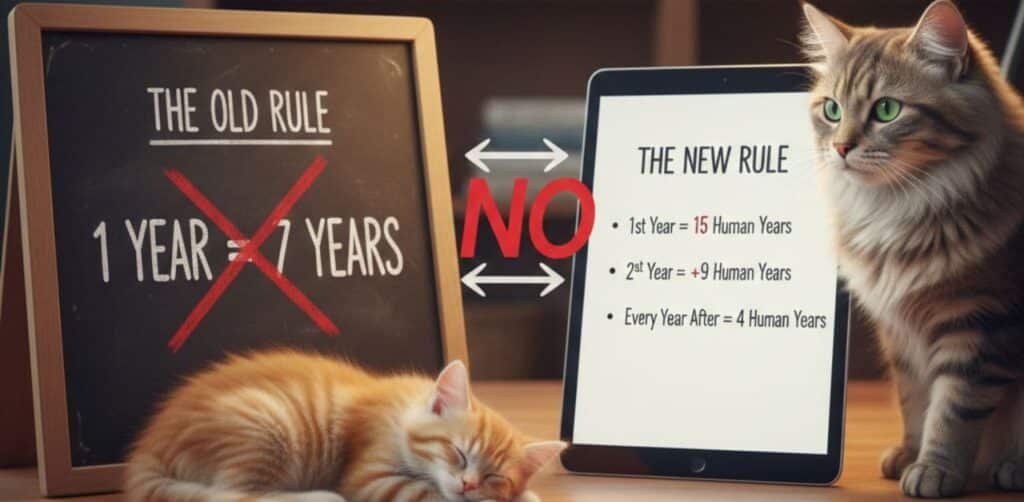
If we used the 7-year rule, a 1-year-old cat would be 7 human years old. However, a 1-year-old cat is physically mature enough to reproduce—something a 7-year-old human child certainly cannot do.
Veterinarians now use a more accurate formula known as the 15-9-4 rule:
- The First Year: Your cat’s first year is equal to roughly 15 human years.
- The Second Year: The second year adds about 9 human years. (By age 2, your cat is roughly 24).
- Every Year After: Each following year adds approximately 4 human years.
Using this formula gives a much more realistic picture of your pet’s physical and mental development.
Cat Years to Human Years: The Complete Conversion Chart
To make it simple for you, we have compiled this comprehensive cat age chart. Save this, bookmark it, or print it out to keep track of your furry friend’s journey.
| Cat Age (Actual) | Human Age (Equivalent) | Life Stage |
| 1 Month | 1 Year | Kitten |
| 6 Months | 10 Years | Junior |
| 1 Year | 15 Years | Teenager |
| 2 Years | 24 Years | Young Adult |
| 5 Years | 36 Years | Prime |
| 8 Years | 48 Years | Mature |
| 10 Years | 56 Years | Senior |
| 12 Years | 64 Years | Senior |
| 15 Years | 76 Years | Geriatric |
| 20 Years | 96 Years | Super Senior |
Understanding the 6 Critical Life Stages of a Cat
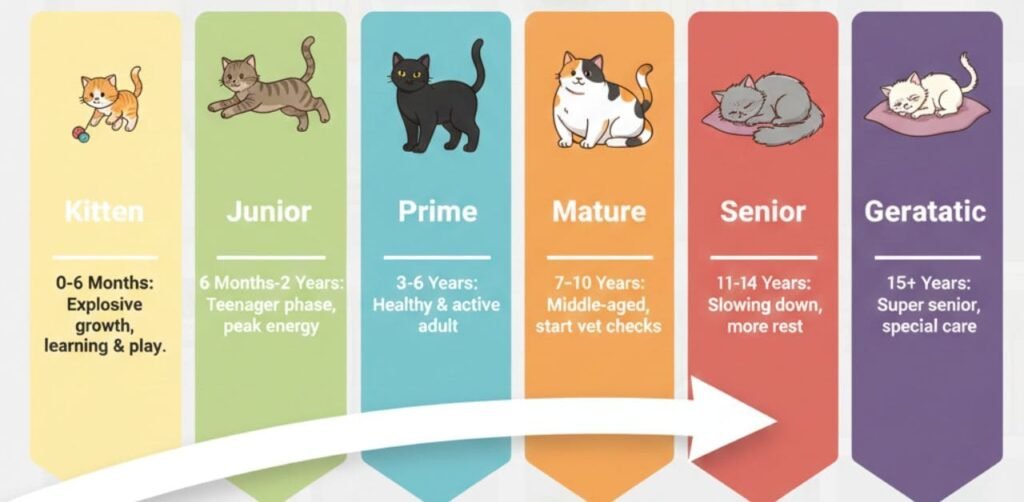
Just like humans move from infancy to retirement, cats go through distinct life stages. Knowing where your cat stands helps you anticipate health shifts before they become critical problems.
Kitten (0–6 Months)
This is the stage of explosive growth. In just half a year, a kitten goes from a helpless newborn to a pre-teen. This is the best time for socialization and establishing healthy eating habits.
Junior (6 Months – 2 Years)
Your cat is now a “teenager.” They reach sexual maturity and their full size. Expect lots of energy, boundary-testing, and playfulness.
Prime (3 – 6 Years)
These are the “Golden Years.” Your cat is at the peak of their health and physical fitness. They are usually settled, confident, and active.
Mature (7 – 10 Years)
In human terms, your cat is now in their 40s and 50s. You might notice them slowing down slightly. This is the proven time to start more frequent vet checkups to catch issues like kidney disease or diabetes early.
Senior (11 – 14 Years)
Once a cat hits 11, they are officially seniors. They may sleep more, play less, and require a diet tailored to their slowing metabolism.
Geriatric (15+ Years)
Many indoor cats now live well into their late teens or even 20s. These “super seniors” require extra love, soft bedding, and potentially specialized medical support for arthritis or cognitive decline.
3 Secret Factors That Influence How Your Cat Ages
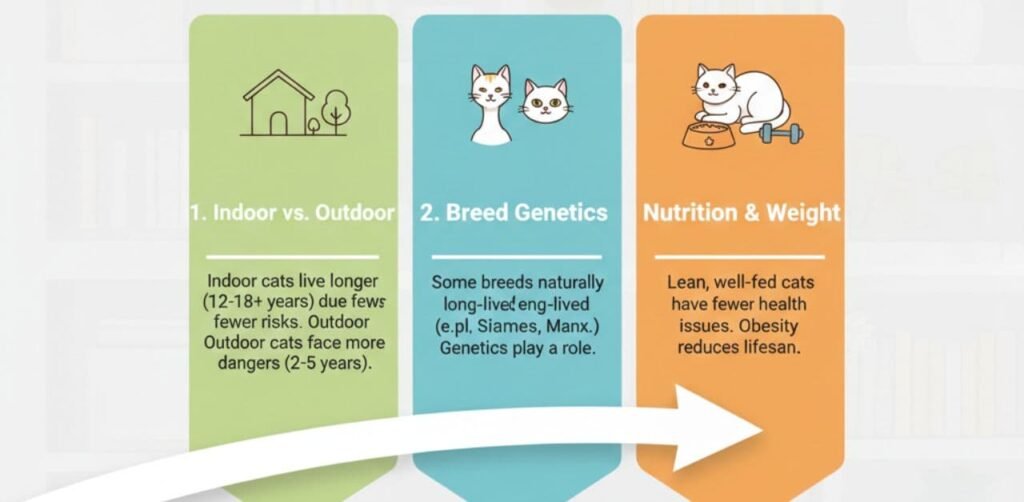
Not all cats age at the same rate. If you want to maximize your cat’s lifespan, you need to consider these three variables:
The “Indoor vs. Outdoor” Factor
This is the biggest contributor to feline longevity. Indoor cats typically live 12–18 years, with many reaching 20. Outdoor cats, unfortunately, face predators, traffic, and infectious diseases, often resulting in a significantly shorter lifespan (averaging 2–5 years in some environments).
Breed Genetics
Some breeds are known for their longevity, while others may be prone to specific genetic conditions. For example, Manx and Siamese cats are often celebrated for living very long lives, while some larger breeds might age slightly faster.
Nutrition and Weight Management
Obesity is the #1 “silent killer” in domestic cats. A cat that is even 2 pounds overweight is at a much higher risk for “human-style” diseases like Type 2 diabetes and joint pain. Keeping your cat lean is a guaranteed way to add years to their life.
How to Tell a Cat’s Age: Expert Tips for Rescues
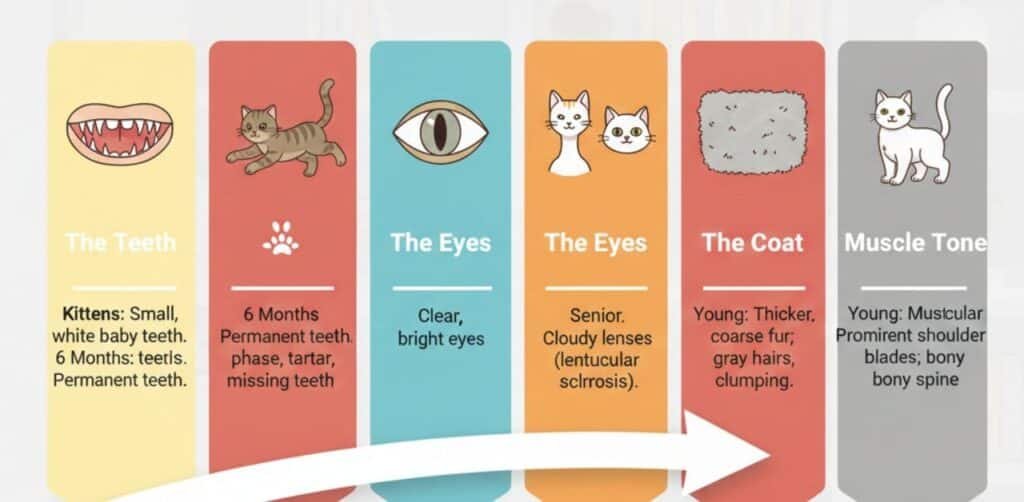
If you’ve adopted a stray and don’t know their birthday, veterinarians use these expert indicators to estimate age:
- The Teeth: Kittens have baby teeth that fall out by 6 months. Older cats usually show yellowing (tartar) or wear and tear. If a cat is missing teeth, they are likely a senior.
- The Eyes: Young cats have clear, bright eyes. Around age 12, a cat’s lenses may show some cloudiness (lenticular sclerosis), which is a normal sign of aging.
- The Coat: Young cats have soft, fine fur. Senior cats may have thicker, coarser fur that might turn gray in some spots or become “clumpier” because they can’t groom themselves as easily.
- Muscle Tone: Younger cats are muscular and sleek. Older cats may have more prominent shoulder blades or “bony” backs due to muscle loss.
Power Tips to Keep Your Cat “Young” Forever
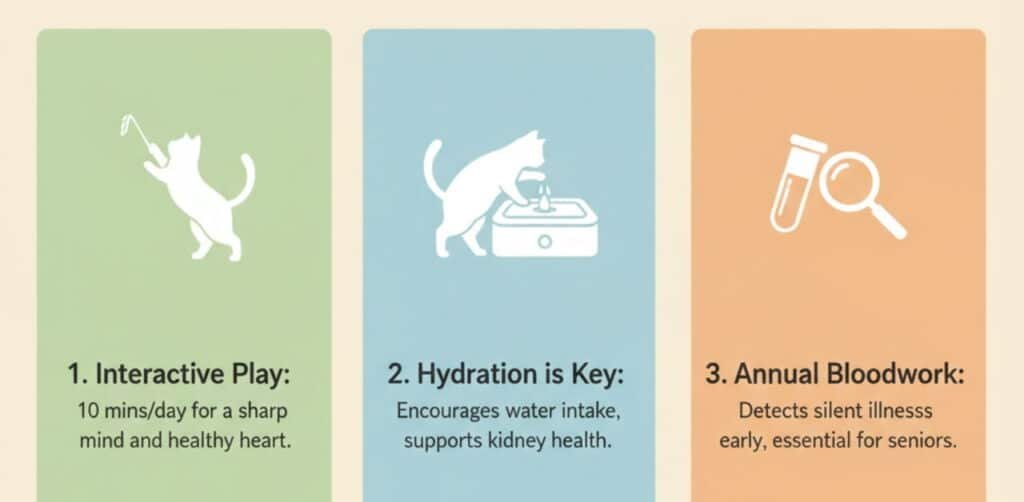
While we can’t stop the clock on cat years to human years, we can certainly slow down the physical effects of aging.
- Interactive Play: Even 10 minutes of “hunting” with a feather wand keeps their brain sharp and heart healthy.
- Hydration is Key: Cats are prone to kidney issues. Using a cat water fountain can encourage them to drink more.
- Annual Bloodwork: Once your cat hits the “Mature” stage (7 years), annual blood tests are the best investment you can make to catch “silent” illnesses.
Every Moment Counts
Whether your cat is a 24-year-old “young adult” or a 96-year-old “super senior,” understanding their age helps you appreciate their unique needs. Cats are masters at hiding pain, so being aware of their human-age equivalent reminds us to be more patient and observant.