
As a cat owner in the US, you’ve likely noticed that your feline friend is a master of non-verbal communication. While they might meow for food or purr when content, their most expressive tool is often overlooked: the tail. Understanding cat tail meanings is like unlocking a secret code that allows you to bond deeper with your pet and provide the best care possible.
From the “happy hook” to the “angry bottle brush,” every flick and swish tells a story. In this guide, we will decode the science and emotion behind your cat’s movements.
Why Tail Language Matters
Cats use their tails for more than just balance. While the tail is an extension of the spine (containing about 10% of their bones), it functions primarily as an emotional barometer. Because cats are both predators and prey in the wild, they have evolved subtle ways to communicate their mood without making noise that might attract unwanted attention.
The High-Up Greetings
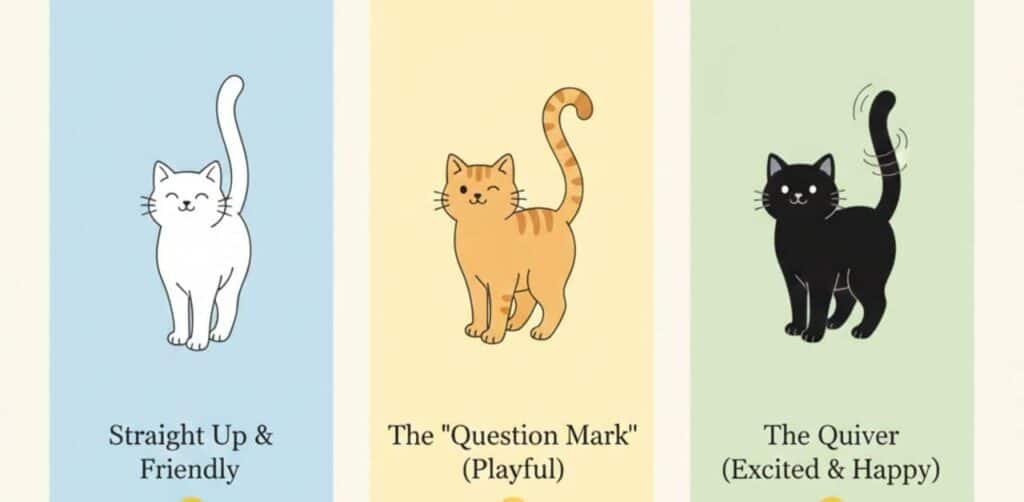
When a cat’s tail is pointing toward the ceiling, it’s generally a sign of a happy, confident kitty.
- The Straight Up “Flag”: If your cat approaches you with a vertical tail, they are feeling friendly and approachable. This is the gold standard of cat tail meanings—it means “I’m glad to see you!”
- The Question Mark (Curved Tip): A tail that is straight up but curls at the very end indicates a playful mood. This is the perfect time to pull out the laser pointer or a feather wand.
- The Quiver: If the tail is upright and vibrating or quivering, your cat is likely experiencing extreme excitement. You’ll often see this when you’re opening a can of their favorite wet food.
The Low and Tucked Positions
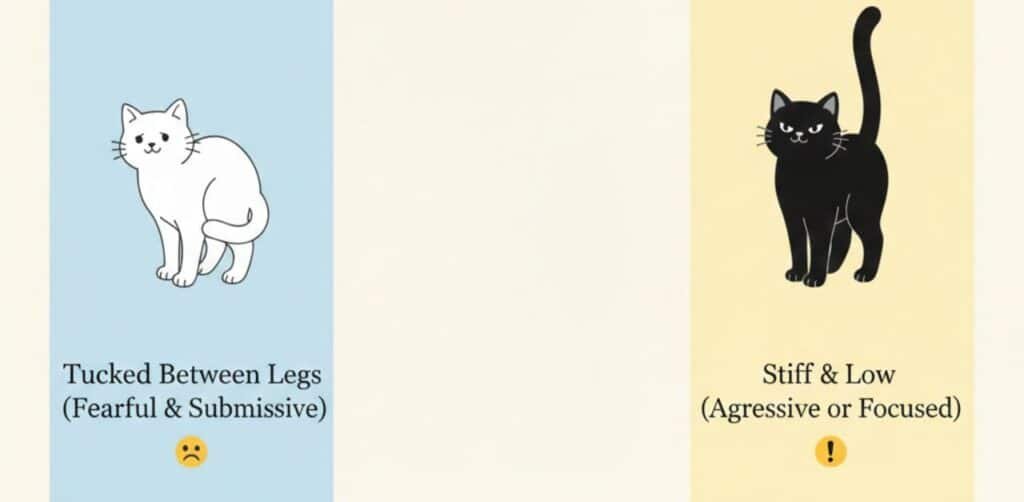
Low tail positions usually signal a need for space or a feeling of insecurity.
- Tucked Between Legs: Just like a dog, a cat with a tail tucked under its belly is feeling fearful or submissive. Something in their environment—perhaps a loud noise or a new guest—is making them feel threatened.
- Stiff and Low: A tail held straight down, perpendicular to the floor, can signal aggression or intense focus. If they are stalking a toy (or your feet), this is normal. If they are staring at another pet, be cautious.
Movement and Swishing
The speed and rhythm of the movement are crucial when interpreting cat tail meanings.
- The Gentle Swish: A slow, rhythmic side-to-side movement usually means the cat is focused on something, like a bird outside the window.
- The Violent Thump: If your cat is laying down but thumping their tail hard against the floor, they are irritated. This is a clear “stop petting me” warning. Ignoring this often leads to a “love bite.”
- The Twitchy Tip: Small, erratic twitches at the end of the tail often indicate hunting instinct or mild frustration.
Common Tail Positions at a Glance
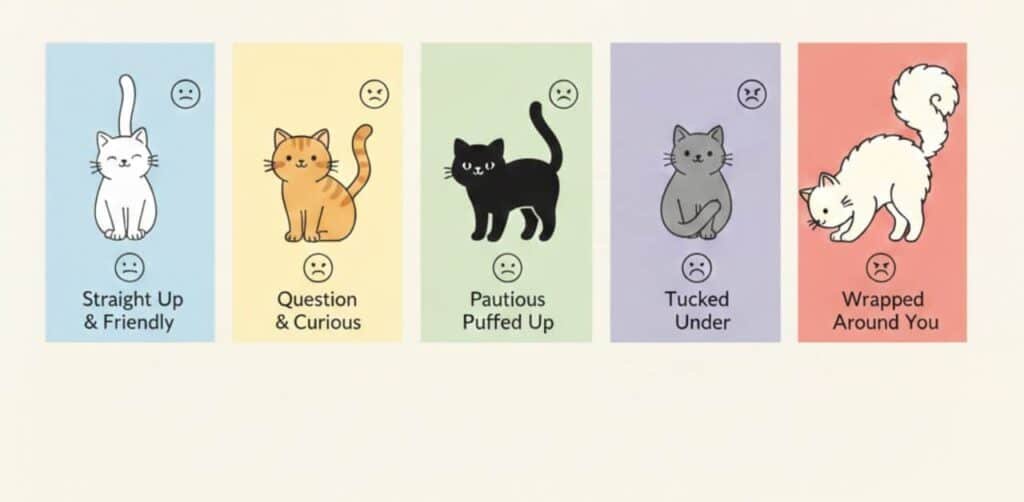
| Tail Position | Emotional Meaning | Recommended Action |
| Straight Up | Happy & Confident | Petting and interaction |
| Question Mark | Playful | Grab a toy! |
| Puffed Up | Scared or Angry | Give them space |
| Tucked Under | Nervous/Fearful | Eliminate the stressor |
| Wrapped Around You | Affectionate | Enjoy the love |
The “Big” Tail: Fear and Aggression
When a cat feels like they are in immediate danger, they try to make themselves look as large as possible.
- The Bottle Brush: This is when the hair on the tail stands straight up (piloerection). A puffed-out tail means the cat is severely spooked or ready to fight.
- The Arched Back: Often paired with the puffed tail, this “Halloween Cat” posture is a defensive mechanism. In this state, the cat’s “fight or flight” response is fully active.
Tail Wrapping and Touching
Cats also use their tails to show “paws-on” affection.
- The Tail Wrap: When a cat wraps its tail around your leg or another cat’s tail, it’s the feline equivalent of a hug. It is a sign of a strong social bond and trust.
- The Gentle Tap: If your cat sits next to you and lightly taps you with their tail, they are acknowledging your presence and showing comfort.
Frequently Asked Questions (US Pet Owner Edition)
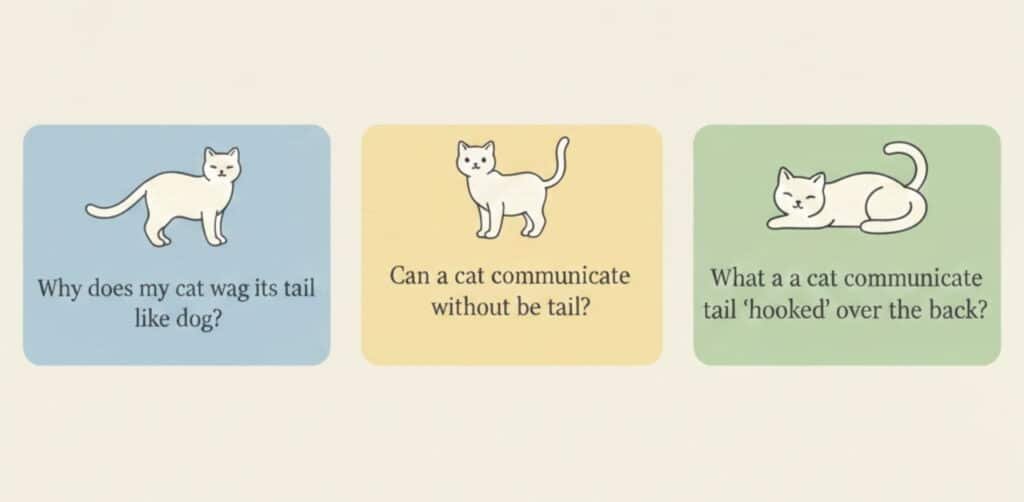
Why does my cat wag its tail like a dog?
Unlike dogs, cats don’t usually wag their tails to show joy. In the world of cat tail meanings, a wag or “swish” is usually a sign of overstimulation or conflict. They are trying to decide whether to stay or run, or they are becoming annoyed with an interaction.
Can a cat communicate without a tail?
Breeds like the Manx are born without tails, and other cats may lose theirs due to injury. These cats rely more heavily on ear positions, whisker movement, and vocalization to get their point across. They adapt remarkably well!
What does it mean when the tail is “hooked” over the back?
In many US households, you’ll see cats walking around with their tail resting slightly over their back. This is a sign of extreme relaxation and “owning the space.” Your cat feels completely safe in their home.
Becoming a Feline Expert
Learning to read your cat’s tail is one of the most rewarding things you can do as an owner. It prevents misunderstandings, reduces your cat’s stress, and helps you know exactly when they want love and when they want to be left alone.
Next time your cat enters the room, look at the tail first. Is it a “Question Mark” ready for play, or a “Low Droop” needing some quiet time? Once you master these cues, your relationship with your pet will reach a whole new level of harmony.