
As a cat owner, you’ve likely stood in your kitchen, cracking an egg for breakfast, while your feline friend stares at you with intense curiosity. It’s a common dilemma: Can cats eat eggs? While eggs are often hailed as a “super food” for humans, the feline digestive system operates on a completely different biological blueprint.
In this Cat Thesis deep dive, we explore nutritional science, potential risks, and the safest ways to introduce eggs into your cat’s diet.
The Nutritional Breakdown: Are Eggs Good for Cats?

To answer the question, Can cats eat eggs?, we must first look at what an egg contains. Eggs are packed with high-quality protein, amino acids, and essential vitamins. Since cats are obligate carnivores, they require animal-based protein to thrive.
- Protein: Eggs provide highly digestible protein that helps maintain lean muscle mass.
- Taurine: This is a critical amino acid for feline heart and eye health.
- Vitamins: Rich in Vitamin A, D, B12, and Iron.
However, just because they can eat them doesn’t mean they should eat them in any form.
The Golden Rule: Never Feed Raw Eggs to Cats

If you are wondering, Can cats eat eggs raw?, the answer is a definitive no. Many “raw diet” enthusiasts suggest this, but the scientific risks are significant:
Salmonella and E. coli: Just like humans, cats can suffer from severe food poisoning. This can lead to vomiting, diarrhea, and extreme lethargy.
Avidin Interference: Raw egg whites contain a protein called avidin. This interferes with the absorption of Biotin (Vitamin B7), which is crucial for your cat’s skin health and coat shine.
Cross-Contamination: Feeding raw eggs can spread bacteria to your kitchen counters and even to you.
Cooked Eggs: The Safest Method
When asking can cats eat eggs, the secret lies in the preparation. Boiled or scrambled eggs (without oil or butter) are the safest options. Cooking neutralizes the avidin and kills any harmful bacteria, making the egg a safe, protein-rich treat.
Hidden Dangers: Ingredients to Avoid

The biggest mistake cat owners make isn’t the egg itself, but the “extras” we add for human taste. When preparing eggs for your cat, ensure they are free from:
- Onions and Garlic: These are toxic to cats and can cause life-threatening anemia.
- Salt and Pepper: Can lead to sodium ion poisoning or digestive upset.
- Butter and Oil: Adds unnecessary fats that can trigger pancreatitis in cats.
Is Your Cat Allergic to Eggs?
Believe it or not, eggs are among the top food allergens for felines. If you notice your cat scratching excessively, developing a skin rash, or vomiting after eating a small piece of egg, they may have an allergy. Always consult your vet if you notice abnormal behavior after a new treat.
The Calorie Trap: Moderation is Key
One large egg contains about 70 to 90 calories. For a 10-pound cat that only needs about 200–250 calories a day, a whole egg is almost half of their daily intake!
Thesis Recommendation: Think of eggs as a “topper” or a treat, not a meal replacement. One tablespoon of cooked egg is usually more than enough for a healthy snack.
Step-by-Step: How to Safely Serve Eggs
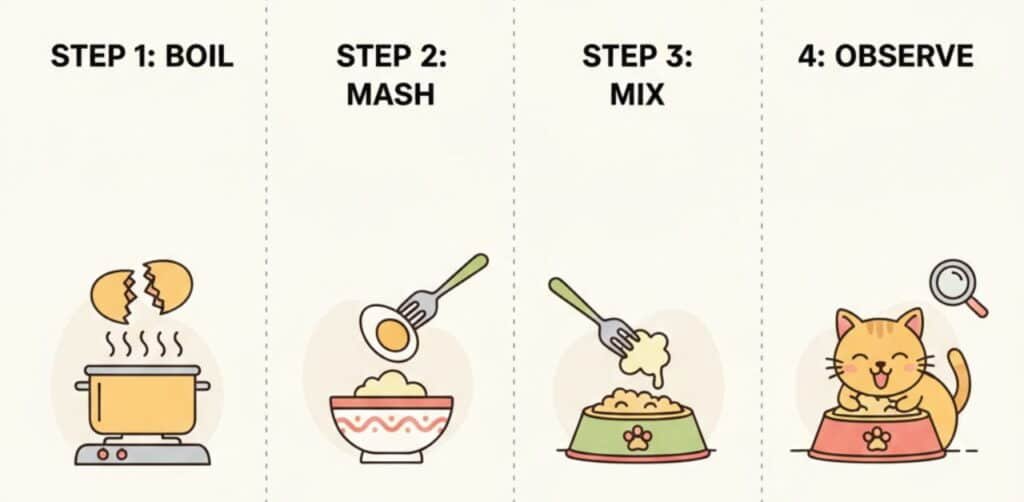
If you’ve decided to let your cat try this protein boost, follow these steps:
- Boil the egg until the yolk and white are completely firm.
- Mash it into small, bite-sized pieces.
- Mix a tiny amount with their regular wet food to see if they like the texture.
- Observe for 24 hours for any signs of an upset stomach.
The Verdict: Can Cats Eat Eggs?
Yes, can cats eat eggs? Absolutely—but only if they are fully cooked and served plain. They offer a fantastic protein boost and can improve the quality of your cat’s fur and energy levels.
However, remember that every cat is unique. What works for one might not work for another. Always prioritize high-quality commercial cat food as the primary source of nutrition, and use eggs as a specialized treat.
Summary Table for Quick Reference
| Method | Safe for Cats? | Why? |
| Raw Eggs | ❌ No | Risk of Salmonella and Biotin deficiency. |
| Fried Eggs | ⚠️ Caution | Only if cooked without oil, salt, or butter. |
| Boiled Eggs | ✅ Yes | Best way to preserve nutrients safely. |
| Scrambled Eggs | ✅ Yes | Safe if kept plain and unseasoned. |
Final Verdict: The Cat Thesis Perspective
Understanding your feline’s biological needs is the foundation of a long, vibrant life. While our research confirms that the answer to “Can cats eat eggs?” is a resounding yes, it comes with a scientific responsibility. Always stick to the “10% Rule”—supplemental treats like eggs should never exceed 10% of your cat’s total daily caloric intake to prevent obesity and nutrient imbalance.