
As a cat parent, you strive to create a sanctuary for your feline friend. You curate the best grain-free kibble, invest in the fluffiest beds, and fill your home with lush, green life. But here is a chilling “thesis” for every cat owner: Not all greenery is friendly. In the United States alone, the ASPCA Animal Poison Control Center handles thousands of calls annually related to plant ingestion. What looks like a beautiful aesthetic choice for your living room could be a ticking time bomb for your cat’s health.Ingesting these plants can lead to severe distress and visible Cat Anxiety Symptoms that owners should monitor.
In this comprehensive guide, we are diving deep into the 10 most common houseplants that are toxic to cats, the science behind their toxicity, and what you can plant instead to keep your home both beautiful and safe.
Why Do Cats Eat Plants Anyway?
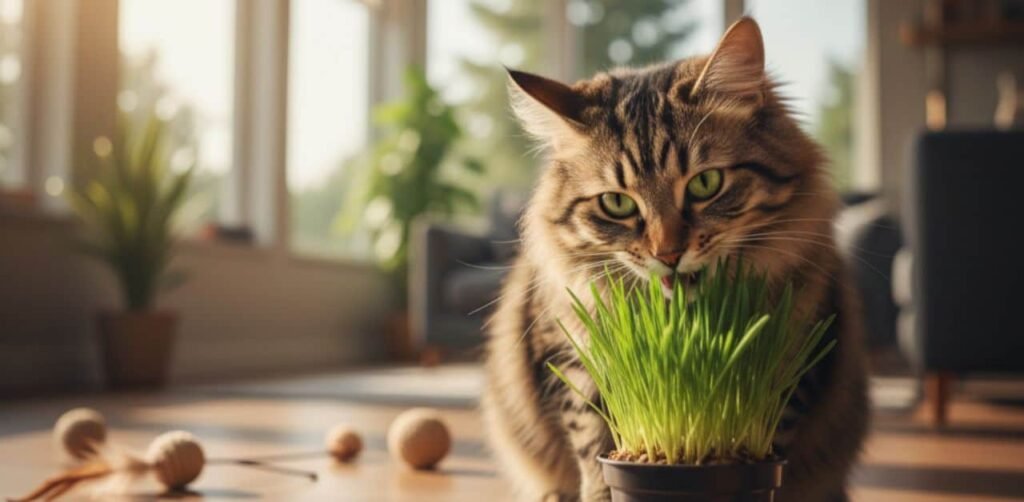
Before we list the culprits, let’s understand the behavior. Cats are obligate carnivores, yet they often nibble on grass or houseplants. Why?
- Digestion: It helps them pass hairballs.
- Boredom: An indoor cat looks for entertainment.
- Nutrients: Sometimes they seek folic acid found in green leaves.
However, since your cat doesn’t know the difference between a snack and a hazard, the responsibility falls on you.
Lilies (Lilium & Hemerocallis species)

- Danger Level: Critical / Deadly
- The Science: Every part of the lily—the petals, the leaves, the pollen, and even the water in the vase—is highly toxic.
- Symptoms: Within hours, a cat may show vomiting and lethargy. If untreated, it leads to acute kidney failure and death within 3–5 days.
- The Verdict: If you own a cat, lilies should never enter your home.
Sago Palm (Cycas revoluta)
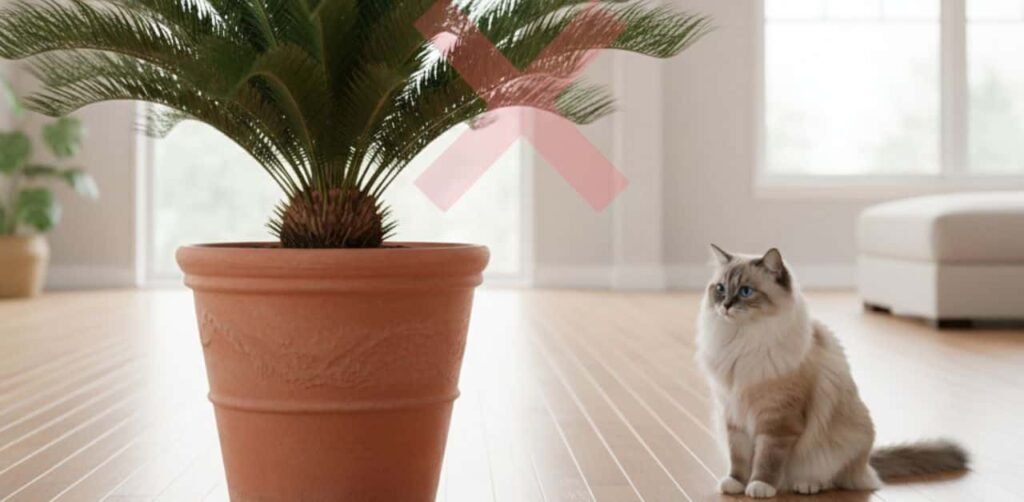
- Danger Level: Extremely High
- The Science: Frequently used in US landscaping and as indoor “bonsai” palms, these contain cycasin.
- Symptoms: Drooling, bloody stools, and yellowing of the skin (jaundice). The mortality rate for Sago Palm ingestion in cats is nearly 50%.
- The Verdict: A beautiful plant with a deadly secret. Keep it far away from curious paws.
Pothos / Devil’s Ivy (Epipremnum aureum)
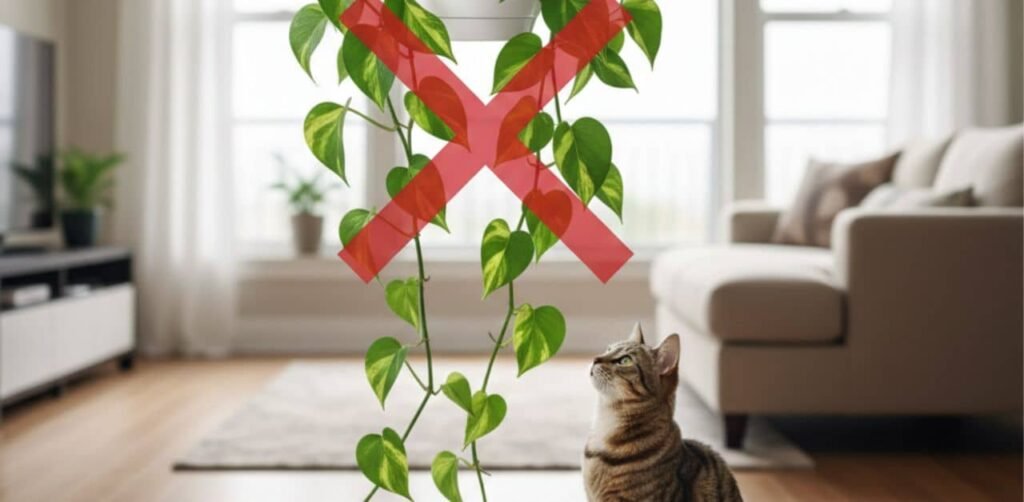
- Danger Level: Moderate
- The Science: Pothos is perhaps the most common houseplant in America. It contains insoluble calcium oxalate crystals.
- Symptoms: When chewed, these crystals act like tiny needles, causing immediate oral irritation, swelling of the throat, and difficulty swallowing.
- The Verdict: If you have Pothos, hang it high in a place where your cat cannot reach it.
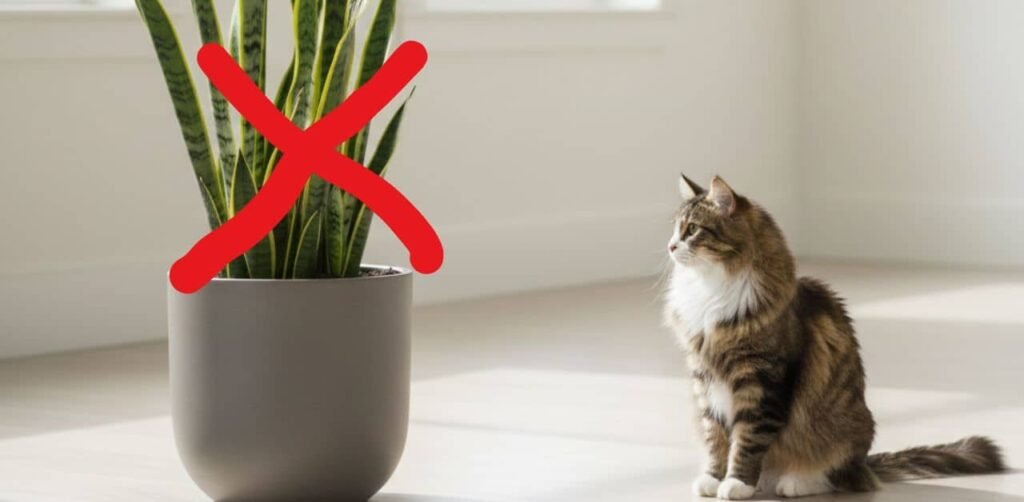
Snake Plant / Mother-in-Law’s Tongue (Sansevieria)
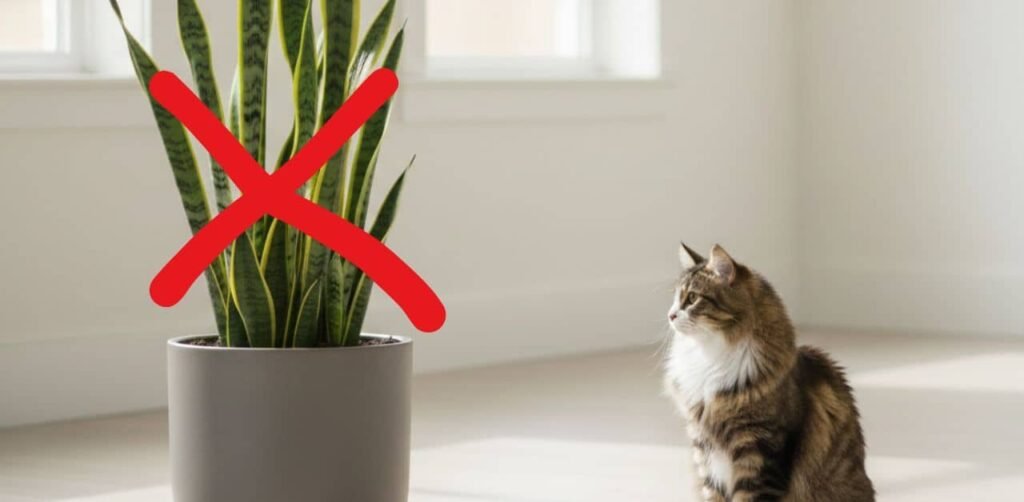
- Danger Level: Mild to Moderate
- The Science: Known for its air-purifying qualities, it contains saponins which act as a natural insecticide—and a feline toxin.
- Symptoms: Nausea, vomiting, and diarrhea.
- The Verdict: Great for air quality, bad for cat snacks.
Aloe Vera
- Danger Level: Moderate
- The Science: While the inner gel is medicinal for humans, the “latex” (the layer between the skin and gel) contains anthraquinone glycosides.
- Symptoms: Changes in urine color, tremors, and vomiting.
- The Verdict: Keep your healing plant in a closed room or a high shelf.
English Ivy (Hedera helix)
- Danger Level: Moderate
- The Science: This climbing vine contains triterpenoid saponins. Interestingly, the foliage is more toxic than the berries.
- Symptoms: Excessive drooling, abdominal pain, and severe vomiting.
- The Verdict: Classic for decor, but hazardous for “climbers” like cats.
Peace Lily (Spathiphyllum)
- Danger Level: Moderate
- The Science: Unlike true lilies, these don’t cause kidney failure, but they contain those painful calcium oxalate crystals.
- Symptoms: Intense burning of the mouth and pawing at the face.
- The Verdict: A common gift plant that requires caution.
Jade Plant (Crassula ovata)
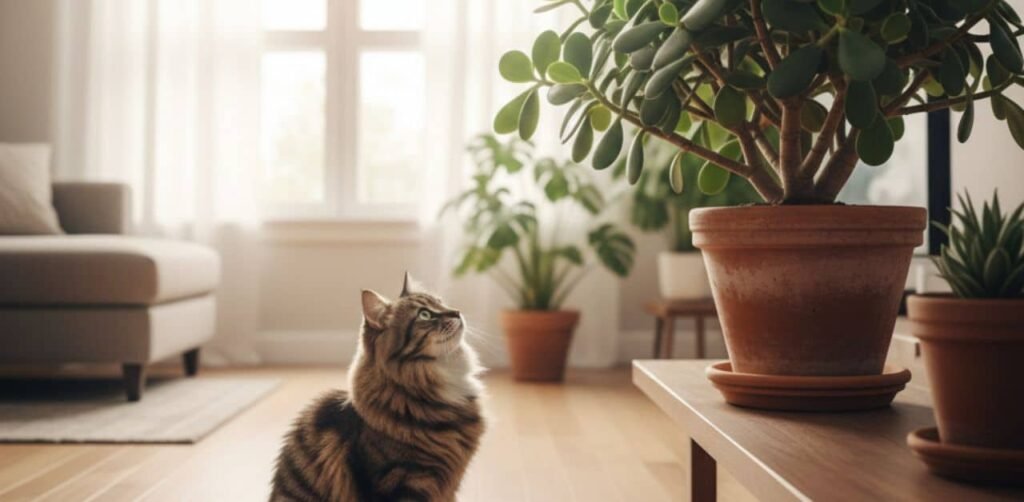
- Danger Level: Moderate
- The Science: Also known as the “Money Plant.” The exact toxin is unknown, but the effects are well-documented.
- Symptoms: Incoordination (drunken walking), lethargy, and a slowed heart rate.
- The Verdict: Not a “lucky” plant for your pet.
Tulips & Hyacinths
- Danger Level: High (especially the bulbs)
- The Science: The bulbs contain the highest concentration of Tulipalin A and B.
- Symptoms: Severe gastrointestinal upset, increased heart rate, and respiratory distress.
- The Verdict: If you’re a gardener, ensure your cat doesn’t dig up the bulbs.
Azaleas / Rhododendrons
- Danger Level: High
- The Science: Even a few leaves can cause serious issues due to grayantoxins.
- Symptoms: Weakness, low blood pressure, and even coma.
- The Verdict: These are often brought indoors as potted gifts—be extremely careful.
Emergency Action Plan: What to do if your cat eats a toxic plant?

If you suspect your cat has ingested any of the plants above, do not wait for symptoms to appear.
Remove the cat: Immediately move them away from the plant.
Identify the plant: Take a photo or bring a sample of the plant to the vet.
Visit the Vet: Time is the most critical factor in saving your cat’s life.
The Pet-Friendly Alternative: Safe Plants for Your Home
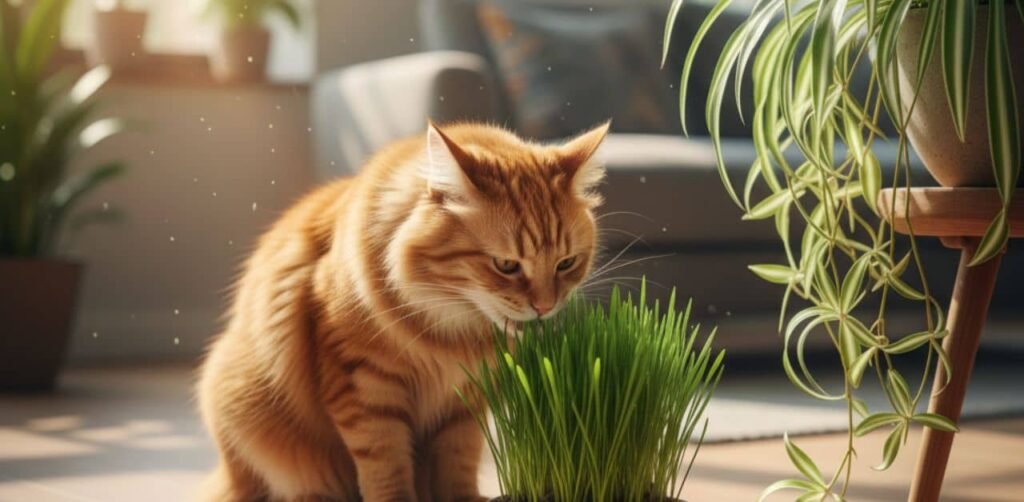
Don’t worry, you don’t have to live in a concrete jungle! Here are 5 beautiful plants that are 100% ASPCA-approved and cat-safe:
- Spider Plant: Looks great and cats love the “dangly” bits.
- Calathea (Prayer Plant): Stunning patterns and totally non-toxic.
- Boston Fern: Great for hanging baskets.
- Areca Palm: A safe alternative to the Sago Palm.
- Cat Grass: The best way to distract your cat from your other plants!
Final Thoughts from CatThesis
Your home should be a safe haven. By choosing your indoor plants wisely, you can enjoy the beauty of nature without risking your cat’s life. Knowledge is the first step in responsible pet ownership.