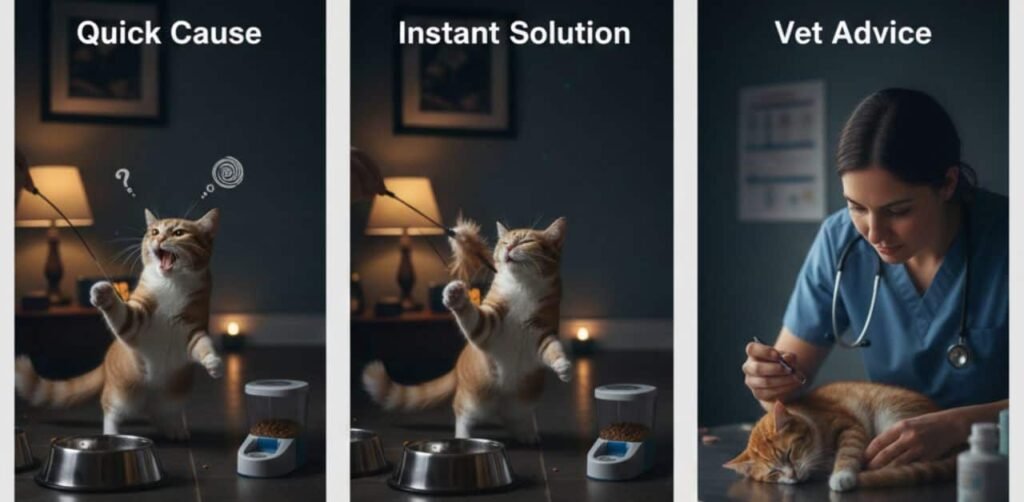
If you are a cat owner, you know that cats are generally quiet animals. However, nothing is more frustrating than being woken up at 3:00 AM by a loud, persistent meow. If you find your cat meowing at night all of a sudden, you might be wondering if something is wrong.
While it is normal for cats to be more active during the night (as they are crepuscular animals), a sudden change in behavior often indicates an underlying issue. In this guide, we will explore why your cat has started vocalizing at night and how you can help them (and yourself) get a better night’s sleep.
Boredom and Pent-up Energy
Indoor cats often spend most of their day sleeping while their owners are at work. By the time you are ready for bed, your cat is fully rested and ready to play. If they haven’t had enough mental or physical stimulation during the day, they will use their “midnight zoomies” and loud meows to get your attention.
Hunger or Thirst
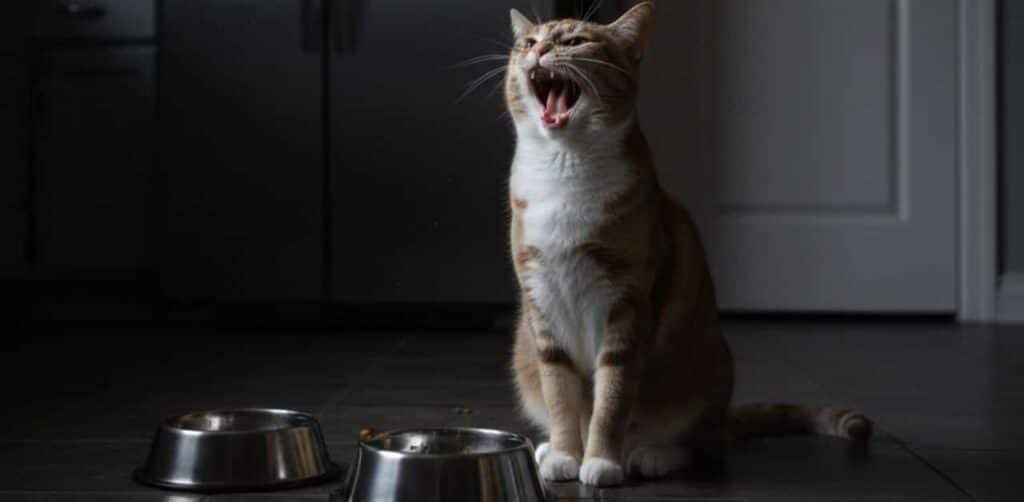
Sometimes the simplest explanation is the right one. If your cat’s feeding schedule is too early in the evening, they might get hungry by midnight. A cat meowing at night all of a sudden might just be reminding you that their bowl is empty.
Tip: Try using an automatic feeder that releases a small snack during the night to keep them satisfied without you having to get out of bed.
Cognitive Dysfunction (Senior Cats)
If you have an older cat, nighttime meowing could be a sign of Feline Cognitive Dysfunction (FAD), which is similar to dementia in humans. Senior cats can become disoriented or confused in the dark, leading to “crying” or loud vocalization because they feel lost or anxious.
Medical Issues and Pain
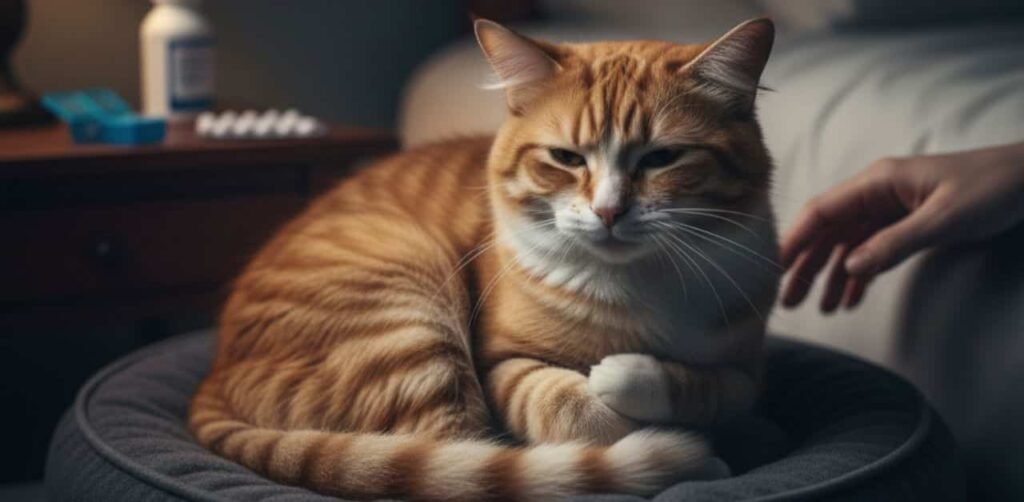
Cats are experts at hiding physical pain. However, discomfort from conditions like hyperthyroidism, high blood pressure, or kidney disease can worsen at night. If your cat is older and the meowing is loud and distressed, a vet check-up is highly recommended to rule out health problems.
Mating Instincts
If your cat is not spayed or neutered, nighttime meowing is often a hormonal behavior. Female cats in heat will yowl loudly to attract mates, and intact males will meow if they scent a female nearby. This behavior is instinctual and very difficult to stop without “fixing” the pet.
Comparison: Normal vs. Concerning Behavior
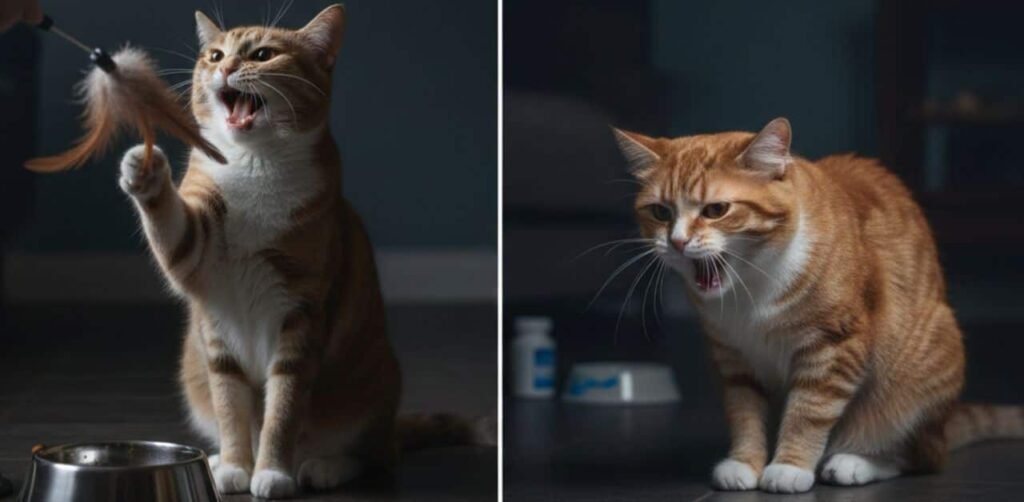
| Behavior | Likely Cause | Action Needed |
| Occasional “chirping” | Playfulness | Ignore or provide toys |
| Constant loud yowling | Medical/Pain | Visit a Vet |
| Meowing by the door | Wants to go out | Environmental enrichment |
| Disoriented meowing (Senior) | Cognitive issues | Nightlights/Vet advice |
How to Stop the Nighttime Meowing
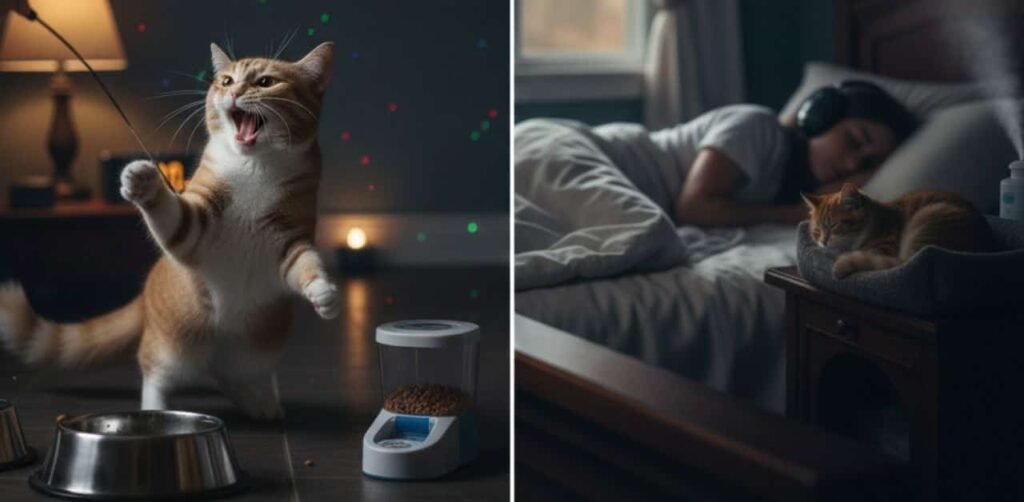
Establish a Play Routine
Spend at least 15–20 minutes in the evening playing with your cat using “feather wands” or laser pointers. The goal is to “hunt, catch, and kill” (the toy). Following this with a meal will mimic their natural cycle of hunting, eating, and then sleeping.
Ignore the Attention-Seeking
This is the hardest part. If your cat meows and you get up to pet them or give them a treat, you are rewarding the behavior. Your cat learns that “Meowing = Attention.” Even if you yell at them, they see it as a win. Try to stay consistent and ignore the noise so they learn it doesn’t work.
Create a Calming Environment
For senior cats or anxious cats, a plug-in pheromone diffuse (like Felicia) can work wonders. Additionally, leaving a small nightlight on can help a disoriented senior cat find their way to the litter box or water bowl without feeling panicked.
Conclusion
A cat meowing at night all of a sudden can be a stressful experience for any pet parent. Most of the time, it is a sign of boredom or a need for a routine change. However, if the behavior persists or your cat seems in distress, always consult with a veterinarian to ensure there are no hidden health issues.
With a little patience and the right adjustments to their daytime activity, you can return to having peaceful, quiet nights.
Article Summary