
As a cat owner, noticing dark gunk in your cat’s ears can be alarming. Is it just a bit of dirt, or are tiny parasites making a home in your feline friend’s ear canal? Understanding the difference between cat ear mites vs. wax is crucial for your cat’s comfort and health.
While earwax is a natural part of a cat’s biology, ear mites (Otodectes cynotis) are highly contagious parasites that require prompt treatment. In this guide, we will break down the symptoms, visual cues, and behaviors that help you identify the culprit.
What is Normal Cat Ear Wax?
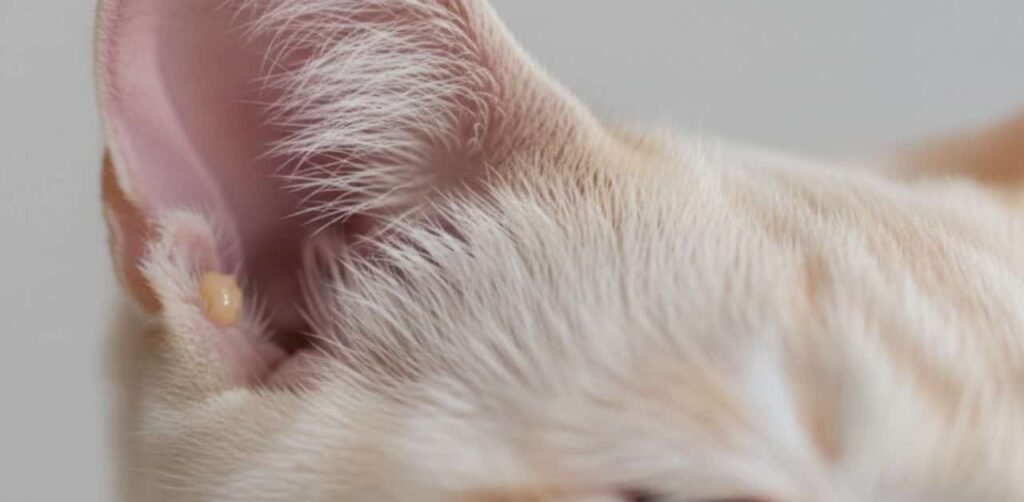
Just like humans, cats produce earwax (cerumen) to protect their ear canals from dust, bacteria, and debris.
-
- Appearance: Healthy cat earwax is typically light yellow to pale brown.
-
- Consistency: It should be slightly oily and smooth.
-
- Odor: Normal wax is odorless.
-
- Behavior: If your cat has normal wax buildup, they won’t show signs of distress, such as excessive scratching or head shaking.
What are Cat Ear Mites?
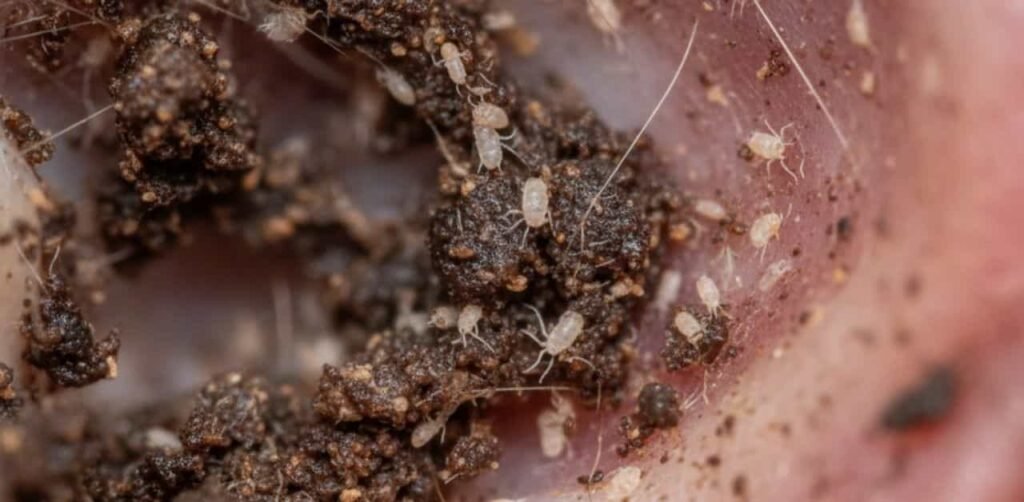
Ear mites are microscopic parasites that feed on the oils and wax inside a cat’s ear. They are incredibly itchy and can lead to secondary infections if left untreated.
-
- Appearance: The most common sign of mites is a dark, crumbly discharge that looks exactly like coffee grounds.
-
- Consistency: Unlike wax, mite debris is usually dry and granular.
-
- Odor: Mite infestations often produce a foul, musty smell due to the accumulation of waste and dried blood.
Key Differences: Cat Ear Mites vs. Wax at a Glance
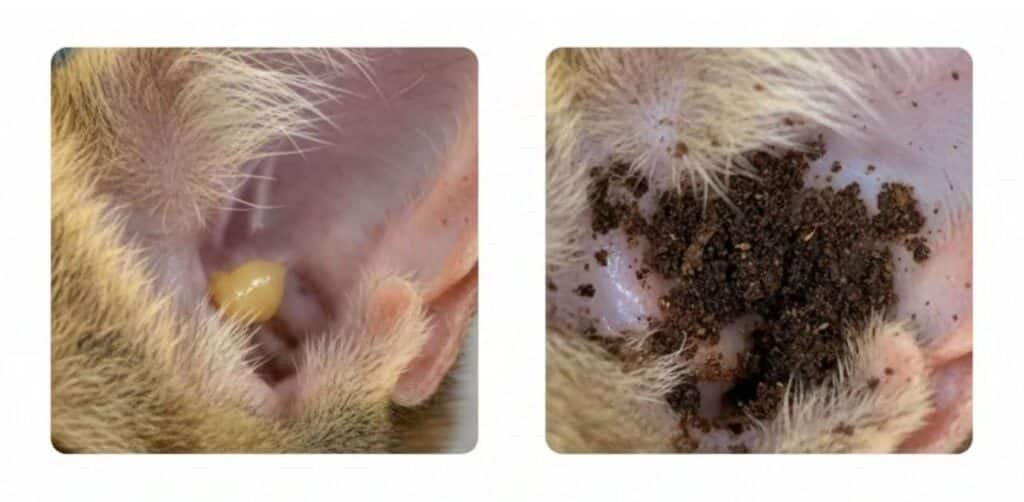
To make it easy for you to diagnose at home, use this comparison table:
| Feature | Normal Earwax | Ear Mites |
| Color | Light Yellow / Pale Brown | Dark Brown / Black |
| Texture | Smooth and Waxy | Dry and Crumbly (Coffee Grounds) |
| Odor | None | Foul or Musty |
| Itching | Rare / Occasional | Intense / Constant |
| Head Shaking | No | Very Frequent |
| Inflammation | Pale Pink Skin (Normal) | Red, Swollen, and Irritated |
| Contagious | No | Yes (Highly!) |
5 Clear Symptoms of Cat Ear Mites
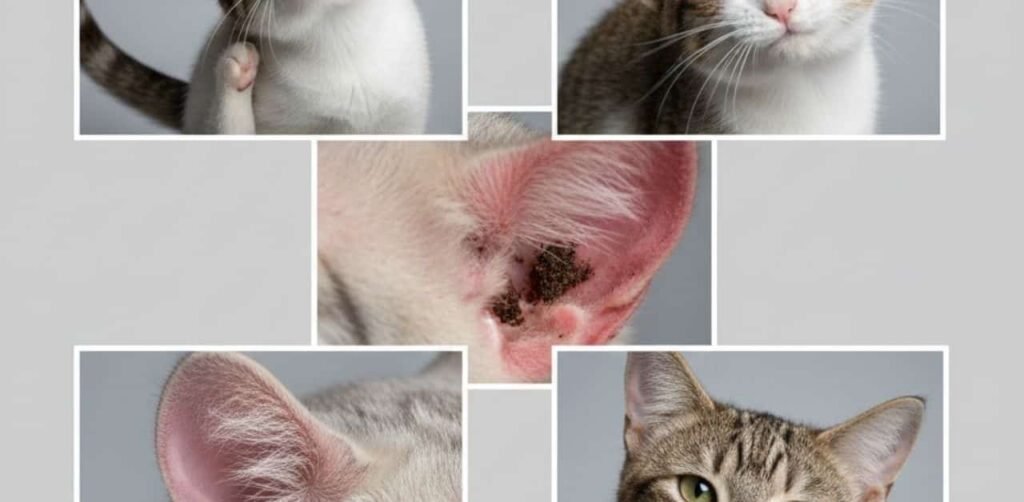
If your cat is experiencing an infestation, you will likely notice these five behavioral and physical symptoms:
1. Intense Scratching and Pawing
Mites cause extreme irritation. You may see your cat constantly scratching at their ears or even rubbing their head against furniture and carpets to find relief.
2. Frequent Head Shaking
Does it look like your cat is trying to shake something out of their ear? This “violent” head shaking is a classic sign that something—most likely mites—is moving deep inside the canal.
3. “Coffee Ground” Discharge
This is the most recognizable symptom. If you see dark brown or black specks that look like dried dirt or coffee grounds, it is a 90% chance that mites are present. This debris is a mix of wax, mite waste, and dried blood.
4. Redness and Inflammation
Take a look at the skin of the inner ear. Is it bright red or swollen? Mites bite the delicate skin, leading to inflammation. In severe cases, you might even see scabs or hair loss around the ear due to self-trauma from scratching.
5. Unusual Head Tilt
If the infestation is severe or has moved into the middle ear, your cat might hold their head at an angle. This can affect their balance and requires immediate veterinary attention.
Sometimes, what looks like mites is actually a yeast or bacterial infection.
-
- Yeast infections usually produce a gooey, brown discharge that smells like “old socks” or “corn chips.
-
- Bacterial infections may show yellow or green pus and cause significant pain.
If the discharge is moist rather than dry and crumbly, it is likely an infection rather than mites.
When to See a Veterinarian

While there are over-the-counter treatments, a vet visit is always recommended for three reasons:
-
- Diagnosis: A vet will look through an otoscope to see the live mites moving.
-
- Safety: If your cat’s eardrum is ruptured (which can happen from scratching), certain ear drops can cause permanent deafness.
-
- Secondary Infections: Mites often cause bacterial infections that require antibiotics, not just mite killers.
How to Prevent Ear Problems in Cats
-
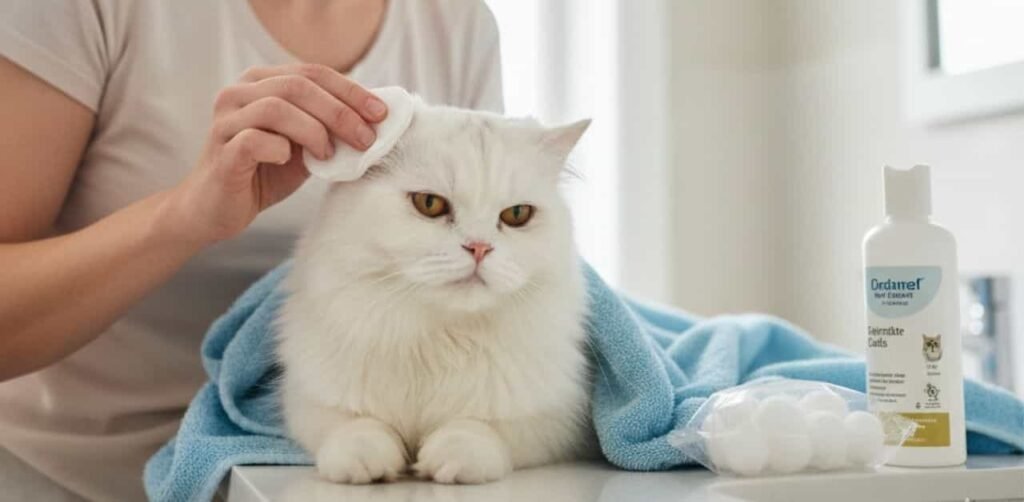
- Regular Inspections: Check your cat’s ears once a week during grooming.
-
- Keep it Dry: Always dry your cat’s ears after a bath.
-
- Flea & Tick Prevention: Many modern monthly spot-on treatments also prevent ear mites.
-
- Cleanliness: If you have multiple pets, treat them all simultaneously if one has mites, as they spread rapidly through contact.
Conclusion
Distinguishing between cat ear mites vs. wax is the first step in ensuring your cat lives a happy, itch-free life. If you see dark, crumbly debris and a cat that won’t stop shaking its head, don’t wait—get them checked out!
Personal Experience