
As cat parents, we’ve all been there: you’re enjoying a turkey sandwich or a bowl of berries, and you feel those big, curious eyes watching your every move. It’s tempting to share a bite of your snack with your feline friend. But before you let your cat “sample” your plate, it’s crucial to know which human foods cats can eat safely and which ones could lead to an emergency vet visit.
While cats are “obligate carnivores,” meaning their bodies require meat to survive, certain human foods can provide a healthy boost of fiber or protein. This guide breaks down the safe, the “maybe,” and the strictly forbidden foods to keep your kitty healthy and happy.
The Golden Rule: Cats Are Not Small Humans
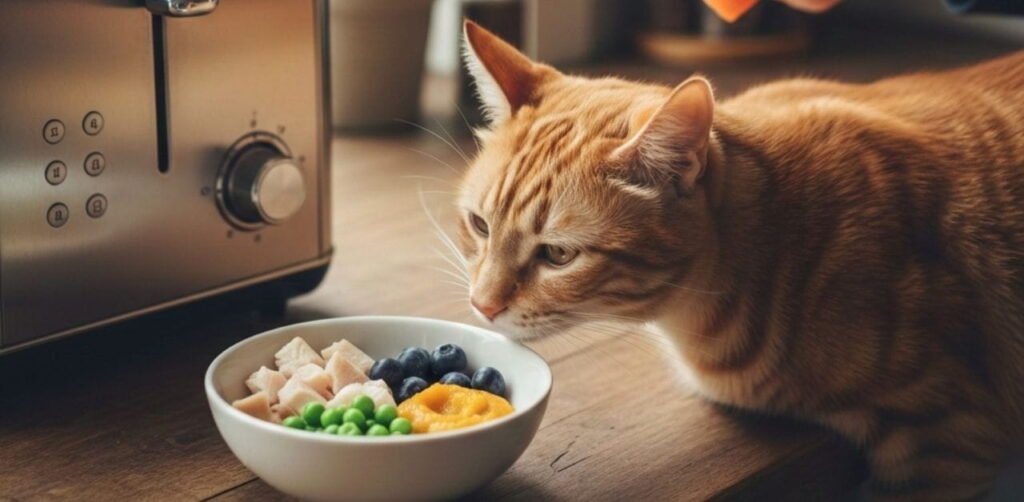
Before diving into the list, we must understand feline nutrition. Cats require specific nutrients like taurine, which is only found in animal protein. Unlike humans or dogs, their digestive systems aren’t designed to process a high-carb or plant-heavy diet.
According to most veterinarians and pet health experts, human foods should never make up more than 10% of your cat’s daily caloric intake. The remaining 90% should come from high-quality, balanced cat food.
Safe Human Foods Cats Can Eat
If you want to treat your cat, stick to these vet-approved options. Always ensure these foods are prepared plainly with no salt, garlic, onions, butter, or oil.
Lean Meats (The Best Choice)
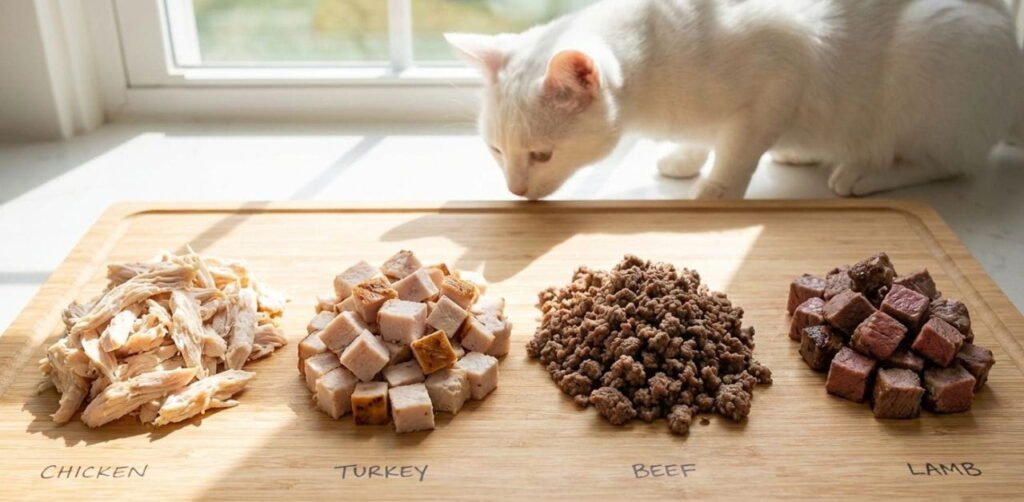
Since cats thrive on protein, lean meats are the safest and most natural treat you can offer.
- Chicken: Boiled or grilled skinless chicken breast is a feline favorite.
- Turkey: Sliced turkey (unseasoned) is an excellent low-fat protein source.
- Beef: Lean ground beef or steak bits are safe, provided they aren’t fatty.
- Cooked Lamb: A rich source of energy, but keep portions small due to fat content.
Fish (In Moderation)
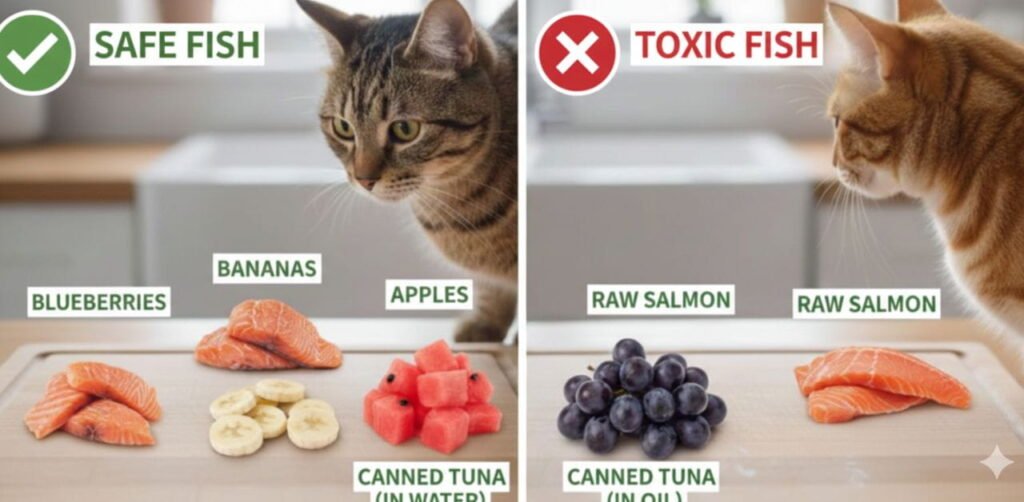
While the “cat eating a fish” trope is famous, not all fish is created equal.
- Salmon and Tuna: These provide essential Omega-3 fatty acids, which are great for skin and coat health.
- Canned Fish: If using canned tuna, ensure it is packed in water, not oil, and check for low sodium content.
- Warning: Never feed raw fish, as it contains an enzyme that destroys thiamine (Vitamin B1), a critical vitamin for cats.
Certain Vegetables
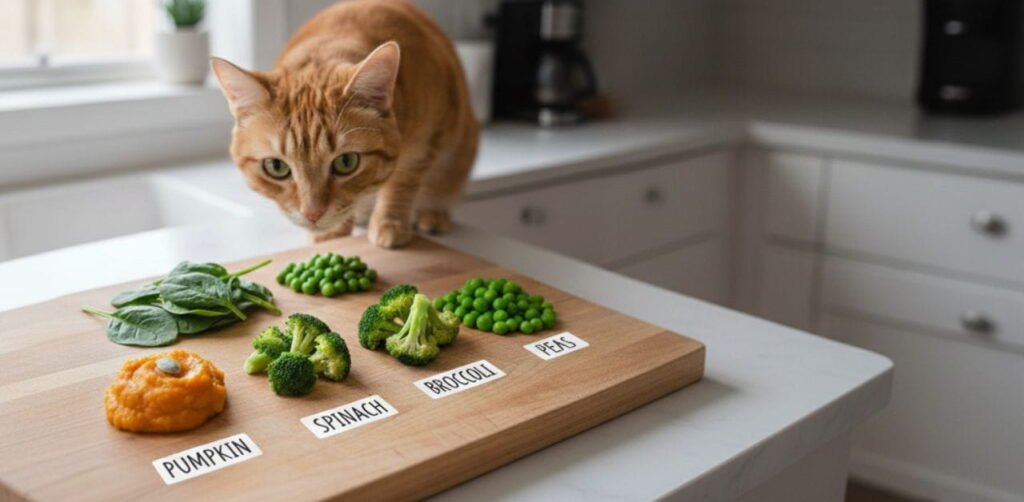
Some cats surprisingly enjoy the crunch of a veggie. These can be great for cats prone to constipation.
- Pumpkin: Pureed pumpkin (NOT pumpkin pie filling) is a miracle worker for digestion and hairballs.
- Spinach: High in vitamins A, C, and K, though it should be avoided if your cat has a history of kidney stones.
- Steamed Broccoli: A safe, fibrous snack for cats who like to “graze.”
- Peas: Often found in commercial cat foods, these are high in fiber and protein.
Fruits (The Sweet Treats)
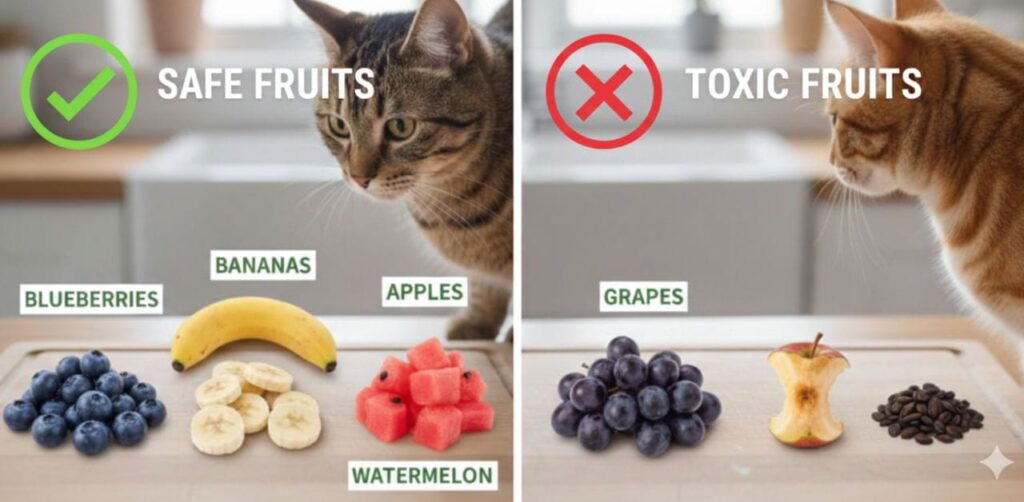
Cats lack “sweet” taste buds, but some enjoy the texture of fruit.
- Blueberries: Packed with antioxidants.
- Bananas: A good source of potassium and soluble fiber.
- Apples: Safe if peeled and the seeds/core are removed (seeds contain cyanide).
- Watermelon: A great hydration boost in the summer, but remove all seeds first.
The “Maybe” Category: Handle with Caution
Some foods aren’t necessarily toxic but can cause stomach upset depending on the individual cat.
Dairy: The Great Myth
Most adult cats are actually lactose intolerant. While they may love the taste of milk or cheese, it often leads to diarrhea and bloating.
- Cheese: Small bits of hard cheese (like cheddar) are usually okay as a rare treat because they are lower in lactose.
- Yogurt: Plain, unsweetened yogurt can provide probiotics, but monitor your cat for any signs of upset stomach.
Eggs
Cooked eggs (scrambled or boiled) are a fantastic protein source. However, never feed raw eggs due to the risk of Salmonella or E. coli.
The “Never” List: Toxic Foods for Cats
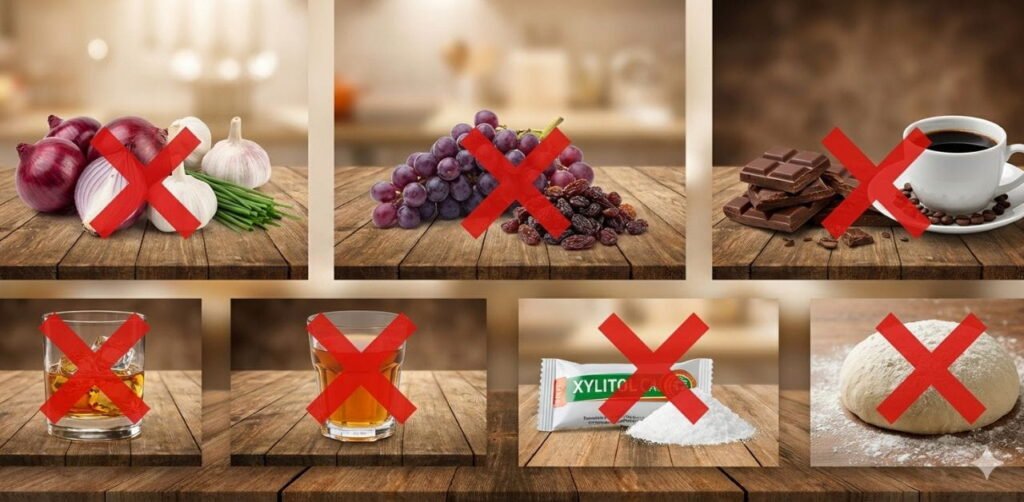
To rank high on Google and keep your pet safe, it’s vital to highlight the “Danger Zone.” If your cat consumes any of these, contact a vet or the Pet Poison Helpline immediately.
- Onions, Garlic, and Chives: These are the most dangerous. They contain compounds that can break down a cat’s red blood cells, leading to anemia. Even garlic powder in seasoned meat is a risk.
- Grapes and Raisins: These can cause sudden kidney failure in cats (and dogs).
- Chocolate and Caffeine: Both contain methamphetamine, which cause vomiting, tremors, and seizures.
- Alcohol: Even a tiny amount can cause permanent brain damage or liver failure.
- Xylitol: This artificial sweetener (found in sugar-free gum and some peanut butters) causes a lethal drop in blood sugar.
- Raw Dough: The yeast can expand in the stomach and produce alcohol.
How to Introduce Human Food to Your Cat
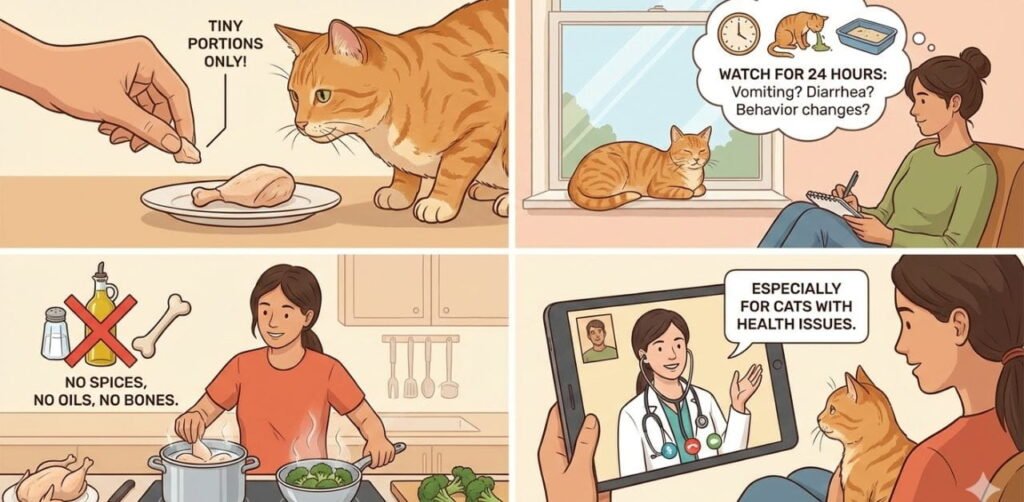
- Start Small: Introduce only one new food at a time in a “pinky-nail” sized portion.
- Monitor: Watch for vomiting, diarrhea, or changes in behavior over the next 24 hours.
- Prepare it Right: No spices, no oils, no bones.
- Consult Your Vet: Especially if your cat has underlying health issues like diabetes or kidney disease.
Quick Reference for Cat Owners
| Food Category | Safe to Eat | Avoid / Toxic |
| Proteins | Cooked Chicken, Turkey, Beef, Eggs | Raw Meat, Deli meats with seasoning |
| Seafood | Cooked Salmon, Tuna (in water) | Raw Fish, Fried Fish |
| Produce | Pumpkin, Blueberries, Peas, Bananas | Grapes, Raisins, Onions, Garlic |
| Snacks | Small bits of Hard Cheese | Chocolate, Candy (Xylitol), Bread Dough |
Frequently Asked Questions (FAQs)
Can cats eat bread?
Plain, baked bread is generally safe in very small amounts, but it offers no nutritional value. Avoid bread with seeds or herbs.
Can cats eat peanut butter?
While not toxic, most peanut butter is high in fat and may contain Xylitol. It’s better to avoid it or only give a tiny amount of Xylitol-free, unsalted PB.
Why is my cat begging for my food?
Cats are curious. Often, they are more interested in the smell or the activity of you eating than the food itself. Try offering a cat-safe treat at the same time you sit down to dinner.
Final Thoughts
Sharing a snack with your cat can be a lovely bonding experience, but safety must come first. Stick to plain, cooked meats and safe veggies like pumpkin to keep their digestive system on track. When in doubt, remember: If it’s seasoned, it’s a “no.“