Are you ready to uncover the extraordinary secrets behind the world’s most beloved feline? Whether you call them marmalade, ginger, or “cheeto” cats, the orange tabby is a breathtaking icon in the pet world. From their legendary personalities to their complex genetics, these “tiny tigers” are much more than just a pretty coat.
In this comprehensive guide, we are diving deep into the most captivating orange tabby cat facts that every cat lover in the US needs to know.
“Orange Tabby” is Not a Breed
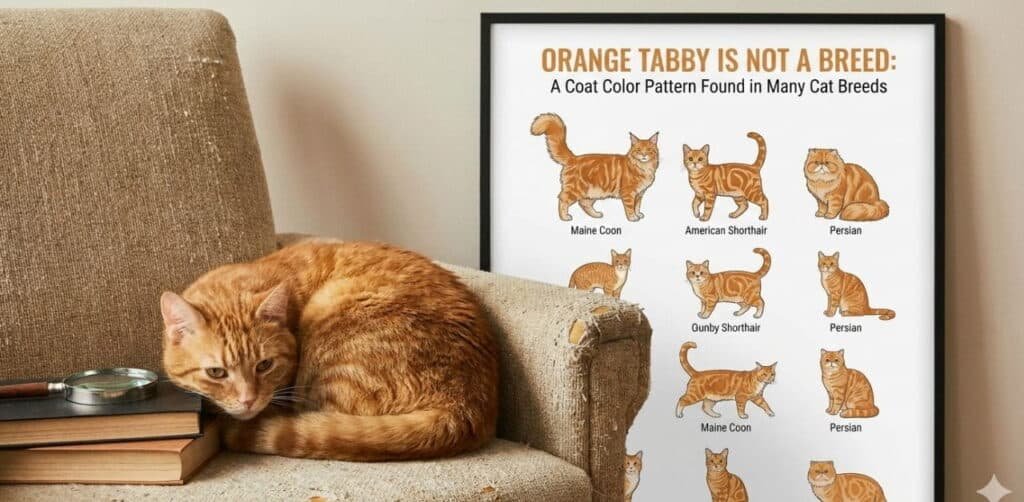
The most essential fact to understand is that “Orange Tabby” refers to a coat color and pattern, not a specific breed. You can find this stunning orange hue across many different breeds, including:
- Maine Coons
- Persians
- Abyssinians
- American Shorthairs
- British Shorthairs
The Mysterious “M” Forehead Mark
Every true tabby cat sports a distinguished “M” shape on their forehead. While science explains this as part of their natural camouflage pattern, enchanting legends suggest otherwise. Some say it stands for “Mau” (the Ancient Egyptian word for cat), while others believe it was a mark of honor bestowed by religious figures. Regardless of its origin, it is a trademark of their majestic look.
The Surprising Gender Gap: The 80/20 Rule
One of the most mind-blowing orange tabby cat facts is their gender ratio. Approximately 80% of orange tabby cats are male, while only 20% are female.
Why? It’s all about genetics. The “ginger gene” is located on the X chromosome. Since males (XY) only have one X chromosome, they only need one ginger gene from their mother to turn orange. Females (XX), however, require two ginger genes—one from each parent—to display that vibrant orange coat.
They Are the “Golden Retrievers” of the Cat World
While scientists debate whether coat color affects personality, many owners and vets swear that orange tabbies are the most gregarious and affectionate cats. They are often described as bold, friendly, and incredibly social. If you are looking for a “velcro cat” that loves cuddles, an orange tabby is your ultimate choice.
The “Lentigo” Freckles: Nature’s Beauty Marks
Have you noticed tiny black spots on an orange cat’s nose or gums? Don’t panic—these are called Lentigo. This is a harmless genetic condition common in ginger cats that causes “freckles” to appear as they age. It usually starts around age one or two and adds a charming uniqueness to their face.
Four Distinct Coat Patterns
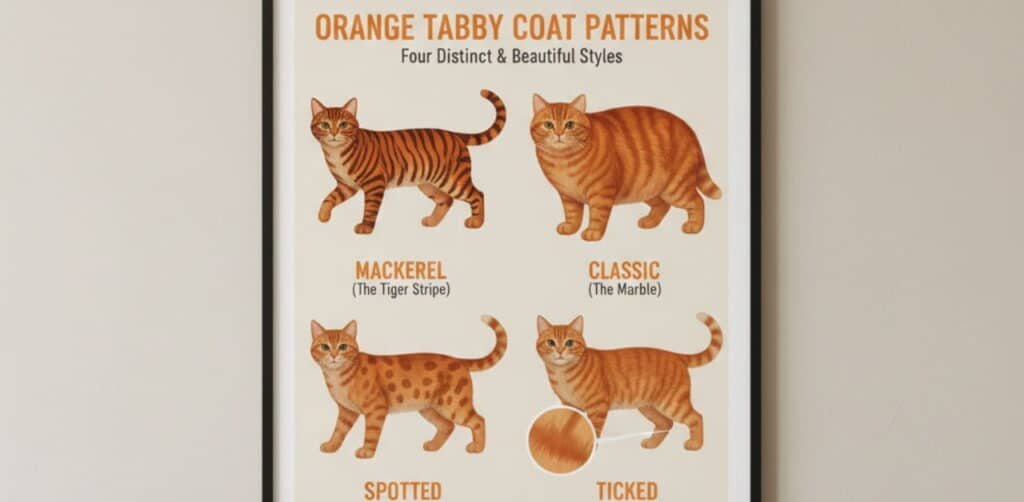
Not all orange tabbies look the same. Their intricate coats generally fall into four categories:
- Mackerel (The Tiger Stripe): The most common pattern featuring narrow stripes running down the sides.
- Classic (The Marble): Features bold, swirling patterns that look like a marble cake.
- Spotted: The stripes are broken up into distinct spots or “dashes.”
- Ticked: At first glance, the cat looks solid orange, but each individual hair is “agouti” (multi-colored).
They are Pop Culture Royalty
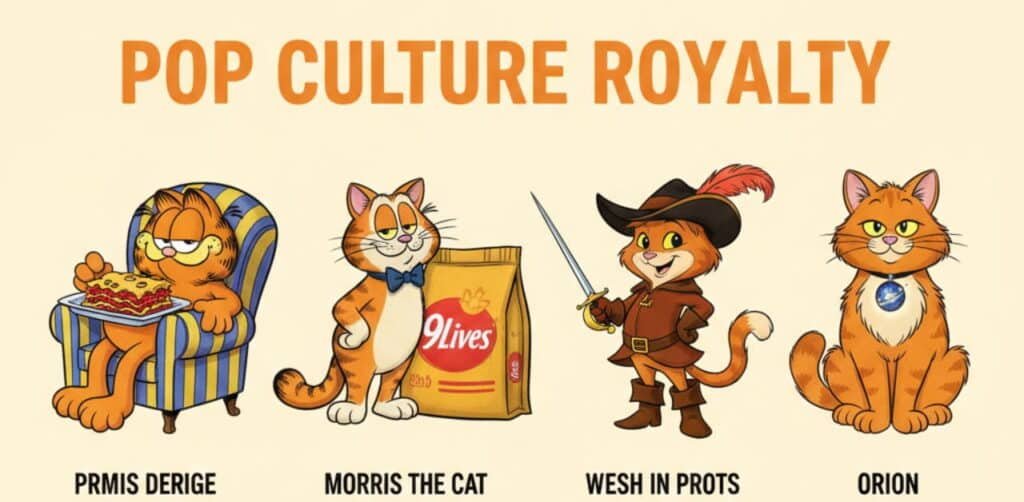
Orange cats have a legendary status in Hollywood. Their charismatic presence has made them the stars of our favorite screens:
- Garfield: The lasagna-loving icon.
- Morris: The “most fastidious cat in the world” from 9Lives commercials.
- Puss in Boots: The dashing hero from the Shrek franchise.
- Orion: The galaxy-wearing feline from Men in Black.
The Specific Pigment: Pheomelanin
The brilliant color of an orange tabby comes from a specific pigment called pheomelanin. This is the same pigment responsible for red hair in humans! Depending on the concentration of this pigment, a cat’s coat can range from a shimmering cream to a deep, fiery red.
They Are Total Foodies
It’s not just Garfield! Many orange tabby owners report that their cats are obsessed with food. They have a voracious appetite and can be prone to obesity if their diet isn’t monitored. Their love for treats makes them highly trainable, but you must be careful not to overfeed your precious companion.
They Live Long, Vibrant Lives
With proper care, a high-quality diet, and regular vet checkups, orange tabbies are resilient creatures. Many live well into their late teens or even early twenties. Their enduring health makes them a wonderful long-term companion for US families.
They are Talkative Companions
If you want a quiet cat, an orange tabby might not be for you! They are known for being vocal and expressive. Whether it’s a soulful meow for breakfast or a soothing purr during nap time, they will always let you know how they feel.
Ancient Egyptian Connections
The tabby pattern is believed to be one of the oldest in the world. Ancient Egyptian artwork often depicts cats with striking tabby markings. These cats were venerated and protected, a tradition of love that continues in our homes today.
Camouflage Experts
In the wild, the orange tabby’s stripes served a critical purpose: camouflage. The broken lines helped their ancestors blend into tall grass and shadows, making them lethal hunters and keeping them safe from larger predators.
High Energy and Playfulness
Orange tabbies are often dynamic and full of life. They enjoy interactive toys, puzzle feeders, and “cat-venturing” outdoors on a harness. Their spirit is infectious, making them a perfect match for active households.
Every Orange Tabby is a “Tabby”
A surprising fact: You will never find a solid orange cat without some hint of tabby markings. Even if the stripes are faint (ghost stripes), the “non-agouti” gene (which makes cats solid colors like black) doesn’t work effectively on orange pigment. Every ginger cat is genetically a tabby!
Why You Need an Orange Tabby in Your Life
The orange tabby is a masterpiece of nature. Between their stunning looks and their affectionate personalities, it’s no wonder they are the most searched-for cat color in the United States.
Whether they are sporting “freckles” on their nose or “M” marks on their forehead, these spectacular felines bring a boundless amount of joy and warmth to any home.