
Living in a bustling city like New York, Los Angeles, or Chicago often means embracing the “small space” lifestyle. But does a compact apartment mean you can’t enjoy the company of a furry friend? Absolutely not. In 2026, more Americans than ever are becoming “cat parents” in urban environments. However, a successful apartment living with a cat requires more than just a food bowl and a litter box. To help your cat thrive, you need a strategic approach to space, stimulation, and comfort.
In this comprehensive guide, we reveal the proven secrets to keeping your apartment cat healthy, happy, and active.
Choosing the Best Cat Breeds for Apartment Living
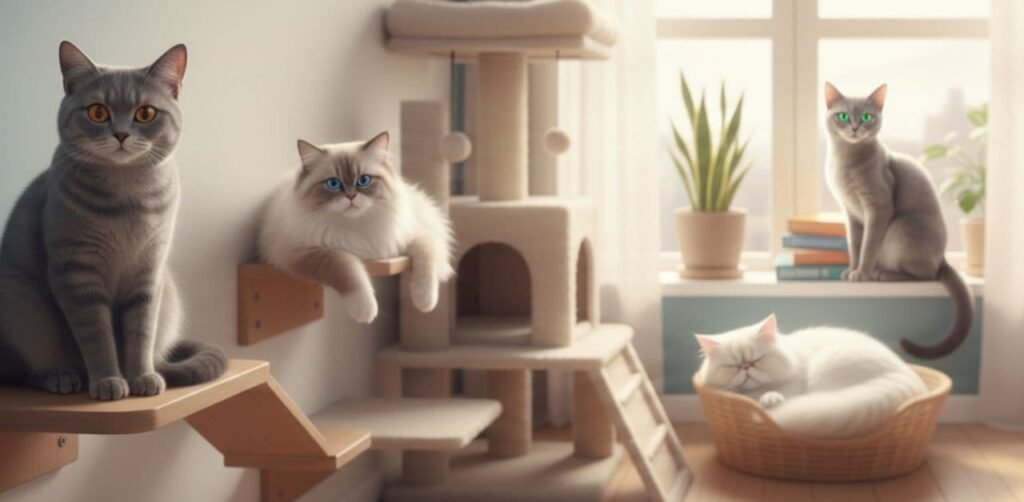
Not all cats are built for small-space living. While every cat has a unique personality, certain breeds are naturally more suited to the quiet, indoor lifestyle of an apartment.
- The Ragdoll: Often called “puppy-cats,” Ragdolls are famously laid-back and affectionate. They don’t require massive amounts of exercise and are content lounging on your sofa.
- British Shorthair: Known for their “teddy bear” looks, these cats are independent and calm, making them perfect for owners who work 9-to-5.
- Persian: If you want a low-energy companion who appreciates a peaceful environment, the Persian is the ultimate choice.
- Russian Blue: These cats are quiet, gentle, and highly adaptable to indoor routines.
Pro Tip: Consider adopting a senior cat from a local US shelter. Older cats are generally calmer and perfectly happy to spend their days napping in a sunbeam.
Maximizing Vertical Space
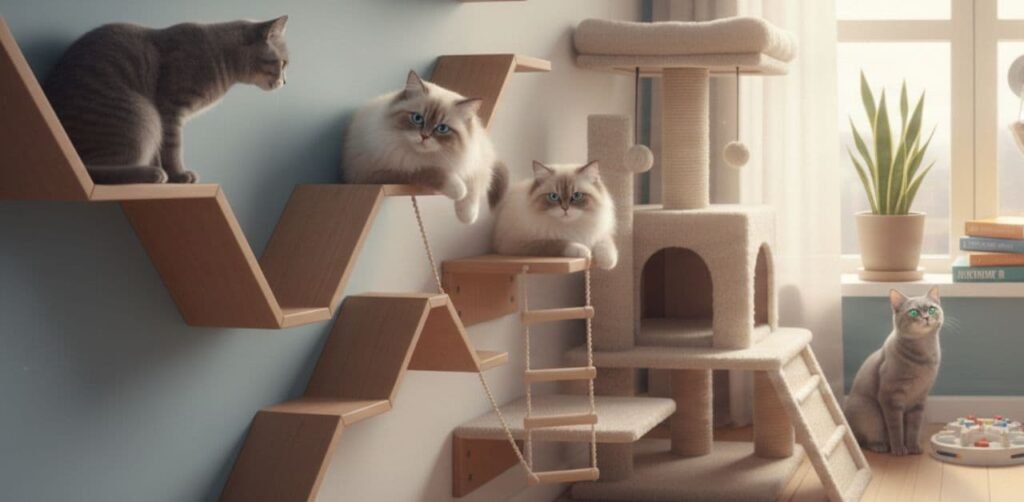
When you lack floor space, the only way to go is up. “Catification” is the process of making your home cat-friendly without sacrificing your aesthetic.
Vertical Territory
In the wild, cats are both predators and prey. Being high up makes them feel secure. You can achieve this in a small apartment by:
- Cat Trees: Invest in a floor-to-ceiling cat tree. In 2026, minimalist and wooden designs are trending, blending perfectly with modern US home decor.
- Wall-Mounted Shelves: Install “cat walks” along your walls. This creates a high-speed highway for your cat to move across the room without touching the floor.
- Window Perches: A suction-cup window bed is an essential gadget. It provides hours of “Cat TV” (watching birds and squirrels outside).
Master the Litter Box Challenge (Odor & Space)
The biggest concern for apartment dwellers is the dreaded litter box smell. In a small studio or one-bedroom, a stinky box can ruin the vibe of your entire home.
High-Tech Solutions
By 2026, automatic self-cleaning litter boxes (like the Litter-Robot or Neakasa M1) have become the gold standard. They remove waste immediately, drastically reducing odor.
Stealthy Placement
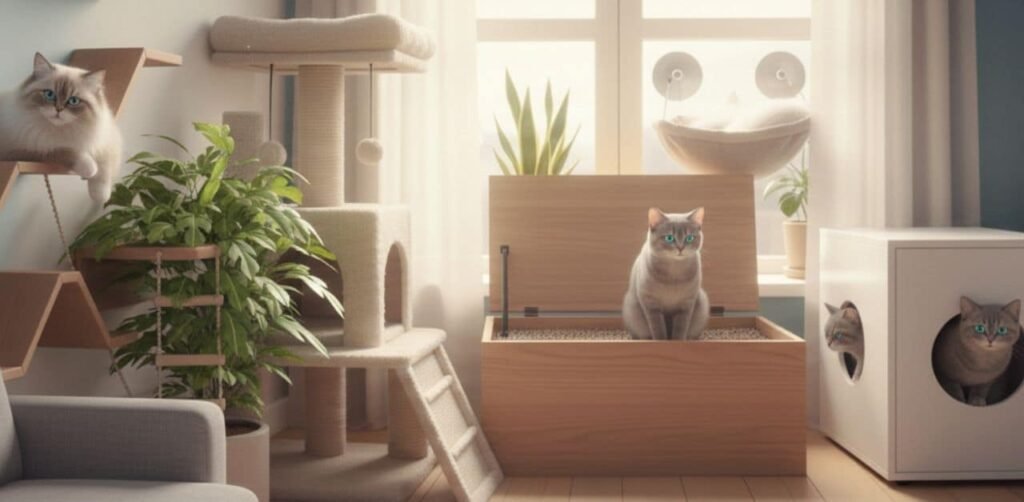
Don’t just leave the box in the corner of the living room. Try these effortless hacks:
- Hidden Furniture: Use a litter box enclosure that looks like an end table or a bench.
- Top-Entry Boxes: These reduce “litter tracking”—the annoying pebbles that end up in your bed or on your rug.
- Air Purifiers: Place a HEPA-filter air purifier near the box to neutralize dander and smells instantly.
Preventing the “Boredom Blues”
An indoor cat in a small apartment can easily become bored, leading to destructive behavior like scratching furniture or overeating. You must satisfy their natural hunting instincts.
Interactive Play
Dedicate at least 15 minutes twice a day to active play. Use wand toys that mimic the movement of birds or mice.
Modern Tech for Cats
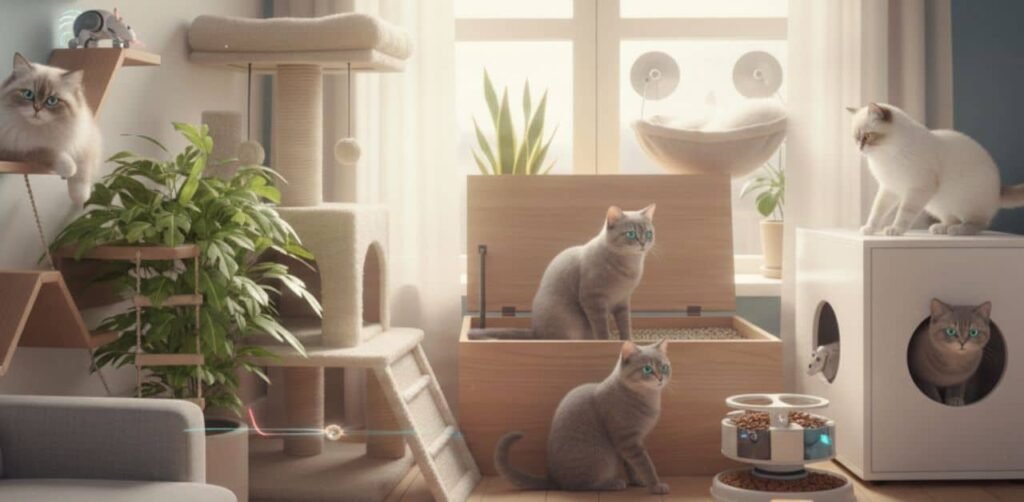
- Puzzle Feeders: Instead of a bowl, use a puzzle feeder. It forces your cat to “hunt” for their kibble, keeping their brain sharp.
- Smart Toys: In 2026, AI-powered laser toys and moving robotic mice can keep your cat entertained while you are at the office.
The “Cat-Proofing” Checklist
Living high up in an apartment complex poses unique risks. Safety is non-negotiable.
- Window Screens: Ensure all screens are heavy-duty and securely fastened. “High-Rise Syndrome” is a real danger where cats fall from open windows.
- Balcony Protection: If you have a balcony, never let your cat out unsupervised unless you have installed a “Catio” or specialized cat netting.
- Toxic Plants: Many popular indoor plants like Lilies and Pothos are toxic. Opt for cat-safe greenery like Spider Plants or Cat Grass.
Sustainable Cat Care
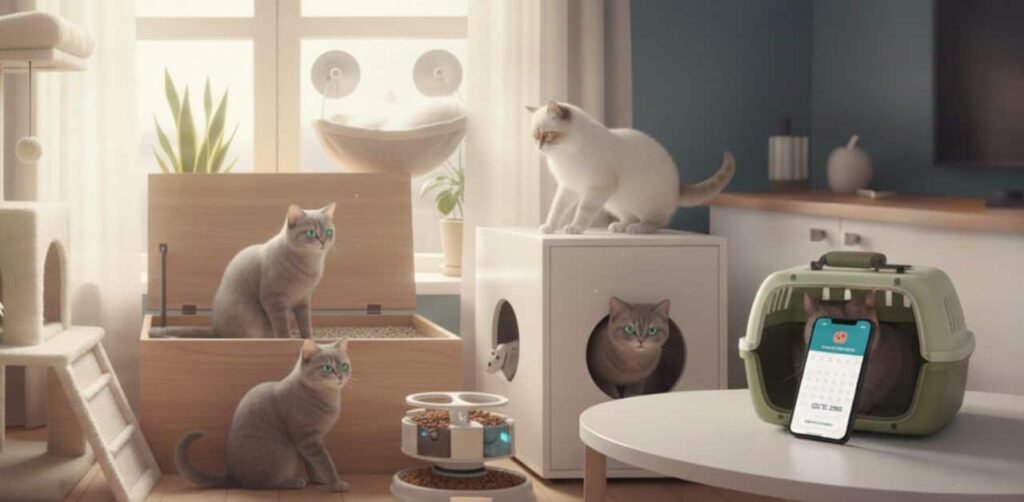
US cat owners are increasingly moving toward eco-friendly habits. To rank well and appeal to the modern reader, focus on:
- Biodegradable Litter: Using corn, tofu, or pine-based litters.
- Organic Diet: High-protein, grain-free meals with ethically sourced ingredients.
- Regular Vet Visits: With the rise of pet insurance in the US, preventative care is more accessible than ever.
Small Home, Big Love
Living in an apartment doesn’t mean your cat has to live a “small” life. By utilizing vertical space, investing in smart technology, and providing consistent mental engagement, you can create a thriving sanctuary for your feline friend.
Remember, a happy cat doesn’t need 3,000 square feet; they just need a dedicated owner and a view of the world.