
Have you ever looked into your cat’s mysterious eyes and wondered, “If you were a human, would you be a rebellious teenager or a wise retiree?” We’ve all heard the old myth that one cat year equals seven human years. Stop right there. That outdated math is not only wrong—it’s a total misconception that could affect how you care for your pet.
Understanding the true conversion of cat years to human years is a game-changer for any dedicated cat owner. Whether you are raising a frisky kitten or comforting a graceful senior, knowing their “real” age helps you provide the life-saving care and nutrition they deserve.
In this comprehensive guide, we will break down the science of feline aging, debunk the myths, and give you the proven formula to calculate your cat’s age with precision.
Why the “Rule of 7” is a Total Failure
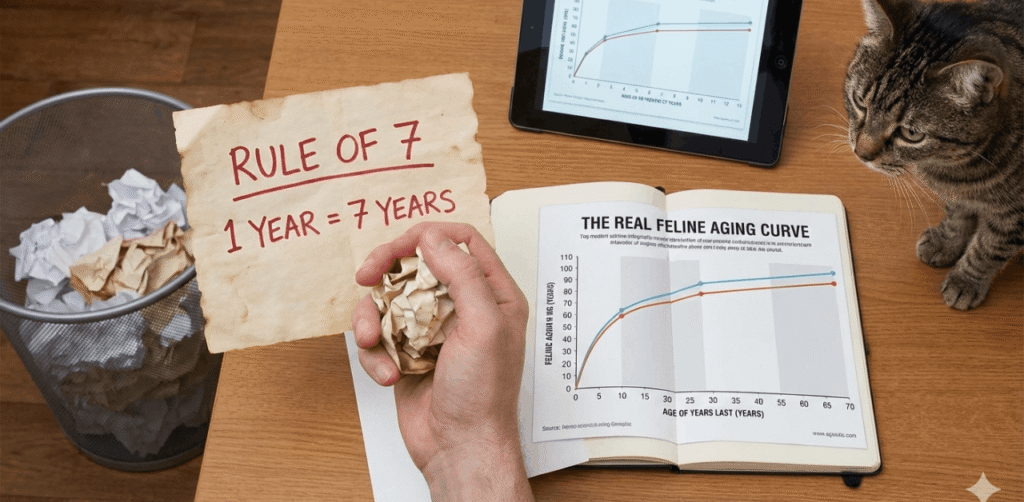
For decades, people simplified pet aging by multiplying by seven. While this makes for easy math, it’s scientifically inaccurate. Cats age with explosive speed during their first two years of life and then settle into a steady, slow crawl.
Think about it: A one-year-old cat is physically capable of having kittens. If the “Rule of 7” were true, that would be like a 7-year-old human child becoming a parent. Impossible, right? In reality, a one-year-old cat is more like a 15-year-old human—full of energy, attitude, and rapid growth.
How Cats Actually Age
To truly master the cat years to human years conversion, experts use a tiered approach. Here is the definitive breakdown used by veterinarians worldwide:
The First Year: The first 12 months of a cat’s life are equivalent to about 15 human years.
The Second Year: By the time a cat hits their second birthday, they have added another 9 years, making them roughly 24 human years old.
The Golden Ratio: After age two, each additional calendar year counts as approximately 4 human years.
The Cat Age Cheat Sheet (US Standards)
| Cat Age (Years) | Human Age (Equivalent) | Life Stage |
| 6 Months | 10 Years | Pre-teen |
| 1 Year | 15 Years | Adolescent |
| 2 Years | 24 Years | Young Adult |
| 5 Years | 36 Years | Prime |
| 10 Years | 56 Years | Mature |
| 15 Years | 76 Years | Senior |
| 20 Years | 96 Years | Super Senior |
What to Expect as Your Cat Ages
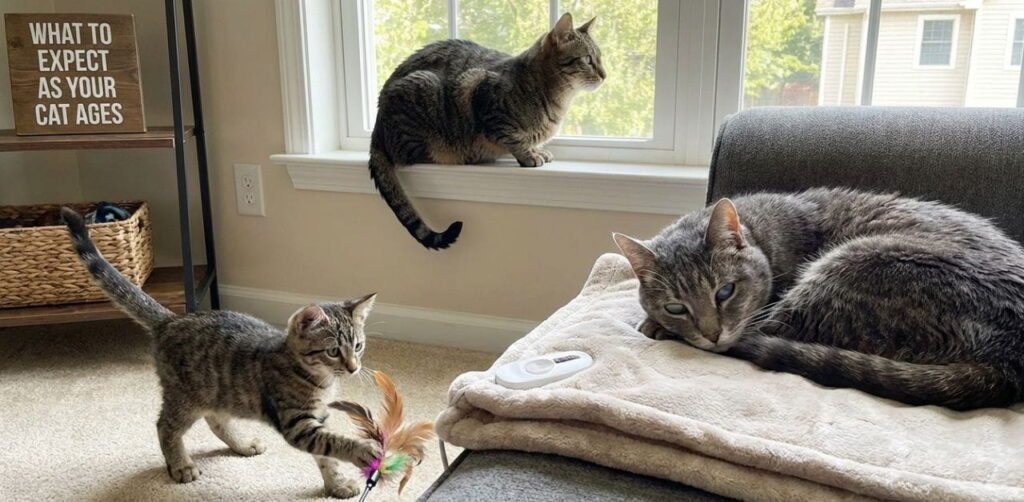
Understanding the power of feline biology means recognizing that a cat’s needs shift dramatically as they “level up” in human years.
The Kitten Phase (0–6 Months)
This is the explosive growth period. In human terms, your cat is going from an infant to a middle-schooler in just six months. They need high-calorie fuel and intense socialization.
- Pro Tip: This is the most critical time for vaccines and behavioral training.
The Junior & Prime Years (7 Months – 6 Years)
By age 2, your cat is a young adult. This is their peak physical condition. They are sleek, fast, and adventurous. Most “outdoor” risks happen during this phase because of their high confidence and curiosity.
The Mature & Senior Years (7–14 Years)
Once your cat hits 7 (the human equivalent of their mid-40s), you might notice them slowing down. They may play less and sleep more. This is the essential time to watch their weight, as obesity in senior cats is a silent killer.
The Super Senior (15+ Years)
Many indoor-only American cats are now living well into their late teens and early 20s. A 20-year-old cat is nearly 100 years old in human terms! These cats require extraordinary care, including heated beds, easy-access litter boxes, and frequent vet checkups.
6 Vital Factors That Influence How Your Cat Ages
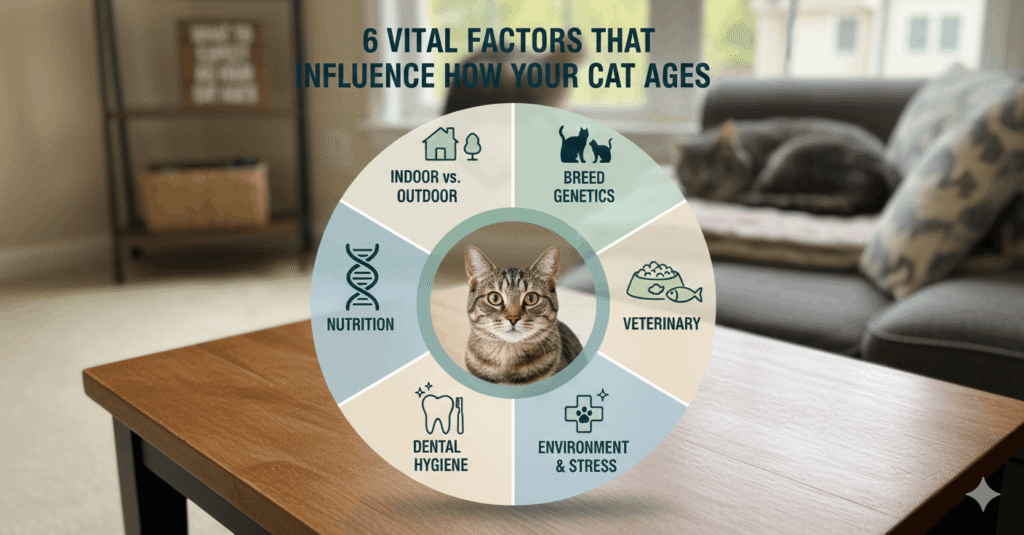
Not every cat ages at the same rate. If you want your feline friend to reach a legendary age, you must consider these variables:
Indoor vs. Outdoor Lifestyle
This is the most significant factor in the US. Statistics show that indoor cats live significantly longer (often 12–18 years) compared to outdoor cats (who may only live 2–5 years due to traffic, predators, and disease).
Breed Genetics
Some breeds, like the Siamese or Burmese, are known for their remarkable longevity, often living past 20. Larger breeds like the Maine Coon may age differently due to their size and heart predispositions.
Nutrition: The Fuel of Life
Feeding your cat “grocery store kibble” versus premium, high-protein nutrition can make a difference of several human years. Look for foods that prioritize real meat and avoid “fillers” like corn and soy.
Veterinary Interventions
Annual bloodwork is a must-have. Cats are masters at hiding pain. By the time they show symptoms, a disease might be advanced. Early detection is the ultimate weapon against aging.
Dental Hygiene
Did you know that dental disease can lead to heart and kidney failure? Keeping your cat’s teeth clean can literally add years to their life.
How to Spot the Signs of Aging
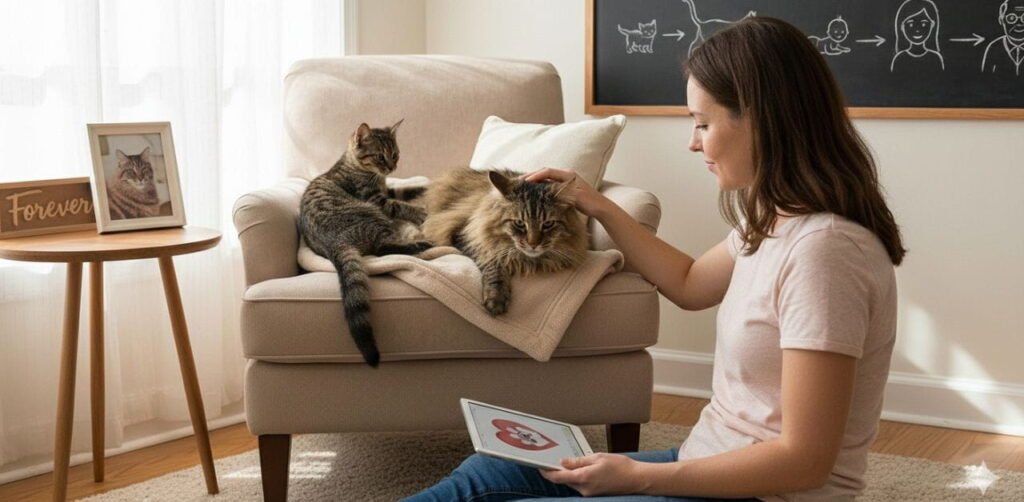
Is your cat feeling their “human age”? Look for these tell-tale signs:
- Cloudy Eyes: Just like humans get cataracts, senior cats may develop a haziness in their eyes.
- Stiff Movement: If they stop jumping on the high counter, it’s likely arthritis.
- Changes in Grooming: Senior cats often struggle to reach their back, leading to matted fur.
- Irritability: “Grumpy” behavior is often a mask for chronic pain.
Age is Just a Number, But Care is Forever
Calculating cat years to human years is more than just a fun trivia game. It is a crucial tool for proactive pet parenting. By recognizing that your 10-year-old “baby” is actually a 56-year-old adult, you can adjust their lifestyle to ensure they remain happy, healthy, and vibrant for years to come.
Your cat gives you unconditional love; the least you can do is understand the journey their body is taking.